
When it came to business administration, mileage was largely neglected back in the day. Although everyone knew it mattered, no one wanted to deal with it properly. That is why businesses faced the following issues:
- Receipts went missing
- Journey notes were not updated
- Reimbursement claims arrived late.
However, work is becoming more mobile with time. So, there is no space for the earlier loose approach.
Guesswork No Longer Works for Businesses
Mileage is no longer a travel detail for the following professionals:
- Freelancers
- Field teams
- Tradespeople
- Consultants
- Care workers
- Sales staff.
Rather, to them, mileage links directly to tax records and fuel spending. Also, it links to job costing, client billing, and cash flow. So, if mileage tracking is poor, it might distort business decisions. This happens before anyone spots a pattern.
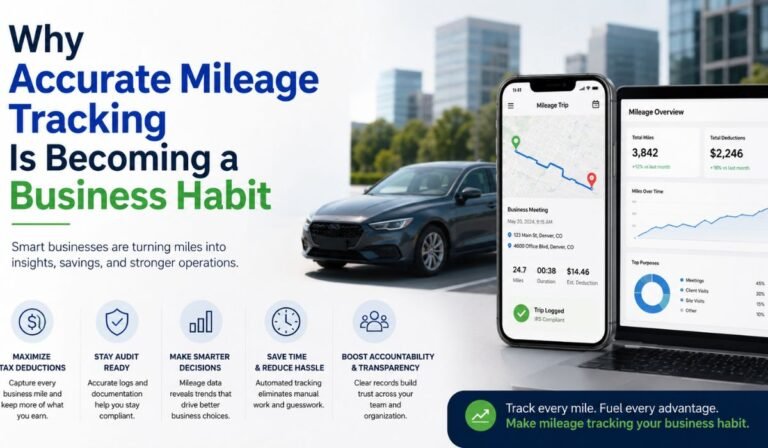
In those situations, a Mileage Tracking App makes the routine cleaner and faster. Also, it makes the routine more reliable. This works especially for people who move between sites all day.
So, drivers do not rebuild journeys from their memory later. Rather, they keep a more consistent record during the working day.
Mileage Logs Have Limited Capability
Of course, paper logs and spreadsheets still work for many businesses. This is because they are familiar. Also, if travel is occasional, it is usually enough for small businesses. But discipline is necessary to keep track of them.
In this case, someone must remember the following every single time:
- Starting point
- Destination
- Purpose
- Date
- Distance
- Notes.
If there is a miss one week, the whole thing gets really complex and scattered.
Apart from that, there is hidden labour in manual tracking. Although the record may look “free”, someone still spends time checking entries and finding missing details. Also, they have to correct obvious gaps. Therefore, the cheapest system might drain a lot of attention.
Mileage Data Matters a Lot
Visibility, not recordkeeping, is the biggest issue here. In fact, when mileage is scattered, businesses do not understand where travel costs actually come from. Thereby, the following issues happen –
- Fuel budgets become vague
- Route planning stays reactive
- Reimbursement policies turn into arguments rather than systems.
For instance, a company might think one client is profitable. But they might realise later that repeated site visits are eating the margins. Meanwhile, a freelancer might undercharge for local jobs. However, these short journeys might add up later.
Hence, over time, these factors affect pricing and tax planning. Also, they affect workload choices.
Compliance Depends on Plain Records
When it comes to tax and reimbursement records, clarity is necessary. It is just clear evidence rather than overcomplication. Basically, a proper mileage record should show the following:
- When the journey happened
- Why it happened
- Where it began
- Where it ended
- How far the driver travelled.
Therefore, it is not possible to carry the same professional weight with a vague monthly estimate.
Apart from that, consistency also matters a lot. In fact, one perfect record does not fix the ones that are missing. Essentially, businesses must have repeatable habits. This will enable them to hold up during busy periods. So, mileage tracking depends more on operational behaviour rather than technology.
How to Ensure Updating Mileage Data?
If you want to update mileage data, you have to follow a simple approach.
- Choose a method
- Define the rules
- Stick to those rules.
Basically, staff should know the following aspects:
- What counts as business mileage?
- When to submit records?
- What information should records include?
Meanwhile, managers must review claims fast. This is because delays lead to sloppy reporting.
Moreover, the business must also feel mileage data into wider operational thinking. For instance, if travels rise, it makes sense to redesign the routes. Also, if some jobs require repeated visits, it is better to make pricing adjustments. Furthermore, proper guidance is necessary if employees regularly correct claims after submission.
Make Mileage Tracking Real-Time Now
Businesses must prioritise mileage tracking as a real-time business control. This is important because travel costs are not readily available. In fact, they stay behind fuel receipts and rushed appointments.
So, make sure mileage tracking does not get too complicated for the business. Rather, make it easier to do correctly each time. It is important to make records timely and consistent. Also, they must be usable for the business. This way, the business will gain a clearer view of its work processes.
