
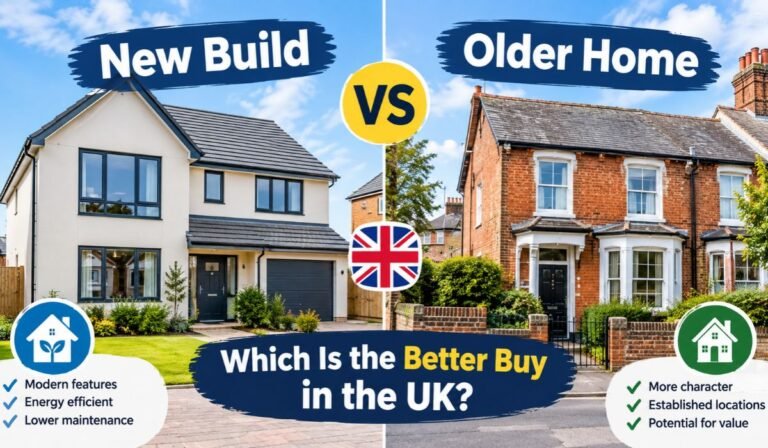
When you start searching for a home, one of the first choices you face is whether to buy a brand new property or an older one. New builds promise modern design, low maintenance and energy efficiency. Older homes often offer character, larger rooms, established neighbourhoods and more room to add value. Both can be excellent choices, but they suit different buyers and different priorities. This guide compares the two so you can decide which is the better buy for you.
The Advantages of Buying a New Build
The biggest appeal of a new build is that everything is new. You are the first person to live there, with a fresh kitchen, new bathrooms, modern wiring and plumbing, and no immediate need for repairs or redecoration. For busy buyers, this can be a real relief.
New builds are generally built to high energy efficiency standards. Good insulation, double or triple glazing and efficient heating systems can mean noticeably lower energy bills than many older homes. Most new builds achieve strong Energy Performance Certificate ratings, which is becoming more important as buyers pay closer attention to running costs.
New homes usually come with a structural warranty, commonly lasting ten years, from providers such as NHBC or similar schemes. This offers protection against certain defects during the early years of ownership.
Buying a new build can also mean no chain. If you are buying directly from a developer, there is no seller who needs to find their own next home, which can make the process smoother and more predictable.
The Drawbacks of New Builds
New builds often carry a price premium. Part of what you pay reflects the fact that the home is brand new, and this premium can disappear quickly once you move in. If you need to sell within a few years, you may find that resale prices do not match what you originally paid, especially if the developer is still selling new homes nearby.
Rooms can be smaller than in older properties, and gardens are often compact. Storage can also be limited. Always check room measurements carefully rather than relying on show home impressions, which are styled to look spacious.
Build quality varies between developers. Snagging issues, such as poorly fitted doors, paintwork problems or minor leaks, are common. A professional snagging inspection can help identify these before or soon after you move in.
Some new build estates involve ongoing estate management charges for maintaining shared areas, roads or green spaces. Check these carefully, as they can increase over time.
The Advantages of Buying an Older Home
Older homes often offer more space for the money. Victorian, Edwardian and 1930s properties commonly feature higher ceilings, larger rooms and bigger gardens than modern homes at a similar price.
Character is another major attraction. Period features such as fireplaces, sash windows, cornicing and original floorboards can give a home real personality. Many buyers love the individuality that older properties provide.
Older homes are usually in established areas with mature trees, settled communities and proven local amenities. You can see exactly what the neighbourhood is like, rather than relying on plans for future shops, schools or transport links.
There is also more scope to add value. Extending, converting the loft or modernising an older home can significantly increase its worth, giving you the chance to build equity through improvements.
The Drawbacks of Older Homes
Older properties can come with hidden problems. Damp, subsidence, outdated wiring, old boilers, roof issues and poor insulation are all common. These can be expensive to fix, so a thorough survey is essential before buying.
Energy efficiency is often lower, which can mean higher bills and the need to budget for improvements such as insulation, new windows or a modern heating system. Listed buildings and homes in conservation areas may also have restrictions on what changes you can make.
Buying an older home usually means being part of a chain, which can bring delays and the risk of the sale falling through.
How to Decide Which Is Right for You
Ask yourself a few key questions:
- Do you want to move in and relax, or are you happy to take on work?
- How long do you plan to stay in the home?
- Is space more important to you than low maintenance?
- How much do energy costs matter to your budget?
- Do you value character, or do you prefer a modern layout?
If you plan to stay for many years and want low running costs, a new build could suit you well. If you want space, character and the chance to add value, an older home may be the better choice.
Tips for Buying Either Type
For a new build, research the developer’s reputation, read reviews from previous buyers, check the warranty and arrange a snagging survey. For an older home, commission a detailed survey, ask about past work and building regulation approvals, and budget for repairs and upgrades.
In both cases, compare prices with similar homes nearby to make sure you are paying a fair price.
Final Thoughts
Neither new builds nor older homes are automatically the better buy. The right choice depends on your budget, your lifestyle and your long-term plans. Speaking with the experienced estate & lettings agent in Doncaster can help you compare local new build and resale prices, understand which homes hold their value best and find a property that suits your needs.
