
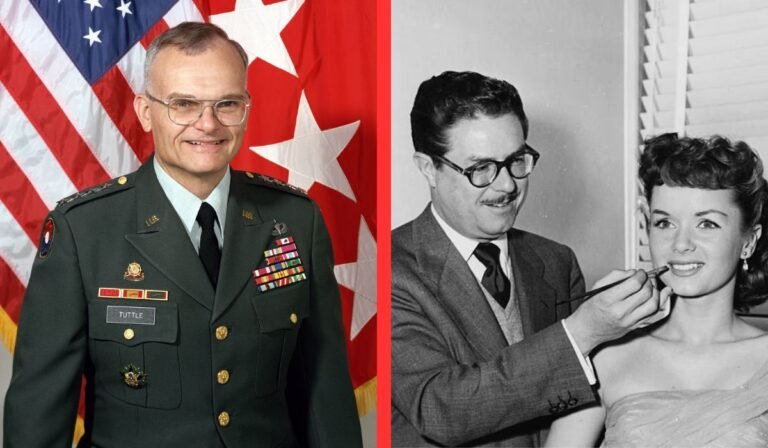
When people think about the magic of classic Hollywood movies, they often remember the actors, directors, or unforgettable stories. Yet behind many of the most iconic characters was an artist whose work helped bring imagination to life. William Tuttle was one of the most talented and respected makeup artists in film history. During a career that lasted more than four decades, he transformed actors into historical figures, fantasy characters, aging personalities, and unforgettable creatures that captivated audiences around the world.
William Tuttle worked during Hollywood’s Golden Age, a period when practical makeup effects relied entirely on creativity, craftsmanship, and patience. Long before computer-generated imagery became common, his innovative techniques allowed filmmakers to tell stories that seemed impossible at the time. His work appeared in award-winning films and influenced generations of makeup artists who continue to build on his ideas today.
Although many moviegoers may not recognize his name, they have almost certainly seen the remarkable results of his artistry. His dedication to realism and storytelling earned him widespread respect throughout the film industry, including a rare Academy Honorary Award for his outstanding contributions to cinematic makeup. Today, William Tuttle is remembered not only for the characters he helped create but also for changing the way audiences experience movies.
In this article, you’ll discover William Tuttle’s early life, his journey into Hollywood, his groundbreaking work at MGM Studios, his most famous films, his lasting influence on special effects makeup, and the remarkable legacy that continues to inspire filmmakers around the world.
William Tuttle At A Glance
| Information | Details |
|---|---|
| Full Name | William Julian Tuttle |
| Known As | William Tuttle |
| Date Of Birth | April 13, 1912 |
| Birthplace | Jacksonville, Florida, United States |
| Date Of Death | July 27, 2007 |
| Age At Death | 95 Years Old |
| Nationality | American |
| Profession | Makeup Artist, Makeup Department Professional, Occasional Actor |
| Industry | Hollywood Film Industry |
| Years Active | 1930s–1980s |
| First Studio | Fox Studios |
| Longtime Employer | Metro-Goldwyn-Mayer (MGM) Studios |
| Specialty | Character Makeup, Prosthetic Makeup, Aging Makeup, Fantasy Makeup |
| Famous Films | 7 Faces Of Dr. Lao, The Time Machine, Forbidden Planet, North By Northwest, The Birds |
| Major Award | Academy Honorary Award (1965) |
| Known For | Revolutionary Practical Makeup Techniques |
| Legacy | One Of Hollywood’s Greatest Makeup Artists |
| Influence | Inspired Modern Special Effects And Prosthetic Makeup Artists |
Early Life And Family Background
William Tuttle was born on April 13, 1912, in Jacksonville, Florida. His childhood was far from easy, and like many families during the early twentieth century, his family faced financial hardships. These early struggles taught him responsibility from a young age and helped shape the determination that later defined his remarkable career.
When William was only fifteen years old, he had to leave school to help support his family. Rather than continuing his education, he entered the workforce so he could provide for his mother and his younger brother, Thomas Tuttle. Although this decision was difficult, it demonstrated his strong sense of duty and maturity.
Unlike many future Hollywood artists who received formal education in art or theater, William learned through experience. Every opportunity became a chance to develop new skills, whether in music, performance, or entertainment. This practical approach to learning would later become one of his greatest strengths as a makeup artist.
His early experiences also helped him understand people from many different backgrounds. Meeting performers, musicians, comedians, and theater professionals gave him valuable insight into character, expression, and stage performance. These lessons later influenced the realistic makeup designs that became his trademark.
Despite leaving school early, William never stopped learning. Throughout his life, he remained curious, constantly experimenting with new materials and techniques. His success proves that passion, creativity, and dedication can sometimes become even greater teachers than formal education.
From Musician To Hollywood
Before becoming one of Hollywood’s most respected makeup artists, William Tuttle followed a very different career path. Music was his first passion, and his talent quickly opened doors in the entertainment world.
As a young man, he worked with comedy teams and performed in a burlesque orchestra. These experiences introduced him to the fast-paced world of live entertainment, where performers depended on timing, appearance, and audience engagement. Working behind the scenes and on stage helped him understand how visual presentation could completely transform a performance.
His musical abilities eventually allowed him to lead his own orchestra, an impressive achievement for someone still in his late teens. Leading a band required discipline, creativity, and confidence—qualities that would later help him manage large makeup departments on major film productions.
Around the age of eighteen, William decided to pursue greater opportunities by moving to Hollywood, California. During the early 1930s, Hollywood was rapidly expanding as America’s film capital. Studios were producing hundreds of movies every year, creating opportunities for talented people willing to work hard and learn new skills.
After arriving in Hollywood, William secured employment at Fox Studios. Although he had entered the industry through humble beginnings, working at a major studio exposed him to experienced artists and filmmakers. It was here that he discovered the fascinating world of professional movie makeup.
His decision to leave music behind ultimately changed cinema history. Rather than entertaining audiences through performance, William found a way to entertain them through artistic transformation, helping actors become unforgettable characters on screen.
Learning The Art Of Movie Makeup
William Tuttle entered Hollywood at a time when movie makeup was evolving into a sophisticated art form. Studios needed talented artists who could create believable characters under the bright lights of early film production, and William quickly showed he possessed both technical skill and artistic imagination.
Rather than treating makeup as simple cosmetics, he viewed it as an essential part of storytelling. Every wrinkle, scar, beard, hairstyle, or facial transformation had to support the character and help audiences believe what they were seeing. This philosophy became the foundation of his career.
Working alongside experienced makeup professionals, William learned traditional techniques while constantly experimenting with new ideas. He developed expertise in facial prosthetics, aging effects, facial hair application, sculpting, molding, and realistic skin textures. At a time when modern synthetic materials did not exist, achieving convincing results required exceptional craftsmanship.
One of William’s greatest strengths was his attention to detail. He carefully studied facial anatomy, expressions, lighting, and camera angles before designing makeup for each role. This careful planning allowed his work to appear natural on screen while remaining durable during long filming schedules.
His reputation grew steadily because directors knew they could trust him with difficult transformations. Actors also appreciated his professionalism, patience, and ability to create comfortable makeup that allowed them to perform naturally. These qualities helped establish William Tuttle as one of Hollywood’s rising talents.
As filmmaking became more ambitious, so did William’s techniques. Science fiction, fantasy, historical dramas, and adventure films demanded increasingly creative makeup solutions, and he consistently found innovative ways to meet those challenges.
William Tuttle’s Rise At MGM Studios
William Tuttle’s career reached new heights after joining Metro-Goldwyn-Mayer (MGM), one of Hollywood’s most prestigious film studios. MGM was famous for producing lavish productions featuring some of the biggest stars in the world, and maintaining its reputation required the highest standards in every department, including makeup.
At MGM, William worked on a wide variety of films that required completely different makeup styles. One project might involve creating subtle aging effects for a dramatic performance, while the next demanded elaborate fantasy creatures or historical characters. His versatility quickly made him one of the studio’s most valuable artists.
Over time, William became the head of MGM’s makeup department, leading teams responsible for some of the studio’s most ambitious productions. Managing large crews required not only artistic talent but also leadership, organization, and the ability to solve problems under tight production schedules.
His work earned the respect of directors, producers, costume designers, and actors alike. He collaborated closely with filmmakers to ensure every character’s appearance matched the story, helping audiences become fully immersed in each film. His makeup never distracted from a performance; instead, it strengthened the emotional impact of every scene.
William also embraced innovation throughout his years at MGM. He continually experimented with new materials, sculpting techniques, molds, and application methods that made character transformations more realistic than ever before. His willingness to improve traditional methods helped push Hollywood makeup forward during an era of rapid cinematic growth.
Perhaps most importantly, William understood that great makeup should remain invisible to the audience. Viewers should believe they are looking at the character rather than noticing the makeup itself. This philosophy became one of the defining principles of his career and influenced countless artists who followed.
By the early 1960s, William Tuttle had established himself as one of the most respected makeup artists in the world. His groundbreaking work at MGM laid the foundation for the extraordinary achievements that would soon earn him international recognition and secure his place among Hollywood’s true pioneers.
Most Famous Movies And Iconic Makeup Creations
William Tuttle built his reputation by working on some of Hollywood’s most memorable films. His ability to transform actors into believable characters made him one of the industry’s most trusted makeup artists. Whether the story called for realistic aging, fantasy creatures, or dramatic facial changes, Tuttle approached every project with creativity and careful attention to detail.
One of his greatest achievements came with 7 Faces Of Dr. Lao (1964). In this fantasy film, actor Tony Randall played several completely different characters, each requiring a unique appearance. William Tuttle designed and applied the makeup that allowed Randall to convincingly portray multiple personalities on screen. The work was so remarkable that it earned Tuttle the Academy Honorary Award, recognizing his extraordinary contribution to the art of movie makeup.
Another landmark project was The Time Machine (1960), where Tuttle helped create the futuristic look of humanity in a distant future. His makeup designs supported the film’s imaginative world while remaining believable to audiences. The success of the movie showed that practical makeup could play an important role in science fiction storytelling.
Tuttle also contributed to Forbidden Planet (1956), one of the most influential science fiction films ever made. Although the movie is remembered for its groundbreaking visual effects, the makeup department played an equally important role in creating the futuristic atmosphere. His work helped actors appear natural within an extraordinary setting, proving that makeup could quietly strengthen a film without drawing attention to itself.
His filmography also includes North By Northwest (1959), directed by Alfred Hitchcock. While this suspense classic did not require elaborate fantasy makeup, it demonstrated Tuttle’s skill in creating polished, realistic appearances for actors under demanding filming conditions. Great makeup is often invisible, and Tuttle understood that subtle work could be just as important as dramatic transformations.
Another notable production was The Birds (1963). Working on Hitchcock’s famous thriller required realistic injury makeup that helped audiences believe the terrifying bird attacks. His careful attention to bruises, cuts, and physical effects added emotional weight to scenes that remain powerful decades later.
Throughout his MGM career, William Tuttle worked on dozens of additional productions across many genres, including historical dramas, musicals, westerns, romantic films, and adventure stories. His versatility became one of his defining strengths. Rather than specializing in a single style, he mastered nearly every form of cinematic makeup, allowing directors to rely on him regardless of the story they wanted to tell.
Innovations That Changed Hollywood Makeup Forever
William Tuttle succeeded during an era when every special effect had to be created by hand. Without digital technology, artists depended on imagination, sculpting skills, careful painting, and an understanding of human anatomy. Tuttle became one of the leading innovators because he constantly searched for better ways to create realistic character transformations.
One of his greatest contributions was advancing prosthetic makeup. Prosthetics involve attaching carefully sculpted pieces to an actor’s face or body to create a completely different appearance. Tuttle refined these techniques so the prosthetics blended naturally with an actor’s skin, making them far more convincing on camera than earlier methods.
He also became known for his remarkable aging makeup. Instead of simply painting wrinkles onto a performer’s face, Tuttle studied how skin changes over time. He used shadows, highlights, subtle texture, and carefully designed prosthetic pieces to produce realistic older versions of characters. These techniques helped audiences believe that decades had passed within a single film.
Fantasy makeup was another area where Tuttle excelled. Creating mythical creatures, unusual faces, and imaginative characters required both artistic talent and practical engineering. Every design had to allow actors to speak, move naturally, and perform comfortably during long filming days. Tuttle balanced realism with creativity, ensuring that even the most unusual characters felt believable.
His work also influenced special effects makeup, a field that later expanded dramatically through artists such as Rick Baker, Stan Winston, and many others. Although newer generations introduced advanced materials like silicone and modern foams, many of the principles they followed were built upon foundations established by pioneers like William Tuttle.
Beyond his technical achievements, Tuttle believed makeup should always support storytelling. He never treated makeup as decoration alone. Instead, every transformation reflected a character’s personality, age, health, emotions, or background. This storytelling philosophy continues to shape professional makeup design in Hollywood today.
Perhaps his most enduring innovation was encouraging experimentation. Rather than relying on established techniques, he tested new materials and methods whenever a production presented unusual challenges. His willingness to innovate helped push Hollywood makeup into a new era and demonstrated that creativity could solve almost any cinematic problem.
Awards, Honors, And Professional Recognition
William Tuttle received many compliments throughout his long career, but his greatest public recognition came in 1965, when the Academy of Motion Picture Arts and Sciences presented him with an Academy Honorary Award for his outstanding makeup achievements on 7 Faces Of Dr. Lao.
This award holds a unique place in Oscar history. At the time, the Academy did not have a competitive category recognizing makeup artists. Although makeup professionals made enormous contributions to filmmaking, their work often went unnoticed during awards season. Tuttle’s Honorary Oscar acknowledged that makeup artistry deserved the same respect as cinematography, costume design, editing, and other filmmaking crafts.
His recognition also helped raise awareness of the makeup profession itself. Many people had never considered how much planning, sculpting, painting, and technical skill were required to transform actors into believable characters. Tuttle’s award demonstrated that exceptional makeup could become an essential storytelling tool rather than merely a cosmetic service.
Within Hollywood, William Tuttle earned tremendous respect from directors, producers, and fellow artists. He developed a reputation for reliability, professionalism, and exceptional craftsmanship. Filmmakers knew they could trust him with their most demanding productions because he consistently delivered high-quality work under tight deadlines.
His influence extended beyond awards. Younger makeup artists often sought his advice, studied his techniques, and admired his ability to solve difficult creative problems. Many professionals considered him not only a talented artist but also a generous mentor willing to share knowledge with the next generation.
Years after his retirement, William Tuttle continued receiving recognition through film history publications, museum exhibits, and industry retrospectives celebrating the pioneers who shaped Hollywood’s visual storytelling. His career remains an important chapter in the history of cinematic makeup.
William Tuttle’s Lasting Influence On The Film Industry
William Tuttle’s influence did not end when he retired from filmmaking. Instead, his ideas became part of the foundation upon which modern movie makeup continues to grow. Today’s audiences enjoy incredibly realistic character transformations, but many of the techniques behind those achievements can be traced back to innovators like Tuttle.
Modern prosthetic makeup artists continue to study his work because it demonstrates how careful design can create believable characters without relying on computer-generated imagery. Even in an age of advanced digital effects, practical makeup remains an essential part of filmmaking because it gives actors something real to wear and interact with during performances.
Many award-winning makeup artists have acknowledged the importance of Hollywood pioneers who developed practical techniques during the studio era. William Tuttle belongs among those pioneers whose creativity inspired future generations to push artistic boundaries even further.
His influence can also be seen in film schools and professional makeup academies, where students learn the history of cinematic makeup before mastering modern techniques. Understanding artists like Tuttle helps aspiring professionals appreciate how innovation develops over time through experimentation and dedication.
Film historians frequently describe William Tuttle as one of the individuals who elevated makeup from a technical necessity into a respected creative discipline. Before artists like him, makeup departments often received little public attention. His work helped demonstrate that makeup could shape character development, emotional storytelling, and visual realism.
Even today, audiences continue discovering classic Hollywood films featuring William Tuttle’s remarkable artistry. Although technology has changed dramatically, his commitment to craftsmanship, subtlety, and storytelling remains just as relevant as it was during Hollywood’s Golden Age.
Interesting Facts About William Tuttle
William Tuttle’s remarkable career includes many fascinating details that highlight both his talent and his dedication to filmmaking. One of the most interesting aspects of his life is that he never originally planned to become a makeup artist. His early dream centered on music, and he worked professionally with comedy acts before entering the movie industry.
Another surprising fact is that he left school at just fifteen years old to support his family financially. This early responsibility shaped his work ethic and taught him the value of persistence throughout his career.
Before becoming famous in Hollywood, Tuttle led his own orchestra. The leadership skills he developed as a musician later proved valuable when supervising makeup departments on large studio productions.
His Academy Honorary Award remains historically significant because it recognized makeup artistry years before the Academy introduced a competitive Oscar category for Best Makeup. This made William Tuttle one of the few artists to receive such a unique honor.
Throughout his career, he preferred practical solutions over unnecessary complexity. Rather than creating elaborate effects simply to impress audiences, he focused on helping actors fully become their characters. This philosophy earned him the trust of directors and performers alike.
William Tuttle also believed that successful makeup should never distract viewers from the story. If audiences noticed only the makeup instead of the character, he felt the artist had not fully succeeded. This simple but powerful belief continues to guide many professional makeup artists today.
Perhaps the most impressive fact about William Tuttle is that his work remains admired decades after many of his films were released. In an industry constantly transformed by new technology, his artistry continues to stand as a reminder that creativity, patience, and craftsmanship never go out of style.
Conclusion
William Tuttle’s story is one of determination, creativity, and lasting achievement. From humble beginnings in Jacksonville, Florida, he overcame financial hardship, left school at an early age to support his family, and began his professional life as a musician before discovering his true calling in Hollywood. That unexpected career change led him to become one of the most influential makeup artists in movie history.
Throughout his years at Fox Studios and MGM, Tuttle consistently demonstrated that makeup could do far more than improve an actor’s appearance. His work helped audiences believe in unforgettable characters, fantastic worlds, and emotional stories. Whether he was creating subtle aging effects, dramatic facial transformations, or imaginative fantasy characters, every design reflected careful craftsmanship and a deep understanding of storytelling.
His Academy Honorary Award recognized not only his remarkable talent but also the importance of makeup artistry within the filmmaking process. Long before modern visual effects became common, William Tuttle proved that practical makeup could create astonishing realism through skill, patience, and innovation. His groundbreaking work helped elevate the profession and inspired the development of today’s award-winning makeup industry.
More than a decade after his passing, William Tuttle remains a respected figure among filmmakers, historians, and makeup professionals. His techniques continue to be studied, his films continue to entertain new audiences, and his influence can still be seen in modern cinema. Every time viewers are amazed by a convincing character transformation created with practical makeup, they are witnessing the legacy of pioneers like William Tuttle.
Although audiences often remember the stars they see on screen, the magic behind those performances frequently belongs to talented artists working behind the scenes. William Tuttle was one of those extraordinary artists. His imagination, dedication, and commitment to excellence changed movie history and ensured that his name would forever remain an important part of Hollywood’s remarkable legacy.
Frequently Asked Questions About William Tuttle
Who Was William Tuttle?
William Tuttle was an American Hollywood makeup artist best known for his groundbreaking work in the film industry during the Golden Age of Hollywood. Born on April 13, 1912, in Jacksonville, Florida, he built a career that spanned more than four decades. Tuttle worked on dozens of classic films and became one of the most respected makeup artists of his time. His ability to transform actors into believable characters helped shape the visual style of many famous movies. He is especially remembered for his creativity, technical skill, and lasting influence on modern special effects makeup.
What Movies Did William Tuttle Work On?
William Tuttle contributed to many well-known Hollywood films across several genres. Some of his most famous projects include 7 Faces Of Dr. Lao, The Time Machine, Forbidden Planet, North By Northwest, and The Birds. During his long career at MGM Studios and other productions, he also worked on numerous dramas, musicals, westerns, historical films, and science fiction classics. His versatility allowed him to adapt his makeup techniques to almost any type of movie, making him one of the industry’s most dependable artists.
Why Is William Tuttle Famous?
William Tuttle is famous because he helped transform movie makeup into a respected art form. He developed innovative techniques for prosthetic makeup, aging effects, fantasy characters, and realistic facial transformations at a time when filmmakers relied entirely on practical effects. His exceptional work on 7 Faces Of Dr. Lao earned him an Academy Honorary Award, making him one of the first makeup artists to receive recognition from the Academy of Motion Picture Arts and Sciences. His influence continues to inspire professional makeup artists around the world.
Did William Tuttle Win An Oscar?
Yes. William Tuttle received an Academy Honorary Award in 1965 for his outstanding makeup work on 7 Faces Of Dr. Lao. At that time, there was no competitive Academy Award category for makeup artists. The Honorary Oscar recognized the extraordinary quality of his work and highlighted the importance of makeup artistry in filmmaking. His award also helped pave the way for greater recognition of makeup professionals within the film industry.
What Made William Tuttle’s Makeup Techniques Unique?
William Tuttle combined artistic creativity with careful observation of real human features. Instead of relying on exaggerated makeup, he focused on creating realistic transformations that supported the story and the actor’s performance. His prosthetic applications blended naturally with the skin, while his aging techniques reflected how faces truly change over time. He believed makeup should enhance a character rather than distract the audience, a philosophy that continues to influence professional makeup design today.
Where Did William Tuttle Work During His Career?
William Tuttle began his Hollywood journey at Fox Studios, where he first entered the film industry. He later joined Metro-Goldwyn-Mayer (MGM), one of Hollywood’s most prestigious studios, where he spent much of his career. At MGM, he eventually became one of the studio’s leading makeup artists, working on major productions featuring some of the biggest stars of the era. His work at MGM established him as one of Hollywood’s true pioneers in cinematic makeup.
When Did William Tuttle Die?
William Tuttle passed away on July 27, 2007, at the age of 95. By the time of his death, he had already secured his place among the greatest makeup artists in film history. His contributions continue to be celebrated by film historians, makeup professionals, and classic movie fans who recognize the lasting impact of his work on the entertainment industry.
What Is William Tuttle’s Legacy In Hollywood?
William Tuttle’s legacy extends far beyond the films he worked on. He demonstrated that makeup is an essential storytelling tool capable of transforming performances and bringing fictional worlds to life. His innovations in prosthetic makeup, aging techniques, and character design influenced generations of artists who followed him. Even in the digital age, practical makeup remains an important part of filmmaking, and many of its core principles reflect Tuttle’s pioneering work. His dedication to craftsmanship, creativity, and realism ensures that his influence will continue for many years to come.
Recommended For You: How to Identify High Quality Hookah Products Before You Buy
