
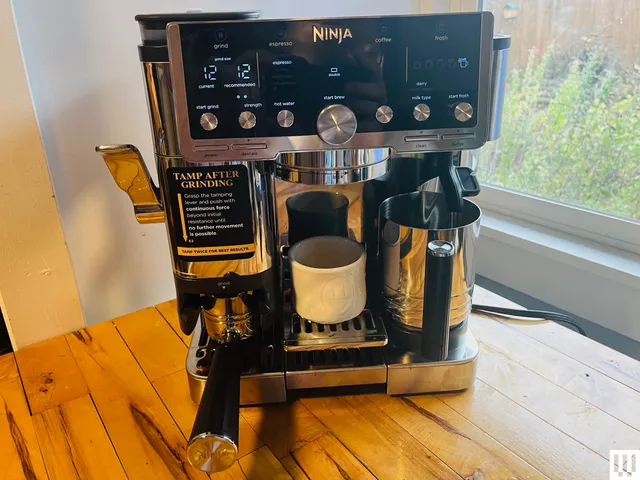
The operational and financial case for automating commercial coffee service has become increasingly clear across every business format that serves beverages at meaningful volume. Manual preparation methods introduce variability, require skilled labour, and create service speed constraints that become costly under sustained demand. Electric coffee machines remove these limitations by replacing manual inputs with consistent, automated processes that produce reliable output at scale. For procurement teams evaluating beverage infrastructure as part of a broader facilities or hospitality investment strategy, the shift to electric equipment represents a structural improvement in both operational efficiency and long term cost control that repays the investment across every year of the machine’s working life.
Understanding how electric systems deliver this value, and which specific variables determine the return on investment for a given business format, is the foundation of a procurement decision that performs throughout the full equipment lifecycle.
Automation and Its Effect on Operational Cost Structures
The financial advantage of electric coffee machines in commercial environments flows directly from automation. Programmable extraction parameters, automated milk systems, and self cleaning cycles reduce the skill level required to deliver consistent output across every service shift. This directly lowers the labour cost per cup by reducing dependence on trained baristas for standard beverage production. Staff freed from repetitive manual preparation tasks can focus on higher value customer interactions and service activities that require genuine expertise and judgment, improving the productivity return on the business’s labour investment.
Businesses deploying electric coffee machines across commercial service operations can explore a purpose built range of electric coffee machines engineered for demanding output volumes, built to sustain consistent performance across high daily cycle counts without degradation in brew quality or machine reliability over time.
Consistency as a Revenue Protection Mechanism
In commercial food and beverage settings, output consistency is not merely a quality standard. It is a revenue protection mechanism. A customer who receives a well prepared beverage on multiple consecutive visits and an inconsistent one on a subsequent occasion experiences a service failure with measurable commercial consequences, including reduced return visit frequency, negative review activity, and weakened brand perception over time. Electric coffee machines with programmable recipe management eliminate this variability by holding extraction parameters constant regardless of operator experience or shift timing.
For businesses operating across multiple sites, the consistency advantage compounds further. Standardised electric systems across locations ensure that the customer experience remains uniform throughout the operational estate, supporting brand integrity and significantly reducing the management overhead associated with maintaining quality standards across different venues and service teams.
Energy Efficiency and Running Cost Reduction
Modern electric coffee machines are designed with energy consumption as a primary engineering consideration. Rapid heat recovery systems, intelligent standby modes, and precise temperature management reduce electricity draw without compromising service readiness or output quality. For businesses running beverage service across extended daily operating periods, the accumulated energy saving from efficient electric systems represents a meaningful reduction in facility operating costs across the full equipment lifecycle. In high volume environments, these savings frequently offset a substantial portion of the acquisition cost over a three to five year operational horizon.
Pairing electric coffee equipment with compatible specialty coffee machines ensures that the broader beverage service infrastructure performs to a consistent commercial standard, delivering a coherent service offering across every drink category on the menu.
Selecting Electric Equipment for Long Term Commercial Performance
Commercial electric coffee machine selection should reflect the actual operational demands of the specific business format. Daily cup volume, menu complexity, staff skill profile, available service space, and supplier service terms all belong in the evaluation framework. Procurement decisions that account for each of these variables produce equipment investments that deliver consistent operational returns from the first day of service through to the end of the machine’s working life. Electric coffee infrastructure chosen with this level of analytical discipline is a capital investment in operational reliability that reduces cost, protects revenue, and builds the service consistency that competitive commercial operations depend on.
