Over the last few years, the digital marketing landscape has experienced a monumental shift. The widespread adoption of large language models has completely redefined how agencies, in-house marketers, and freelance writers approach content production. Tasks that once took days—such as drafting comprehensive blog posts, building email sequences, or outlining landing pages—can now be executed in mere seconds.
However, this unprecedented surge in productivity has introduced a complex new challenge: the rapid dilution of online quality. As the internet becomes flooded with mass-produced, synthesized articles, both search engine algorithms and human readers are evolving to filter out the noise. In today’s highly competitive digital ecosystem, merely generating text is no longer a viable strategy for long-term growth.
The Algorithm’s Response to “Robotic” Writing
Search engines like Google have always prioritized the end-user experience. With the continuous rollout of core updates focusing on “Helpful Content,” algorithms are now explicitly designed to reward experience, expertise, authoritativeness, and trustworthiness (E-E-A-T).
When content teams rely exclusively on raw, unedited machine output, they typically produce articles that are grammatically flawless but structurally monotonous. This type of text tends to lack personal anecdotes, varied sentence pacing, and the nuanced emotional resonance that stems from real-world experience. When algorithms detect these predictable linguistic patterns, the content is frequently categorized as low-value. The resulting penalty is severe: plummeting search visibility and drastically reduced organic traffic.
To protect their rankings and maintain reader engagement, modern content strategists are realizing that intervention is necessary. They must actively implement protocols to humanize ai drafts, ensuring that the final published piece reads with the empathy, insight, and conversational nuance of a genuine industry expert.
The Psychology of Reader Trust
Beyond SEO metrics, the true cost of robotic content lies in consumer psychology. When a potential customer lands on a website to read a product review, a B2B case study, or a thought-leadership article, they are consciously or subconsciously looking for a human connection. They want to know that someone with actual experience has vetted the information.
If a paragraph reads like a sterile encyclopedia entry—relying on a repetitive cadence and an endless loop of generic transitions—the reader’s immersion is broken. This is why producing undetectable ai text has become a critical benchmark for top-tier digital agencies. The objective is not to deceive the audience, but rather to eliminate the mechanical phrasing that causes a reader to lose interest. By smoothing out these predictable loops, the brand’s core message remains the focal point, ensuring that trust is established and maintained.
Scaling Quality: The Modern Editorial Workflow
Recognizing the need for authentic writing is only the first step. The operational dilemma for marketing teams is how to achieve this high standard without sacrificing the efficiency that automated tools provide. Manually rewriting hundreds of machine-generated articles entirely defeats the purpose of adopting automation in the first place.
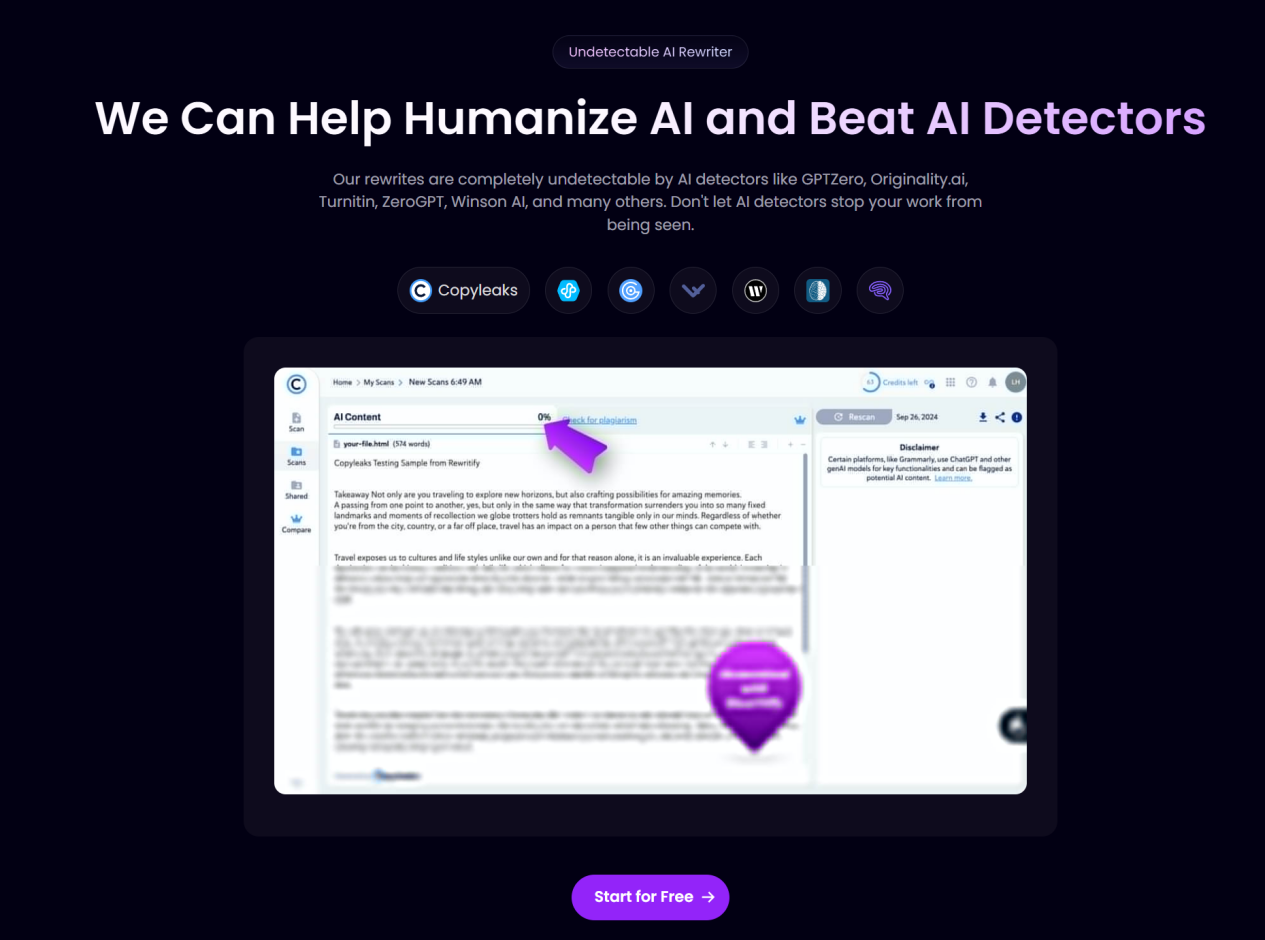
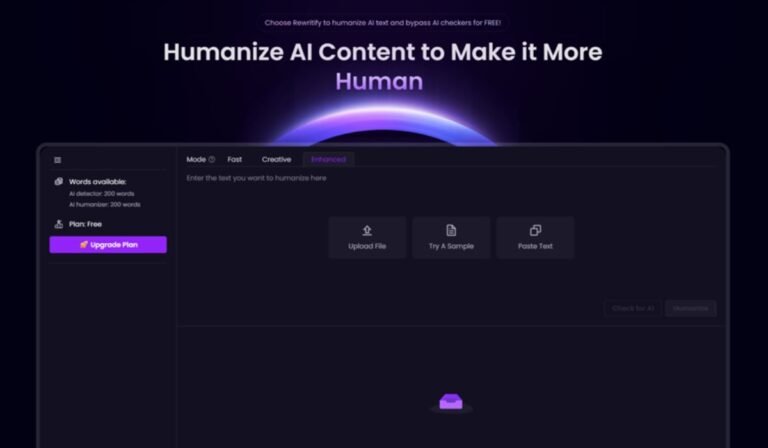
To overcome this bottleneck, the industry is seeing a shift toward specialized text-refinement workflows. Instead of relying on basic grammar checkers, professionals are integrating advanced structural editors into their content pipelines. For instance, when editors need to restructure rigid drafts efficiently, utilizing specialized platforms like humanize ai-rewritify.ai has emerged as a practical industry standard.
Rather than serving as a simple thesaurus, this type of technology is specifically engineered to analyze the structural predictability of an initial draft. It reworks the phrasing to mimic the unpredictable, engaging rhythm of a human copywriter, allowing teams to transform a sterile factual summary into a persuasive, natural narrative without hours of manual labor.
Conclusion: The Hybrid Future of Content
The most successful marketing campaigns moving forward will not be written entirely by humans staring at blank screens, nor will they be produced entirely by algorithms left unchecked. The winning formula is a sophisticated hybrid approach.
By leveraging the speed and data-processing capabilities of modern technology to build a strong foundation, and subsequently using advanced refinement techniques to protect the brand’s unique voice, marketers can scale their operations sustainably. Ultimately, the content that dominates search engine results and builds lasting brand loyalty will always be the content that feels undeniably human.