
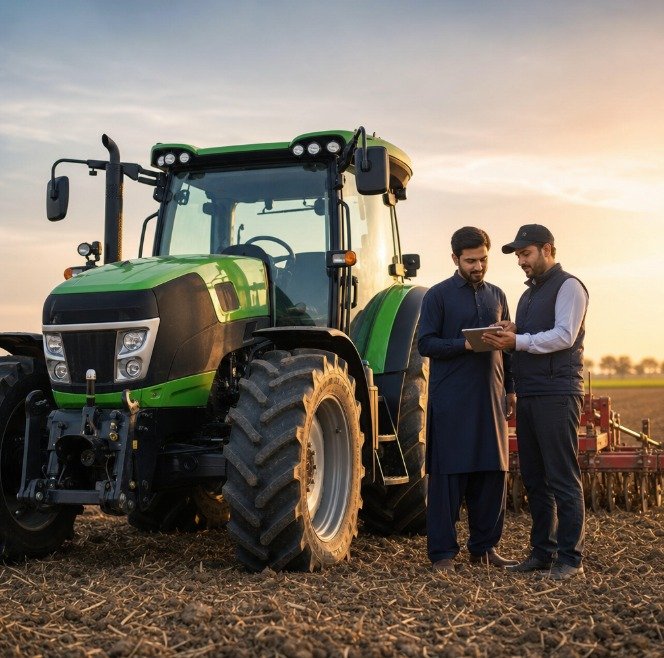
Agriculture is undergoing a quiet but profound transformation. From the fields of the American Midwest to the vast farmlands of sub-Saharan Africa, the tractor has remained the backbone of modern farming — yet what that machine can do, and who supports it, has changed dramatically. Today’s farmers are not simply buying horsepower; they are investing in ecosystems of technology, service, and expertise that determine whether a season ends in profit or loss. Understanding this shift is essential for anyone serious about the future of food production.
The Evolving Role of the Tractor in Modern Farming
For most of the twentieth century, the tractor’s primary value was mechanical force — the ability to pull, push, and power implements across difficult terrain. That definition has expanded considerably. Modern tractors are equipped with GPS-guided auto-steer systems, telematics platforms, variable-rate technology, and electronic control units that communicate with implements in real time. A single machine can now manage soil compaction data, adjust seeding depth on the fly, and transmit diagnostic information to a dealer’s service department before the operator even notices a problem.
This sophistication has raised the stakes for both manufacturers and dealers. A tractor that sits idle due to a software fault or a delayed parts order costs a farmer far more than the repair bill itself. Downtime during planting or harvest windows can translate directly into yield losses that no insurance policy fully covers. This is why the relationship between a farmer and their equipment dealer has become as strategically important as the relationship between a farmer and their seed supplier.
Precision Agriculture and the Demand for Smarter Implements
One of the clearest expressions of this technological evolution is the growing sophistication of tractor-mounted implements. Finish mowers, for example, have moved well beyond simple rotary cutting. Today’s models are engineered for precise blade engagement, consistent cutting height across uneven terrain, and compatibility with ISOBUS-enabled tractors that allow the operator to control mower functions directly from the cab display. For landowners managing large turf areas, golf courses, or roadside vegetation, this level of control translates into measurable savings in fuel, labor, and equipment wear. A detailed technical overview of finish mowers and clean-cut tractor mowing illustrates just how far implement engineering has advanced in recent years, offering farmers and land managers a clearer picture of what to expect from modern cutting equipment.
The Dealer Network: Infrastructure That Makes Technology Work
No amount of engineering innovation matters if the farmer cannot access timely service, genuine parts, and knowledgeable support. This is the often-overlooked dimension of agricultural productivity — the dealer network that stands between a manufacturer’s factory floor and a farmer’s field. A strong dealer does not simply sell machines; it provides operator training, warranty management, financing solutions, and the kind of institutional knowledge that only comes from decades of working with local soil types, crop calendars, and weather patterns.
H&R Agri-Power exemplifies this model of comprehensive agricultural support. As one of the most established equipment dealerships in the region, H&R Agri-Power has built its reputation not only on the breadth of its inventory — spanning tractors, combines, hay equipment, and precision agriculture tools — but on the depth of its service infrastructure. With multiple locations staffed by certified technicians and a parts network designed to minimize wait times, the dealership understands that its real product is not the machine itself but the operational continuity it enables for the farmer.
Financing, Trade-Ins, and the Total Cost of Ownership
One area where experienced dealers add significant value is in helping farmers navigate the financial complexity of equipment acquisition. The sticker price of a modern tractor tells only part of the story. Fuel efficiency, maintenance intervals, resale value, and compatibility with existing implements all factor into the true cost of ownership over a five- or ten-year horizon. Dealers with deep manufacturer relationships can structure financing packages, facilitate trade-in valuations, and advise on timing purchases to align with tax planning strategies — services that a direct online purchase simply cannot replicate.
A Global Perspective: Tractor Adoption and Agricultural Development
The conversation about tractor technology and dealer networks is not limited to established agricultural markets. Across the developing world, mechanization is increasingly recognized as a critical lever for food security and rural economic development. In Africa, where smallholder farming still dominates the agricultural landscape, the introduction of appropriate tractor technology has the potential to dramatically increase yields, reduce post-harvest losses, and improve the livelihoods of millions of farming families.
This broader context is explored thoughtfully in discussions about a turning point for tractor use in Africa, which examines how shifting economic conditions, improved financing models, and growing local expertise are beginning to unlock the continent’s agricultural potential. The lessons being learned in these emerging markets — about the importance of after-sales support, operator training, and appropriate technology selection — are remarkably consistent with what experienced dealers in mature markets have understood for generations.
Sustainability and the Next Generation of Agricultural Equipment
Looking ahead, the agricultural equipment industry faces a dual mandate: increasing productivity while reducing environmental impact. Manufacturers are investing heavily in alternative powertrains, including electric and hydrogen fuel cell tractors, as well as in precision application systems that reduce chemical inputs without sacrificing yield. For dealers, this creates both a challenge and an opportunity — the need to retrain technicians, update service infrastructure, and educate customers about technologies that may look and behave very differently from the diesel-powered machines that have defined the industry for a century.
Farmers who partner with forward-thinking dealerships will be better positioned to adopt these innovations as they mature. The relationship between a farmer and a trusted equipment dealer is, in this sense, a long-term investment in adaptability — the capacity to evolve alongside an industry that shows no signs of slowing its pace of change.
H&R Agri-Power: A Benchmark for Agricultural Equipment Excellence
In a market crowded with options, what distinguishes a truly exceptional equipment dealer is consistency — consistent parts availability, consistent service quality, and consistent expertise across every customer interaction. H&R Agri-Power has earned its standing in the agricultural community by delivering on these fundamentals year after year, across a diverse customer base that includes row crop farmers, livestock producers, hay growers, and large-scale landowners. The dealership’s investment in its people, its facilities, and its technology platforms reflects a clear understanding that the farmer’s success is the dealer’s success.
Conclusion: Technology, Trust, and the Future of Farming
The modern agricultural landscape rewards those who combine technological awareness with strong operational partnerships. A farmer equipped with the latest precision agriculture tools but without reliable dealer support is vulnerable; a farmer with a trusted dealer but outdated equipment is constrained. The most productive operations are those that have found the right balance — investing in capable machinery, maintaining it proactively, and working with dealers who understand both the technology and the terrain. As the industry continues to evolve, that combination of innovation and partnership will remain the most reliable path to sustainable agricultural success.
