
Introduction
Across the United States, large lawns, parks, sports fields, estates, and acreages need to be kept neat, and doing that by walk-behind mower is impractical at scale. A finish mower attaches to a tractor and delivers a clean, even cut over wide areas in a single pass. Landscapers, municipalities, golf courses, and rural property owners use these implements to maintain turf that is meant to look groomed rather than simply cleared.
What a Finish Mower Is
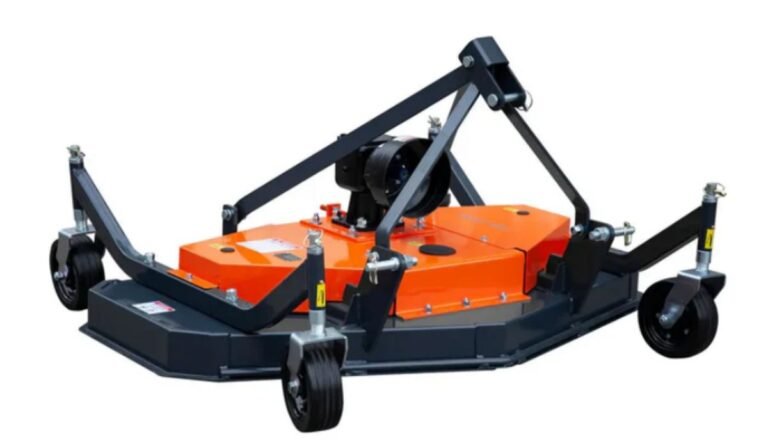
A finish mower is a powered cutting implement that produces a smooth, level result on maintained grass. It is built for turf that is already established and kept short, where appearance matters. The deck houses several blades that spin at high speed, and the cut clippings are discharged to the rear or the side. The outcome resembles the cut of a dedicated lawn mower, but over a much wider path.
How It Works
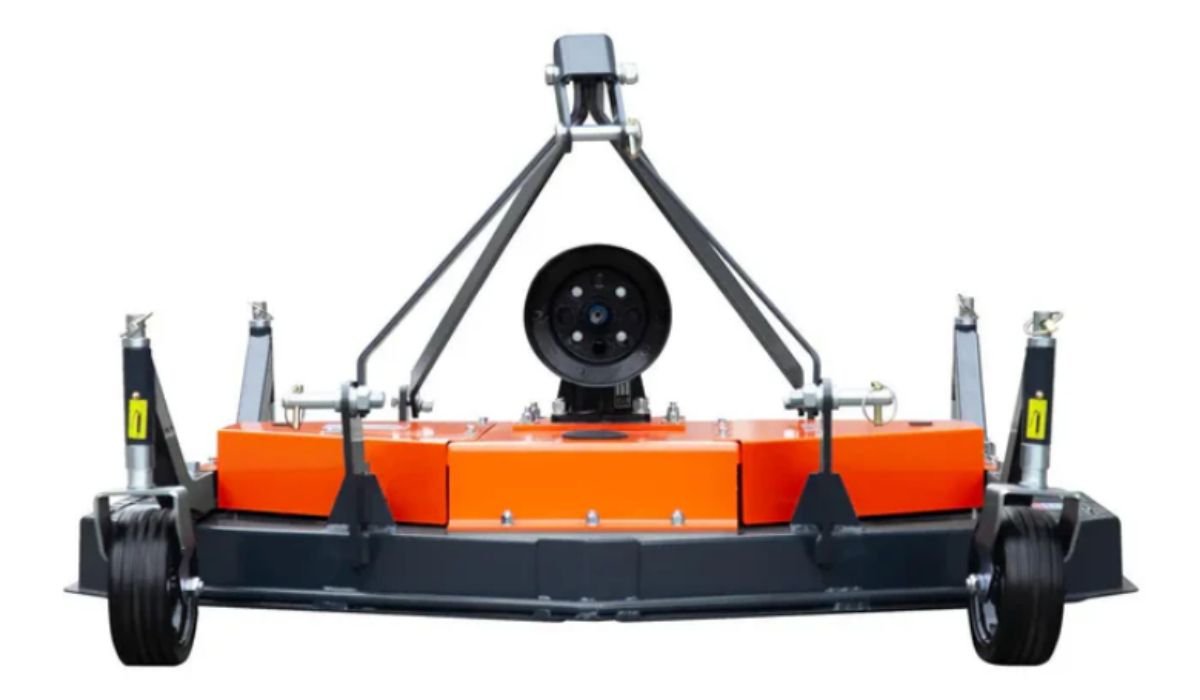
The mower mounts to a tractor’s three-point hitch, which carries and lifts it, and draws power from the tractor’s power take-off, or PTO. A driveline transfers rotation from the PTO to a gearbox on the mower, which spins the blades beneath the deck. Because the power comes from the tractor rather than a separate motor, the implement itself is relatively simple. Raising the hitch lifts the deck for transport.
Finish Mower Versus Rough-Cut Mower
It helps to distinguish this tool from a rough-cut mower, sometimes called a brush hog. A rough-cut mower uses heavy blades to clear tall weeds, brush, and saplings, leaving a coarse result. A finish mower uses lighter, faster blades and a closer deck to cut established grass cleanly and evenly. Running it through heavy brush can damage the machine, while using a rough-cut mower on a lawn leaves a ragged, uneven finish.
Cutting Height and Deck
Cut height is set by adjusting the deck relative to the ground, often using gauge wheels or hitch settings. A level deck is important, since one that tilts will cut unevenly and may scalp high spots. The gauge wheels also help the deck follow the contour of the ground and reduce gouging on uneven terrain. Setting an appropriate height for the season and grass type keeps the turf healthy and the finish even.
Matching to the Tractor
A finish mower must suit the tractor that powers it. The implement is rated for a range of PTO horsepower and a hitch category, and the deck width should match the tractor’s size and the area to be mowed. An oversized deck on a small tractor can overload the PTO, while a narrow deck on a large tractor wastes time. Matching width, power, and hitch category is the starting point for safe, efficient operation.
Common Uses
Finish mowers serve many maintained-turf settings:
- Parks, campuses, and public grounds
- Sports fields and recreation areas
- Estates, acreages, and large lawns
- Roadside verges and commercial landscapes
- Orchards and other open, grassed land
Safety Considerations
A finish mower combines a rotating driveline with fast-spinning blades, so the hazards are real, and the points below are general guidance rather than a substitute for the manufacturer’s instructions and proper training:
- Keep all PTO and driveline guards in place
- Stop the PTO and engine before inspecting or clearing the deck
- Keep bystanders well clear, since the blades can throw objects
- Take extra care on slopes, where a tractor can overturn
- Disengage the blades when crossing gravel or hard surfaces
Maintenance
Routine care keeps a finish mower cutting cleanly. Blades should be kept sharp and balanced, since dull or bent blades tear the grass and strain the machine. Drive belts and the gearbox oil need periodic checking, and the driveline joints require greasing on the schedule the manufacturer sets. Clearing packed grass from under the deck after use reduces corrosion and keeps airflow around the blades for a cleaner cut.
Advantages and Limitations
Advantages:
- Cuts wide areas of turf cleanly in one pass
- Uses the tractor’s power, so the implement stays simple
- Adjustable cut height suits different grass and seasons
- Lifts on the hitch for easy transport
Limitations:
- Requires a suitable tractor with a PTO
- Not built for heavy brush or saplings
- Rotating driveline and blades demand careful handling
- Wide decks need open space to maneuver
Industry Outlook
As demand for well-kept public and private grounds continues, tractor implements such as finish mowers remain a staple of professional and rural property maintenance. Manufacturers are refining deck design, blade systems, and driveline guarding. Buyers should match the deck width, hitch category, and PTO requirement to their tractor and the area they maintain, since an implement chosen for a compact tractor will not suit a large machine, and the right pairing protects both the equipment and the operator.
