
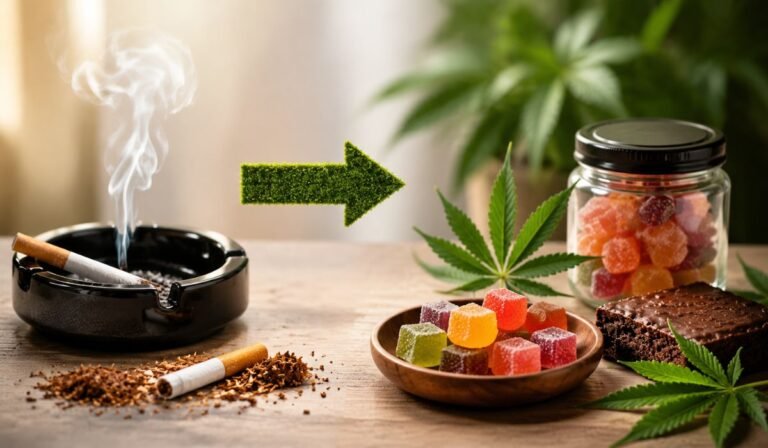
When individuals who are used to smoking marijuana try edibles, they typically believe that their built-up tolerance will be a safeguard. Unfortunately, that’s not the case. The reality is that the two processes are biologically different, and knowing that distinction can mean the difference between an enjoyable switch and an uncomfortable couch-bound afternoon.
The liver changes everything
When you smoke weed, a psychoactive compound called Delta-9-THC enters your bloodstream directly through your lungs. It generally takes a few minutes to feel the effects. But, when you eat marijuana, this same compound takes an entirely different path. Your body first processes the compound through your digestive tract, where it’s absorbed and then sent to the liver before entering your bloodstream.
This extra step in your liver is important. It converts Delta-9-THC into 11-hydroxy-THC through a process known as first-pass metabolism. This metabolite is not only more potent but also crosses the blood-brain barrier much more effectively than the THC you inhale. The result is a much more intense, longer-lasting high that’s more likely to also morph into a deeply disorientating, nauseating, experience often punctuated with cold sweat and walks around the block.
Aside from the liver’s work in creating that metabolite, there’s also the question of bioavailability. When you smoke weed, about 30% of the available cannabinoids in the marijuana actually make it into your system. When you eat it, 4-20%, depending on your metabolism and what else is in your belly, make it through. The catch is that what does get through is already converted into that more powerful metabolite – so the lower delivery rate doesn’t soften the experience the way you’d expect.
Start lower than you think you should
The recommended dosage is 10 mg. Disregard that guideline if you are completely new to edibles regardless of your smoking habits. Start with 2.5 mg to 5 mg. This isn’t just for low-tolerance people. It’s a tool to cue you into your metabolism’s relationship with 11-hydroxy-THC, how long you need to wait for it to come on, and how long it lasts. You can’t gather all those facts from your first edible by eating, say, 10 or 20 mg’s worth, and having a miserable time and never eating edibles again.
The two-hour rule is non-negotiable: Once you have consumed an edible, do not even remotely consider consuming more for at least two hours. Orally ingested cannabis, the clinical guidelines of the American Journal of Public Health advises, has an onset of 30 to 90 minutes, with peak effects at 2 to 3 hours. Inhaled cannabis has a peak of within 30 minutes, to contrast. Guess what leads to most overconsumption? Someone takes a dose, feels nothing after 45 minutes, and takes another dose. Then they both hit. Set a timer.
What you eat affects what you feel
What you have in your stomach specifically does impact how edibles hit you. For instance, if you have nothing else in your stomach, it will hit you quicker – which isn’t always a good thing, as some people get hit with sudden nausea from the edibles before the high. If you want to avoid that, it’s sometimes enough to just have a snack that includes some beneficial fats like avocado, nuts, and olive oil before consuming as fat content in the stomach enables better absorption of cannabinoids, including THC. It also eases you into the high in a far more pleasant and manageable way, and creates a similar high regardless of whether you have taken the edible before or just had a large meal.
Choosing the right product
Edibles aren’t created equal. The majority of what is commercially available is produced using THC distillate, an isolated, refined version of THC which lacks the terpenes and minor cannabinoids found in cannabis flower. Though these distillate edibles are effective, the high feels flat at times and overly paranoid to consumers of flower.
Edibles that are full-spectrum or made from solventless hash rosin retain the terpene profile and complete cannabinoid spectrum of the plant, approximating the entourage effect of flower, where the interplay of cannabinoids and terpenes results in a more nuanced, multi-dimensional high than a flat, direct dose of THC.
If your goal is to maintain as close to the same experience as possible when making the edible leap, seek out full-spectrum or rosin edibles. Another route is to combine your THC with higher doses of cannabidiol (CBD). CBD reduces anxiety and partially negates the effects of THC. This can be helpful for smokers in transition, as they try to emulate their dosing strategies without incinerating plant material.
When stocking up on edibles for the first time, it’s always best to gather products that are clearly labeled, accurately dosed, and lab-tested. You can check out their cannabis products to find options across flower, concentrates, and infused formats that suit different transition approaches.
One alternative worth knowing
If you want to experience the effects more quickly than edibles but would rather avoid lung irritation from smoking or vaping, you can try sublingual absorption. This involves absorbing the cannabis directly into your bloodstream via the many blood vessels found under your tongue. Tinctures or strips can be held there for a minute or two for absorption. The effects usually start in 15 to 45 minutes, and while less intense than edibles, they can be quite long-lasting. This reflects the low 11-hydroxy-THC conversion compared to ingested cannabis, resulting in milder, more predictable effects.
Making the transition stick
Those who smoke and then have a negative experience when eating an edible usually make two mistakes: they dosed based on their inhalation tolerance, and they didn’t give it time to kick in. Both mistakes can be easily avoided with some preparation. Stick to the schedule, start with 2.5 mg, eat something fatty beforehand, and if you can, use a full-spectrum product. The high is not truly “stronger”; it’s simply accessed in a different way. But potencies are harder to gauge than with smoking, so yes, most people end up too high at least once.
