
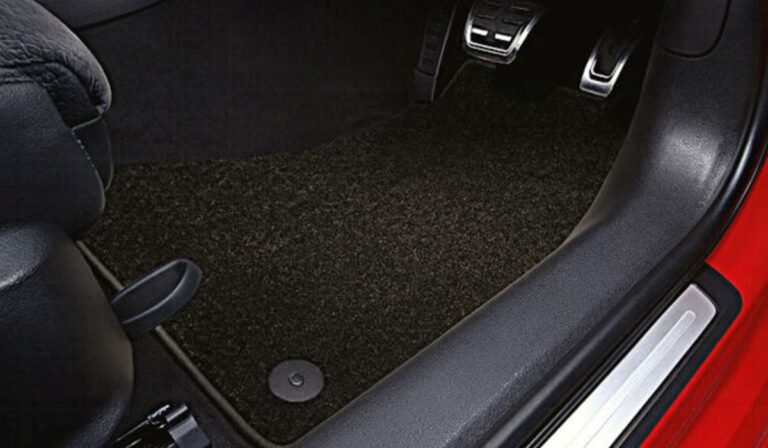
Most of us rarely think about our car mats until they’re worn out, soaking wet or sliding around beneath the pedals. They’re one of the hardest-working parts of any vehicle’s interior, yet they’re also one of the easiest to overlook.
Years ago, Jeremy Clarkson, the journalist, television presenter and host of Top Gear, questioned why cars have carpets in the first place. If they’re only going to get muddy and wet, he argued, why not simply leave the metal floor exposed?
It’s an amusing observation – but it also highlights why car mats exist.
Manufacturers fit carpets to improve comfort, reduce road noise, provide thermal insulation and create a more refined interior. Floor mats are there to protect that investment, absorbing the daily wear that would otherwise damage the vehicle’s original carpeting.
Protection Beyond Appearance
Most drivers associate floor mats with muddy shoes or rainy days, but everyday wear begins much earlier than that. Dust, fine grit and tiny stones carried into the vehicle on footwear act like abrasive particles, gradually wearing away at the vehicle’s original carpet.
The driver’s footwell is particularly vulnerable. Constant movement between the accelerator, brake and clutch pedals creates a concentrated area of wear that eventually leaves permanent marks in the factory carpet if left unprotected.
This is where quality tailored car mats make a real difference. They’re designed to absorb this daily punishment instead. When they eventually become worn, they can simply be replaced, leaving the vehicle’s original flooring largely untouched.
Safety Matters
The condition and fit of your car mats isn’t simply about appearance. Poorly fitting mats can move beneath the pedals, while worn heel pads or curled edges may interfere with normal driving.
For this reason, it’s always worth replacing damaged mats and choosing products designed specifically for your vehicle.
Tailored mats that use the vehicle’s factory fixing points help keep everything securely in place.
Comfort Every Day
A well-maintained interior can make a noticeable difference when it comes to selling or part-exchanging a vehicle. Prospective buyers often judge a car by its overall condition, and worn, stained or damaged carpets can quickly create the impression that the vehicle has been neglected.
Replacing a tired set of floor mats is relatively inexpensive, while replacing factory carpeting is considerably more costly and, in many cases, impractical.
Protecting the original carpet throughout the life of the vehicle helps preserve the cabin’s appearance and can contribute to stronger resale appeal in the future.
Carpet or Rubber?
There’s no universal answer.
Rubber mats are ideal for drivers who regularly deal with mud, snow, wet weather or demanding working environments.
Carpet mats, meanwhile, remain the popular choice for everyday driving, offering a smarter appearance while still protecting the vehicle underneath.
The best option often depends on how you use your car rather than which material is considered “better.”
Why Universal Mats Often Fall Short
Universal floor mats are designed to fit as many vehicles as possible, which inevitably means they compromise on fit. Gaps around the edges may leave sections of the original carpet exposed, while poorly shaped mats can move during everyday driving or interfere with factory fixing points.
Tailored mats are manufactured specifically for individual makes, models and production years. This allows them to follow the contours of the vehicle’s floor more accurately, providing better coverage and a neater, factory-fitted appearance.
For modern vehicles, where floor shapes and fixing systems often vary between model generations, choosing the correct tailored set has become increasingly important.
Why Tailored Mats Make Sense
Every vehicle floor is different. Even different generations of the same model can have different floor shapes, fixing systems or pedal layouts.
That’s why tailored mats generally provide better coverage, improved safety and a more finished appearance than universal alternatives.
Taking a few moments to identify the correct make, model and production year before ordering can save considerable frustration later.
Final Thoughts
Car mats may seem like a small detail, but they perform several important jobs at once.
They protect the original interior, improve comfort, help maintain the vehicle’s value and provide a safer, more secure fit beneath the pedals. It’s a simple accessory that quietly performs one of the hardest-working jobs inside every vehicle.
After more than a decade supplying tailored car mats to motorists across the UK, one thing has become clear:
The best car mats aren’t simply an accessory – they’re one of the simplest ways to protect one of the hardest-working parts of your vehicle.
Whether it’s car mats for a brand-new electric vehicle or a family car that’s been on the road for twenty years, every vehicle deserves protection that’s designed to last.
Jeremy Clarkson once joked that cars would be easier to clean without carpets at all. In reality, manufacturers install carpets because they improve refinement, reduce noise and make the cabin more comfortable. Floor mats exist to protect that investment, quietly absorbing years of daily wear so the original interior doesn’t have to.
