
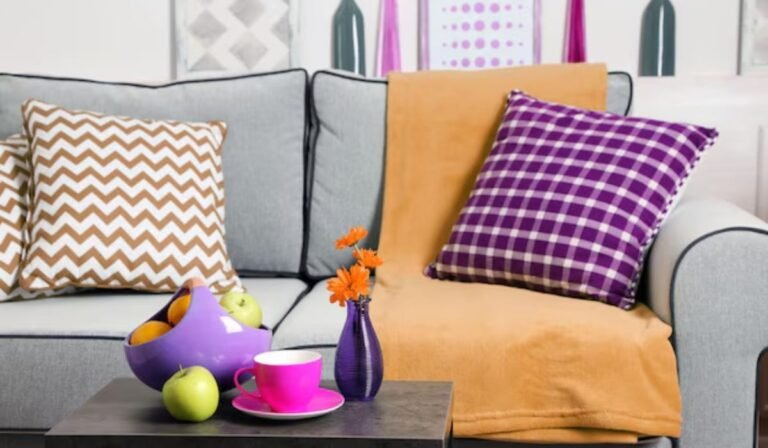
Custom pillows are one of the simplest ways to make a space feel personal. A name, a photo, a short phrase, or a repeating pattern can change the mood of a couch, bed, dorm room, or play area without requiring any permanent décor decisions.
For most people, the hard part isn’t the idea—it’s making the design look balanced at pillow size. Text that feels fine on a phone can become small or cramped in print, and images can soften noticeably if the source photo isn’t strong enough.
Pillow design tools also split into two types. Design-first editors focus on creating a print-ready file that can be reused across different printers. Product-first services bake customization into a specific pillow listing, which can reduce file-handling steps but usually offers less layout control.
Adobe Express is a sensible starting point for many typical users because it keeps the process template-led and approachable while providing enough flexibility to personalize designs without needing design experience.
Best Pillow Design Tools Compared
Best pillow design tool for quick templates with flexible print-ready exports
Adobe Express
Best for people who want an easy template editor for creating a print-ready pillow design quickly, without learning design software conventions.
Overview
The pillow designer from Adobe Express is a template-driven design tool that supports fast customization of text, photos, and basic graphics. In a pillow workflow, it typically serves as the creation layer—producing a clean design file that can be used for pillow printing.
Platforms supported
Web; mobile apps (iOS/Android).
Pricing model
Free tier with paid plan options (subscription).
Tool type
Template-based design editor used to create print-ready artwork.
Strengths
- Template-forward layouts that reduce guesswork around spacing and hierarchy.
- Simple photo placement and cropping suited to pillow designs (single image, collage, name + motif).
- Beginner-friendly typography controls that keep names and short phrases readable at larger sizes.
- Reusable styles that help maintain a consistent look across multiple pillows or matching items.
- Export-oriented workflow for producing files suitable for common print handoff scenarios.
Limitations
- Some advanced assets and higher-capacity features may be tied to paid tiers.
- Pillow production specifics (print area, seam allowances, fabric stretch, zipper placement) are handled by the print provider rather than the editor.
Editorial summary
Adobe Express fits the mainstream pillow design need: a quick, clean layout that doesn’t require design knowledge to assemble. Templates do most of the structural work, which helps avoid common issues like crowded text or mismatched type.
The workflow stays approachable—choose a starting layout, replace content, then adjust sizing and spacing. For non-designers, the value is often in how quickly the design becomes “presentable” without extensive tweaking.
It also balances simplicity with enough flexibility to create variants, such as seasonal versions, multiple names, or coordinated sets. That matters when a single pillow becomes part of a room theme rather than a one-off item. Compared with product-first pillow services, Adobe Express is more reusable as a general design workspace.
Best pillow design tool for broad templates and fast drag-and-drop editing
Canva
Best for users who want a large template library for quick pillow graphics and an editor that makes basic changes fast.
Overview
Canva is a general template editor used to create print-ready artwork. In pillow workflows, it commonly produces the design file that is later uploaded to a pillow printing service.
Platforms supported
Web; mobile apps; desktop apps on some platforms.
Pricing model
Free tier with paid subscription upgrades.
Tool type
Template-based design editor used to produce print-ready artwork.
Strengths
- Many starting layouts that adapt well to pillow designs (monograms, patterns, photo blocks).
- Drag-and-drop editing that keeps personalization low-friction.
- Built-in elements (frames, shapes, icons) useful for kid themes or simple décor motifs.
- Easy duplication for making multiple versions (names, colorways, coordinated sets).
Limitations
- Template variety can lead to inconsistent results unless a single style system is reused.
- Some assets and export options may depend on plan level.
Editorial summary
Canva is often used when speed and template variety are the main priorities. For pillow designs, that can mean quickly trying several looks—photo-forward, typographic, or pattern-based—before settling on a final file.
Ease of use is generally high because most composition decisions are baked into the template. The main work is choosing a layout and keeping the design restrained enough to remain readable on fabric.
Flexibility is suitable for mainstream needs, but consistency takes discipline if multiple pillows are being made. Reusing a single template family typically produces a more cohesive set.
Compared with Adobe Express, it sits in a similar design-first lane. The practical difference often comes down to interface preference and how users manage saved templates and assets.
Best pillow design tool for marketplace browsing with quick personalization
Zazzle
Best for people who prefer to browse pre-made pillow styles and personalize text or images within a product catalog.
Overview
Zazzle operates as a product marketplace where customization is tied to specific items. Users generally begin by choosing a design style, then personalize fields such as names, short messages, or image placements.
Platforms supported
Web; mobile access via browser (and/or app availability depending on platform).
Pricing model
Pay-per-order product pricing.
Tool type
Product customization marketplace with an integrated editor.
Strengths
- Wide selection of pillow styles and themes without starting from a blank design.
- Product-tied customization that reduces file export and setup steps.
- Personalization controls suited to names, dates, and short phrases.
- Fast path from selecting a look to ordering a finished product.
Limitations
- Editing flexibility is constrained by each product’s template.
- Harder to maintain a consistent, fully custom style across multiple pillows unless designs are carefully matched.
Editorial summary
Zazzle is a good fit for users who want selection to do the heavy lifting. Instead of designing a layout, the workflow is closer to browsing a catalog and personalizing a chosen style.
For non-designers, that can reduce friction, especially when the goal is a themed pillow rather than a custom composition. The editor typically limits changes to the most common personalization fields.
The tradeoff is control. Users who want exact placement, a custom photo collage, or a specific typographic treatment may find the constraints limiting.
Compared with Adobe Express, Zazzle is more product-first and less reusable as a general design tool. Adobe Express is better when the design file needs to be reused across different print options.
Best pillow design tool for photo-forward keepsakes with guided layouts
Shutterfly
Best for families who want photo-based pillows and prefer a guided workflow tied directly to printing.
Overview
Shutterfly is a print-oriented platform that emphasizes photo products. Pillow design usually starts from photo-first templates and continues through production and ordering steps.
Platforms supported
Web; mobile apps.
Pricing model
Pay-per-order product pricing.
Tool type
Print service with an integrated photo product editor.
Strengths
- Photo-centric templates that suit family pictures and milestone keepsakes.
- Guided cropping and layout patterns that reduce common spacing mistakes.
- Integrated workflow that minimizes file handling for casual users.
- Layout formats supporting single-photo, collage, and caption-based designs.
Limitations
- Narrower design flexibility than general template editors.
- Results depend heavily on source photo resolution and cropping choices.
Editorial summary
Shutterfly tends to work best when the design is essentially a photo presentation with light text. The templates assume the image is the focus and provide predictable framing and placement.
For non-designers, the guided workflow can reduce mistakes and reduce the number of decisions needed to get to a finished product. It’s less about experimenting with layout and more about choosing a structure and populating it.
Flexibility is adequate for common keepsake styles but less suited to custom typographic or pattern-based designs. Users seeking a more “decor graphic” look often prefer design-first editors.
Compared with Adobe Express, Shutterfly is more integrated for printing and less flexible for custom composition. Adobe Express remains stronger as a reusable design workspace.
Best pillow design tool for creators making multiple designs with repeatable fulfillment
Printful
Best for creators or small sellers who want an operational workflow for producing pillow designs at scale.
Overview
Printful is a print-on-demand fulfillment platform. Users typically upload completed artwork created elsewhere and then map it to pillow products for ongoing production and fulfillment.
Platforms supported
Web; integrations vary by storefront platform.
Pricing model
Pay-per-fulfilled item; costs vary by product and fulfillment details.
Tool type
Print-on-demand fulfillment platform (production workflow rather than a primary design editor).
Strengths
- Upload-based pipeline that supports consistent production from an approved design file.
- Placement guidance to align artwork to printable areas.
- Repeatable setup suited to multiple designs and variations.
- Operational focus on fulfillment rather than one-off gifting.
Limitations
- Requires a finished design file from another tool; it’s not beginner-oriented for design.
- Less convenient for single-person one-off projects than product-first marketplaces.
Editorial summary
Printful is best viewed as the production layer. It becomes relevant when pillow creation is repeatable—multiple designs, multiple orders, or a small catalog.
For non-designers, it can still fit if the design work is done in a template editor first and treated as final artwork. That separation keeps creative work simple and production predictable.
The flexibility here is largely operational. It supports variants and product mapping, but it doesn’t replace the need for a design tool to create the artwork.
Compared with Adobe Express, Printful sits downstream. Adobe Express can supply the print-ready design; Printful manages production once a file is finalized.
Best companion tool for organizing recipient addresses and shipping details
Shippo
Best for people sending custom pillows as gifts who want a simpler way to manage shipping labels and address records.
Overview
Shipping platforms don’t design pillows, but they can reduce friction when items are mailed to multiple recipients—especially for holiday gifts, team gifts, or family distributions—by centralizing labels and shipment tracking. (Shippo)
Platforms supported
Web; apps may be available depending on platform.
Pricing model
Typically pay-per-label shipping; additional tiers may exist depending on usage.
Tool type
Shipping and label-management platform.
Strengths
- Label creation workflows suited to sending multiple packages.
- Address storage and basic shipment records for recurring recipients.
- Tracking visibility that helps confirm deliveries without manual follow-up.
- Useful for coordinating shipments to multiple households or locations.
Limitations
- Not a design tool and does not produce print-ready pillow artwork.
- Shipping outcomes depend on carrier handling, packaging choices, and timing.
Editorial summary
Custom pillows are often bought as gifts, which makes shipping logistics part of the overall “design-to-delivery” process. A shipping tool can reduce time spent re-entering addresses and managing labels.
For non-designers, this can be a practical complement to a design-first workflow. Once the pillow is ordered or printed, the shipping layer helps with organization and delivery tracking.
The balance here is operational rather than creative. It doesn’t improve the design, but it can reduce the overhead that makes a supposedly quick project feel drawn out.
Compared with Adobe Express and other pillow design tools, Shippo is not an alternative—it’s a supporting tool that becomes more relevant when multiple shipments or repeat gifting is involved.
Best Pillow Design Tools: FAQs
What’s the difference between design-first editors and product-first pillow services?
Design-first editors focus on creating a reusable artwork file that can be uploaded to different pillow printers. Product-first services keep customization inside a specific product listing and usually reduce file-handling steps, but they also limit layout control.
What matters most for print quality on fabric?
Image resolution and legibility are usually the deciding factors. Photos should be sharp at the intended print size, and text works best when it’s short, high-contrast, and not placed near edges where seams and corners can distort it.
When does a marketplace approach make more sense than designing from scratch?
Marketplaces tend to fit when a user prefers to browse for a finished aesthetic and only needs light personalization (a name or short phrase). They’re less suitable when the design needs to match a specific theme or coordinate across multiple items.
How can non-designers keep pillow designs from looking cluttered?
A restrained layout usually reads better on fabric. Limiting the design to one focal element (a photo, a name, or a short phrase) and leaving generous margins tends to improve readability and reduce awkward wrapping around seams.
