
Property prices are usually discussed in numbers. Mortgage rates, transport access, new developments, and rental earnings. Most estate listings sound almost identical now. But buyers are paying attention to different things lately, especially in parts of the UK where housing costs keep climbing while day-to-day life feels less stable.
A neighbourhood can look impressive online and still feel completely lifeless in person. That matters more than developers like admitting.
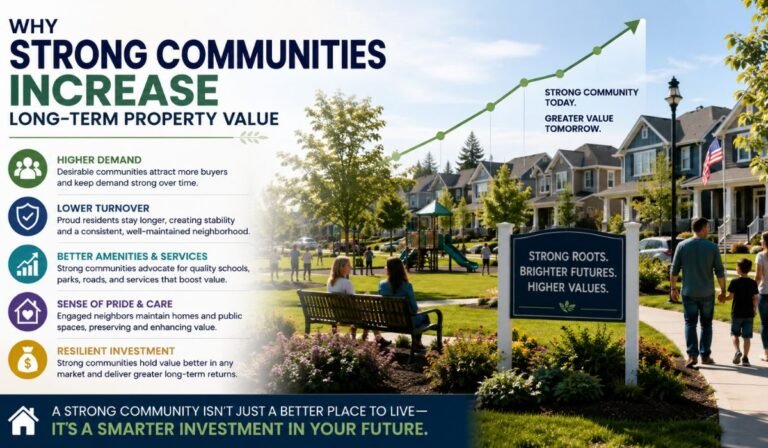
People notice when every shop on the high street changes every six months. They notice when nobody speaks to each other, when local parks are neglected, or when an area feels busy but strangely disconnected. A nice location to live is not always created by expensive residences alone. Strong local communities, on the other hand, typically maintain their value over time because residents really like to and want to live there.
That pattern has become easier to spot after the pandemic. Buyers became far more aware of what daily living actually feels like once work, school, healthcare, and financial pressure all start colliding at the same time.
Community Stability Has Become a Real Selling Point
Long-standing communities in places like Leicester, Birmingham, Manchester, and some areas of East London frequently provide a degree of stability that more recent developments find difficult to match.
For instance, many areas with sizable Sikh or Hindu populations typically have extremely consistent ownership patterns. Homes are often kept within families for years instead of constantly changing hands. Local businesses stay active. Religious centres become part of the wider social structure rather than existing separately from it.
The same applies in many Muslim-majority areas across the UK. Mosques, independent businesses, schools, and local charities often end up creating informal support systems around the neighbourhood. Not in a major way. Mostly through small everyday things that residents gradually rely on without thinking much about it. That kind of stability affects how an area feels. And buyers absolutely pick up on it during viewings, even if they cannot fully explain why one neighbourhood feels more settled than another.
According to the UK Government Levelling Up programme, community engagement and social infrastructure are becoming increasingly important in long-term urban planning discussions across the country.
Strong Communities Usually Recover Faster
There is also a financial side to this that property investors increasingly recognise.
Neighbourhoods with active local communities often handle economic pressure better than disconnected areas. During difficult periods, residents are more likely to support nearby businesses, organise local initiatives, and maintain some sense of stability instead of immediately leaving the area behind. That makes a difference over time.
In many parts of the UK, churches, mosques, temples, and gurdwaras quietly support communities through food banks, youth programmes, elderly care, counselling services, and emergency financial support. Most of this work receives very little attention outside the local area, but residents know it exists.
In several communities, organisations connected to a muslim charity have also supported families facing food insecurity and rising living costs. Similar outreach continues through Christian, Hindu, and Sikh charities across different parts of the country.
None of this suddenly doubles property prices overnight. That is not how housing markets work. But areas where people feel supported tend to keep residents longer. Streets feel more settled. Businesses survive longer. Families feel safer committing to the area. Those things eventually influence demand.
Buyers Want More Than Just New Buildings
A lot of newer developments across the UK look polished at first glance, but some struggle to create any real neighbourhood identity once the marketing phase fades. Everything feels temporary. People move in and out quickly. Ground-floor retail units stay empty. Residents barely know each other beyond passing in lifts or shared parking spaces.
Meanwhile, some older neighbourhoods continue attracting buyers despite having fewer luxury features because the surrounding environment simply feels more established. Reliable local businesses, familiar faces, active community spaces, and cultural events all contribute to that feeling. It is difficult to measure on paper, but buyers respond to it anyway.
Research from RICS (Royal Institution of Chartered Surveyors) has also pointed toward growing interest in community-focused and socially sustainable housing developments across the UK property market.
Property value is no longer shaped only by what sits inside the property boundary. Increasingly, people are paying attention to what happens outside the front door too.
