
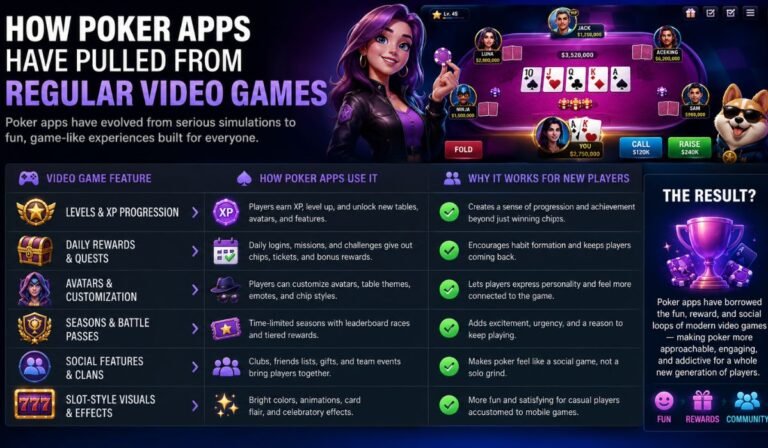
The current generation of poker apps does not look like the early online poker clients that launched in the late 1990s. The lobby has an avatar with cosmetic items. The home screen has a daily mission list with progress bars. The cashier has a loyalty tier with a level number and a progress arc. Most of these elements were lifted directly from free-to-play mobile games and from console live-service titles. The borrowing has been deliberate, and it has worked. New player retention metrics on apps that adopted the full gamification stack run roughly 50% higher than retention on apps that kept a stripped-down lobby. The mechanics below explain how that gap opened.
The Achievement and Daily Mission Layer
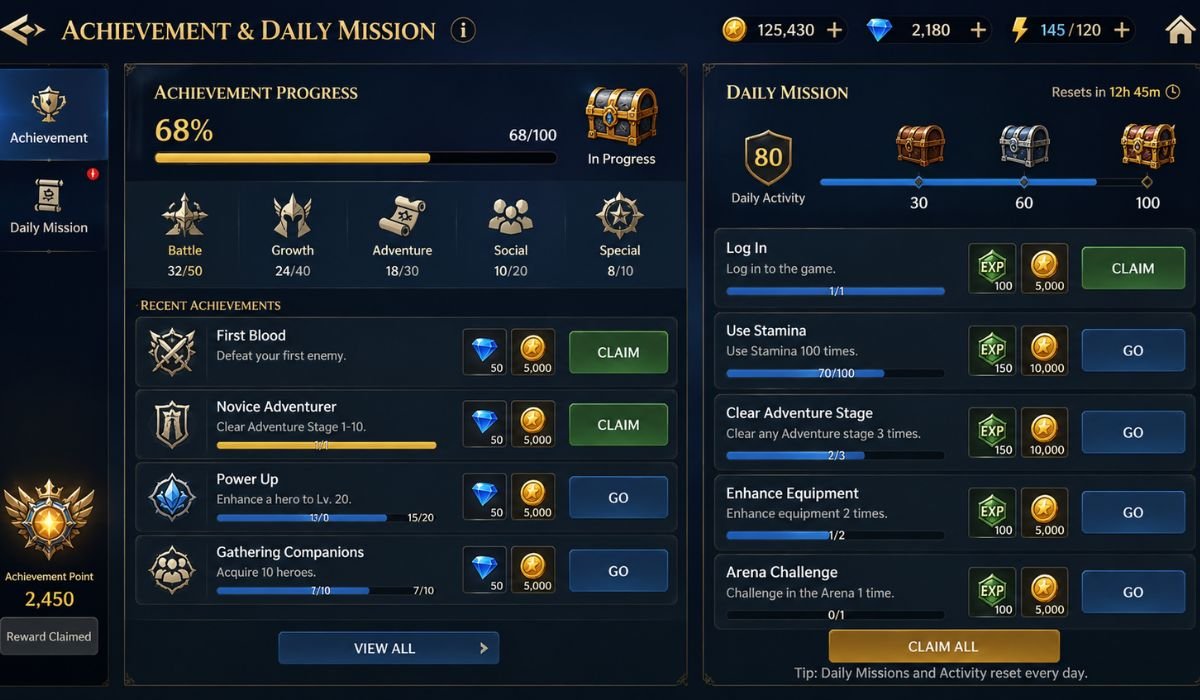
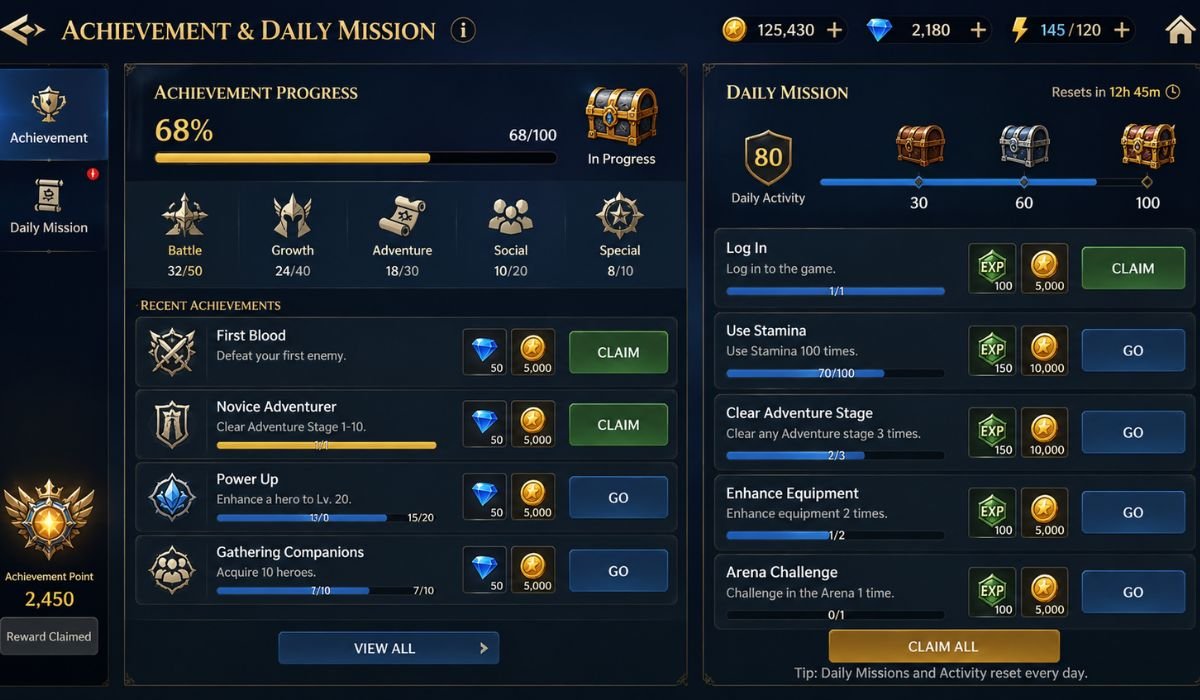
Daily missions are now standard. A typical app delivers three to five missions every 24 hours with specific short-term targets: play 100 hands, hit 10 straights, sit at three different stakes, and win a hand without going to showdown. Each mission has a small reward attached, usually a chip bundle, an avatar item, or a loyalty point allocation. The structure copies the daily quest systems that World of Warcraft normalized and that Fortnite turned into a free-to-play standard.
Achievement systems sit on top of the missions. These track long-term milestones. First royal flush. First final-table win. First ten thousand hands. Each achievement unlocks a badge or title that displays on the player’s avatar. The badges have no in-game function. The display is the function. New players track their visible progress on the avatar more closely than they track their actual bankroll for the first month or two of play.
Avatar Customization and Identity Building
The avatar layer was the second major borrow. Most poker apps now ship a basic avatar editor with face shapes, hair, accessories, and clothing. Premium cosmetics unlock through achievements or through purchase. The fashion choices function the same way they do in Fortnite or Apex Legends. They give the player something to express identity, and they give the player a reason to log back in. The progression mirrors the cosmetic ladder that built Apex Legends and Valorant into multi-billion dollar live-service products. The cosmetic store generates a meaningful share of revenue on the apps that have fully committed to the model.
The avatar also serves a social function. A recognized avatar at the table builds reputation across multiple sessions, which is the same loop that pulls players back into a competitive lobby in any multiplayer video game. The reputation has no rake or bankroll effect, but the social effect is real and measurable in session length.
Leaderboards and Cross-Platform Tracking
Leaderboards rank players across multiple metrics. Hands won. Profit by stake level. Tournament finishes. Weekly missions completed. Most apps now display at least four parallel leaderboards, each refreshing on a different cadence. The structure imports directly from competitive video games, where leaderboards have driven retention since the Halo 2 multiplayer launch in 2004.
The cross-platform tracking that supports the leaderboards is the deeper innovation. A player’s stats and rank now persist across phone, tablet, and desktop. The same identity follows the player wherever the app runs. That continuity is what makes the leaderboard meaningful, because the player feels their progress is permanent rather than session-scoped.
Loot Box Mechanics in Card Reveals
Some apps have layered loot-box style mechanics on top of the basic gameplay. A player completing a mission opens a chest with randomized rewards: a chip bundle, a cosmetic, an emoji pack, a temporary stake bonus. The reveal animation is borrowed almost directly from Overwatch and its original loot box presentation. The variable reward schedule is the most addictive structure in any game design playbook, and most apps have implemented it in some form, sometimes labeled “treasure chest” or “daily reward” rather than loot box because of regulatory scrutiny in some markets.
For a player learning Texas hold’em poker inside one of these casual app environments, the reveal layer functions as a pacing tool that compresses the dead time between hands. The hand math itself remains unchanged. The wrapper around the math now includes the same dopamine triggers that mobile gaming has refined across the last decade.
Battle Pass Structures in Tournament Tracks
Battle passes arrived from Fortnite via every other free-to-play title in the past five years. Most poker apps now run a seasonal track with tiers that unlock as players complete daily and weekly missions. A typical season runs eight to twelve weeks. The free tier delivers basic cosmetics and chip bundles. The paid tier delivers premium cosmetics, expanded daily reward caps, and exclusive avatar items.
The structure works for the same reason it worked in Fortnite. It creates a finite window for collecting specific rewards. Players who would not pay a monthly subscription will pay for a battle pass because the rewards expire when the season ends. The sunk-cost effect drives login behavior for the duration of the season. The apps with the most refined battle pass structures now report player session counts within their pass periods that match the all-time peaks the platforms had previously hit during marquee tournament weeks.
The Stickiness of Normie Players
The cumulative effect of the borrowed mechanics is that the player base has expanded outside the traditional online poker demographic. New players arrive from mobile gaming and from console video games, not from television poker broadcasts. They stay for the missions, the cosmetics, and the social loops, and they pick up the actual poker as a secondary skill. The casual base now subsidizes the cash game economy in a way that was not built into earlier client generations. Apps that have committed to the full mechanic stack are running on a different acquisition model than the apps that have not, and the gap in daily active users between the two groups has widened every quarter since 2022. The next wave of poker apps will keep importing mechanics from whatever live-service video game ships next, regardless of how distant that game’s native audience sits from the traditional online poker player base, and the player base that follows those mechanics will keep arriving without ever having watched a final table on cable.
