
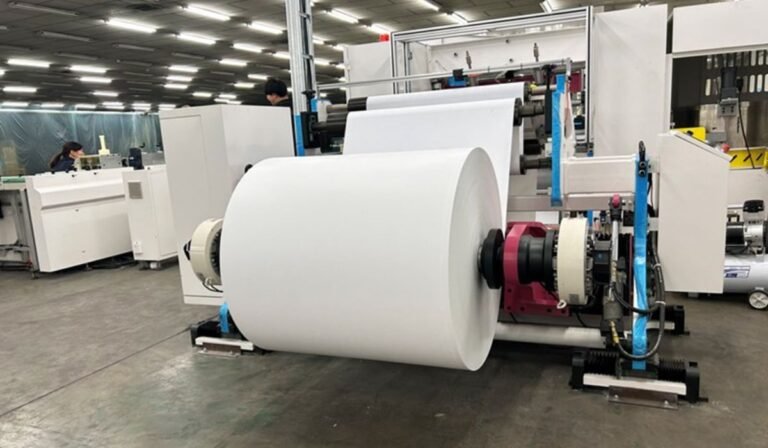
A paper receipt appears to be plain and simple on the outermost level of observation. However, an intricate and careful system was responsible for its production. In the world of rapid commerce, a manufacturer of thermal paper helps ensure sharp, legible, and durable prints. One small, insignificant flaw in the coating or chemistry can negatively impact many, if not all, the paper rolls and can disrupt an entire supply system.
Leading manufacturers treat high quality thermal paper as a specialty engineered product and not a simple, cheap roll of paper. They strive to make the paper as consistent and as durable as possible and designed to perform optimally in the printing process.
The Importance of a Thermal Paper Manufacturer in the Printing Process
A quality thermal paper manufacturer envisions and designs the entire printing process and not just the manufacture of paper rolls. The way thermal paper optimally performs and reacts to the heat of the printing head determines the clarity and legibility of the print.
A quality and reliable manufacturer adequately controls the thermal paper’s heat reaction to ensure that every character print is neither too dark and bold (hyperactive reaction) nor too faded and incomplete (hypoactive reaction). Achieving this balance successfully is the mark of a quality and reliable manufacturer in the thermal paper manufacturing industry.
Base Paper and Raw Material Engineering
The production of quality thermal paper starts with the selection of optimal base paper. A top-tier thermal paper producer utilizes state-of-the-art pulp base materials that lead to smooth, evenly dimensioned, and strong base materials.
Base paper should have the stability to support even coating and consistent reactive heat. In thermal paper, fiber and moisture irregularities may lead to poor print performance. Therefore, before paper production, raw paper stability and reliability should be assessed.
Thermal Coating and Production Core
The application of heat reactive coating is the most crucial part of manufacturing thermal paper. This coating contains chemical components that, upon heat exposure, react and instantaneously create text or images.
Great emphasis is placed on the chemical engineering of the coating to ensure the reactive response is triggered at specific temperature controls. Stable formulations should yield the darkness of print and sustain clarity even with varied printing speeds and various printing devices. Quality demands for control of the chemical formulation of the coating are critical, as even the slightest change can greatly impact the print quality.
Coating Uniformity for Quality Paper
For quality thermal paper, the reaction of the print needs to be uniform for every area. In high-end manufacturing facilities, systems that can precisely coat the thermal layer across the entire surface of the paper are necessary.
Throughout production, sensors check coating thickness and surface uniformity. If any shifts are detected, automatic changes are made to maintain that balance. This guarantees that every print is consistent from the first to the last centimeter of the roll with no streaks or fading.
Heat Sensitivity Control and Printer System Calibration
Each printer operates at different speeds and different levels of heat. Therefore, thermal paper must be calibrated to each printer. A good thermal paper manufacturer tests the thermal paper on different printer systems to ensure the paper is stable.
Such adjustments guarantee that the paper will respond appropriately to the printing process. Inadequate calibration of the thermal sensitivity may result in overly dark or light prints and barcodes that will not print at all. It makes print operations run efficiently.
Durability Enhancement Through Protective Coatings
It is not enough to be able to print a high quality image if that image is not usable because it will fade. A protective topcoat can shield printed documents, effectively shielding them from the elements.
This topcoat provides a protective barrier from moisture and oil, and prevents degradation of the printed information from UV exposure. It also maintains the clarity of the printed information after it has been exposed to the elements. This is very important for the logistics, retail, and healthcare sectors.
Anti-Fade Technology for Long Term Stability
Fading is the most common challenge for thermal printing and can be caused by a number of factors. Leading manufacturers have set out to stabilize the image that is printed through the introduction of anti-fade technology.
This helps ensure the chemical reaction that forms the print remains stable for longer. Depending on quality, thermal prints can last anywhere from months to years while remaining legible. This is important for prints that need to maintain legibility for extended periods of time such as receipts, medical records, and shipping documents.
Multi-Stage Quality Control Systems
A manufacturer of quality thermal paper has a rigorous quality control system that is involved at several stages of the manufacturing process. Each batch is meant to be controlled for quality and for consistency prior to shipment.
Quality control starts at the inspection of raw materials and continues through the application of the coating, testing the heat response, and evaluating the final roll. This layered quality control system ensures that defects are identified early and that only quality products reach the market.
Resistance and Storage Stability
Thermal paper has low resistance and stability to environmental conditions, especially to storage. Design factors of a leading manufacturer take these concerns into consideration. They design their products to sustain the normal daily variations of temperature and humidity in the environment without loss of performance.
They also inform customers of the proper storage conditions where thermal paper should be protected from direct sunlight and exposure to chemicals. Some manufacturers are offering a coating that is more environmentally friendly and reduces chemical impact while still maintaining print quality.
Industry Compatibility and Application Versatility
A modern manufacturer of thermal paper must ensure that their products are compatible with many printing systems that span across different industries. Some of these systems are point of sale systems, thermal printers for barcodes, banking kiosks, and portable printing devices.
Every industry has necessities of their own. Fast and constant printing is a necessity of retail, while logistics require high durability and clarity of barcodes. The stability of records in healthcare illustrates the different requirements that each industry has. These varying requirements trigger product design and testing by manufacturers.
Innovations in Thermal Paper Manufacturing
Thermal papers are in a sector that has more and more innovations going in the direction of performance and sustainability. Stick papers are being engineered so that their coatings are more stable, and the chemicals that are used to coat them are safer, while the paper is designed to last under all conditions and to be more safe and stable in the print environment.
Many of these innovations are designed to make the paper more compatible with high speed and high volume print systems with the least environmental impact. As industries begin to automate more and become more efficient, thermal paper manufacturing is also evolving to be more efficient.
Conclusion
A thermal paper manufacturer instills a degree of assurance that each printed receipt, label or barcode is printed clear, durable and reliable. Through careful selection of raw material, advanced coating technology, quality control and a sustained degree of innovation, thermal paper manufacturing companies are able to produce goods and maintain high standards of performance.
In a consistent and rapid global economy, where businesses and people heavily rely on record keeping and commerce, thermal paper manufacturing companies are producing goods that are allowing businesses to continue operating without disruption.
