
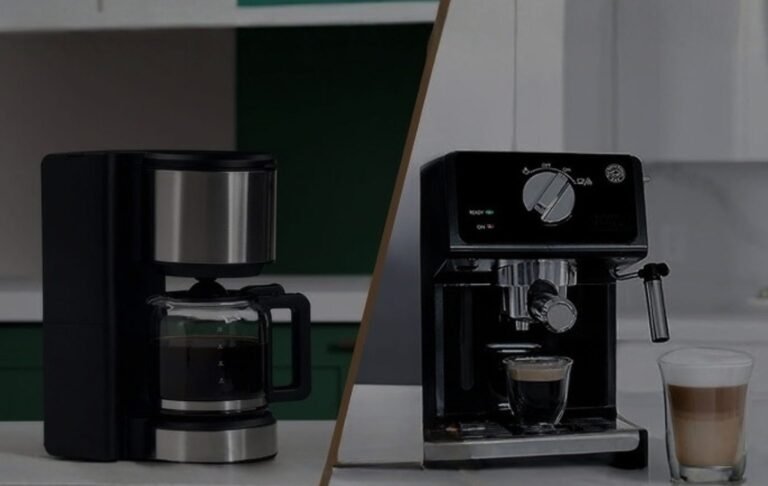
When Indian businesses plan office beverage infrastructure, the choice between an espresso coffee brewer and a standard coffee machine is rarely evaluated with the rigour the decision deserves. Both represent a capital commitment with a multi year operating cost structure, yet most procurement decisions in this category default to familiarity or unit price rather than a structured comparison of operational fit and total return. For finance managers and operations heads responsible for office infrastructure, the correct framing is not which machine makes better coffee. It is which machine delivers better value across its working lifecycle for the specific operating environment it will serve.
What Each Machine Type Is Actually Built to Deliver
Standard coffee machines, whether filter, drip, or pod-based, are engineered for simplicity, low operator skill requirements, and consistent output at moderate throughput. They perform reliably within their design parameters and carry lower acquisition costs that make them attractive for budget-constrained procurement. An espresso coffee brewer, by contrast, is built around pressure-based extraction that produces a higher concentration output per serving, supports a wider range of beverage formats, and typically carries a higher unit price alongside a more demanding maintenance profile. The financial case for choosing between them is not about preference. It is about matching machine capability to the actual demands of the environment where it will operate.
The Total Cost of Ownership Comparison
Acquisition price is the least reliable basis for comparing these two equipment categories. A standard machine purchased at a lower upfront cost may carry a higher consumable cost per cup at volume, particularly in pod-based formats where per-unit consumable pricing significantly exceeds the equivalent cost in bean or ground coffee formats used by most commercial espresso brewers. Over a three year operating horizon, the cumulative consumable cost differential between a pod-based standard machine and a commercial espresso coffee brewer can be substantial for offices processing more than fifty cups per day. Total cost of ownership modelling, rather than unit price comparison, is the financially correct basis for this procurement decision. For businesses evaluating commercial grade options, Kaapi Machines’ espresso coffee brewing machines range provides capacity and consumable data that supports a structured total cost comparison before capital commitment.
Output Versatility and Its Impact on Workplace ROI
One of the clearest operational advantages of an espresso coffee brewer over a standard machine in a commercial setting is output versatility. A commercial espresso brewer supports the full range of espresso-based formats including americano, cappuccino, and flat white, in addition to straight espresso. This versatility directly reduces the likelihood of employees sourcing beverages externally during working hours, which carries a productivity cost that compounds across headcount and operating days. A standard filter or drip machine, while adequate for straightforward requirements, cannot replicate this output range without additional equipment investment. For procurement teams weighing which machine type delivers the stronger workplace productivity return, Kaapi Machines’ automatic coffee machines provide a useful benchmark for understanding how automated espresso-based systems balance output versatility with operator simplicity.
Matching the Right Machine to the Right Environment
The comparison between an espresso coffee brewer and a regular coffee machine does not produce a universal answer. For smaller offices with moderate consumption, standard machines deliver adequate performance at a lower total cost and simpler maintenance profile. For offices with higher headcount, client facing requirements, or a distributed usage pattern across multiple floors, the espresso coffee brewer consistently delivers a stronger return on capital through lower per-cup cost at volume, higher output versatility, and a service life that justifies the higher acquisition cost across the operating horizon.
Making the Investment Decision on Financial Terms
The decision between an espresso coffee brewer and a regular coffee machine is ultimately a capital allocation question, not a product preference. Finance and procurement teams that model total cost of ownership, match machine specification to verified usage volume, and assess vendor service capability before committing capital consistently make procurement decisions that outperform those anchored to unit price alone. The financial discipline applied at the selection stage determines the return delivered across the entire asset lifecycle.
