
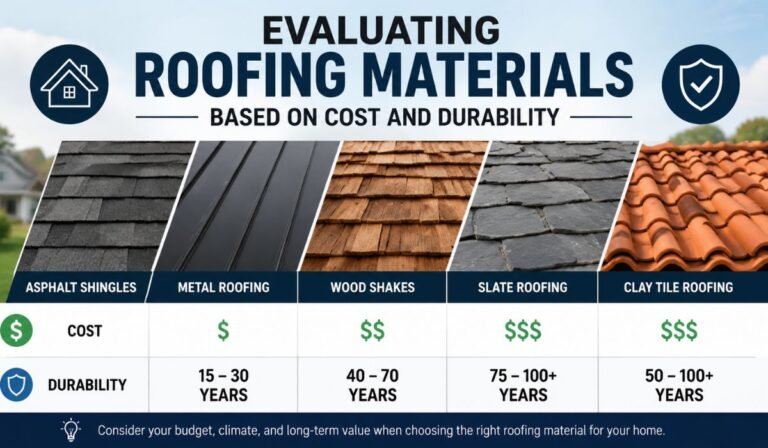
Are you trying to pick a roof but worry about cost and how long it will last? Roofing materials can vary widely in price, and some last twice as long as others. This guide compares cost, durability, and maintenance to help you choose the best option for your home.
Read on to make a smart choice.
Key Factors for Evaluating Roofing Materials
When you choose roofing materials, cost and durability matter a lot. These factors help you find the best option for your home.
Initial Cost
Upfront cost guides many homeowner choices. Asphalt shingles cost less per square foot than metal or slate. Higher-cost materials often offer longer lifespan and lower maintenance.
Contractor fees and installation affect total cost. Energy efficiency and repair needs change long-term value.
Durability and Lifespan
Roofing materials vary in durability and expected lifespan. Asphalt shingles last 15 to 30 years under normal conditions. Metal roofs can last 40 to 70 years and resist storms. Slate and tile often exceed 75 years but cost more.
When comparing metal roof cost vs shingles, it’s important to consider not only the initial expense but also the long-term durability and maintenance requirements.
Lifespan affects the total cost of ownership. Higher durability can lower long-term maintenance and replacement costs. Proper installation and regular maintenance improve performance and extend life.
Consider energy efficiency and local weather when you select materials.
Maintenance Requirements
Given a material’s durability and lifespan, maintenance needs affect total cost. Inspect roofs twice a year and after storms. Clean gutters and remove debris to prevent water damage.
Asphalt shingles often need more repairs and spot replacement. Metal and tile need less upkeep and keep performance longer. Proper care lowers long term cost and extends lifespan.
Types of Roofing Materials
Many roofing materials are available today. Each type offers different benefits and styles for homeowners.
Asphalt Shingles
Asphalt shingles are a popular roofing material. They offer a good balance of cost and durability. Homeowners often choose them because they are affordable and easy to install. These shingles come in many colors and styles, which allows homeowners to match their roof with their home’s design.
The lifespan of asphalt shingles is around 20 to 30 years. Some premium types can last up to 50 years with proper care. Regular maintenance helps extend their life. It usually involves simple tasks like cleaning gutters or replacing damaged shingles when needed.
Asphalt shingles also provide decent insulation, helping save energy costs over time.
Metal Roofing
Metal roofing offers great longevity. It can last over 50 years with proper care. This type of roofing is durable and can withstand harsh weather. It resists wind, rain, and snow very well.
Metal roofs do not crack or break easily.
The cost of metal roofing is higher than some other materials like asphalt shingles. Installation may be more expensive too, but it pays off in the long run. Metal roofs require less maintenance compared to traditional options.
They reflect heat well, which helps save energy costs during hot months. Choosing metal roofing can lead to lower bills over time while ensuring strong protection for your home.
Slate Roofing
Slate roofing is a strong and durable option. It can last over 100 years with proper care. This material resists fire, rot, and insects. Slate comes in many colors, adding beauty to homes.
Installing slate roofing can be costly compared to other materials. The initial cost may range from $700 to $1,500 per square. Despite this high price, its lifespan often makes it a good investment for homeowners seeking long-term durability.
When considering your options, it’s important to assess the roof durability of each material to ensure it meets your long-term needs.
Maintenance mainly involves checking for breakage or loose tiles but is generally low compared to other options like asphalt shingles.
Wood Shakes
Wood shakes offer a natural look for roofing. They are made from split logs, usually cedar or redwood. This type of roofing can last 30 years or more with proper care. Wood shakes provide good insulation and can help keep energy costs down.
Maintenance is essential to keep wood shakes in top shape. They require regular cleaning and treatment against mold and insects. Without care, they may deteriorate faster than other materials.
Costs can vary widely based on quality and installation, making them a more expensive option upfront compared to asphalt shingles. Tile roofing is the next type worth considering for your home.
Tile Roofing
Tile roofing offers strong durability and a long lifespan. It can last over 50 years with proper care. This type of material is resistant to wind, rot, and insects. Tile roofs are also fire-resistant, making them safe in many areas.
The cost of tile roofing is higher than other materials like asphalt shingles. Installation requires skilled labor, which adds to the total expense. Tile roofs come in various styles and colors, enhancing a home’s appearance.
They also provide good insulation properties that improve energy efficiency. Strong weather performance makes tile an excellent choice for areas with extreme conditions. Next up is exploring environmental and weather considerations related to roofing materials.
Environmental and Weather Considerations
Environmental and weather factors play a key role in selecting roofing materials. Different roofs perform better under certain conditions like heat, storms, or heavy snow.
Heat and Sun Exposure
Heat and sun exposure can harm roofing materials. Some materials reflect sunlight, while others absorb it. This affects the temperature inside your home.
Asphalt shingles tend to fade under intense heat. Metal roofs resist damage from UV rays well. Choose a material that suits your climate for better energy efficiency and durability.
Storm and Wind Resistance
Strong roofs can handle storms and high winds. Some materials resist damage better than others. Metal roofing stands out here because it is tough and durable. It can withstand heavy rain and strong gusts without bending or breaking.
Asphalt shingles also offer good wind resistance, but they may lift in severe storms. Slate roofing shines with its weight and strength, making it hard for winds to budge them. Similar durability considerations apply to metal homes, which are designed with strong materials that can help improve resistance against harsh weather conditions when properly engineered and maintained. Choosing the right material ensures safety during inclement weather.
Moisture and Snow Performance
Storms can bring heavy snow and rain. Roofing materials must handle this well to avoid damage. Asphalt shingles are common because they resist moisture and are affordable. Metal roofing sheds snow easily, reducing weight on the structure.
Slate roofs last a long time but can crack under heavy ice or snow loads. Wood shakes absorb moisture, which may cause rot over time unless treated properly. Tile roofing is sturdy against both water and snow but requires strong support due to its weight.
Each option has strengths in moisture and snow performance that should be considered during selection.
Conclusion
Choosing the right roofing material is key. Cost and durability are vital factors to think about. Consider how long the roof will last and what it needs for upkeep. A smart choice can save money over time.
Invest wisely, and protect your home well.
