
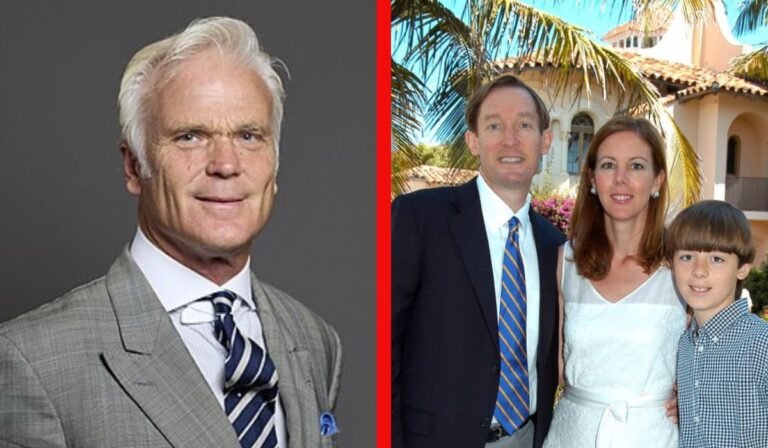
David William Desmond may not be a household name, but his life tells a fascinating story of achievement, independence, and quiet success. While many people recognize him because of his connection to the Trump family, Desmond has spent decades building a respected career based on science, education, and research rather than public attention. Instead of entering business or politics, he chose to dedicate his professional life to understanding how the human brain works and how neurological diseases affect people’s lives.
As the only child of the late federal judge Maryanne Trump Barry, David William Desmond is also the nephew of former U.S. President Donald Trump. Despite belonging to one of America’s most recognized families, he has largely remained out of the spotlight. His work has focused on improving the understanding of stroke, dementia, and cognitive disorders, earning recognition within the medical and academic communities rather than through media headlines.
Beyond his scientific achievements, Desmond has also explored another passion—writing. His satirical novels and newspaper columns reveal a creative side that contrasts with his years of clinical research. This unique combination of science and storytelling has made him an interesting figure whose accomplishments stand on their own.
This article takes a closer look at David William Desmond, exploring his early life, education, professional career, family background, literary work, and the reasons he has chosen a private life despite his famous relatives. Whether you are interested in his medical research, his books, or his connection to the Trump family, this guide provides a complete and balanced overview based on publicly available and reliable information.
Quick Bio Information
| Information | Details |
|---|---|
| Full Name | David William Desmond |
| Birth Year | 1960 |
| Age (2026) | Approximately 66 Years Old |
| Birthplace | New York City, New York, United States |
| Nationality | American |
| Profession | Neuropsychologist, Clinical Researcher, Author, Columnist |
| Known For | Research On Stroke, Dementia, And Cognitive Disorders |
| Education | A.B. In Behavioral Sciences, University Of Chicago |
| Doctoral Degree | Ph.D. In Clinical Psychology, Fordham University |
| Postdoctoral Training | Fellowship In Stroke And Dementia At Columbia University |
| Mother | Maryanne Trump Barry |
| Father | David Desmond Sr. |
| Uncle | Donald Trump |
| Spouse | Lisa Renee Aitken |
| Children | One Son, Robert Desmond |
| Residence | Palm Beach, Florida, And Paris, France (Publicly Reported) |
| Notable Books | The Misadventures Of Oliver Booth; Oliver Booth And The Evil Socialite |
| Main Research Areas | Stroke, Vascular Dementia, Cognitive Impairment, Neuropsychology |
| Public Profile | Private And Largely Outside Politics And Family Business |
Early Life And Family Background
David William Desmond was born in 1960 in New York City, during a period when the Trump family was already becoming well known in New York real estate circles. Although he grew up surrounded by a successful and influential extended family, his own life followed a very different path from that of many of his relatives.
He is the only child of Maryanne Trump Barry, a respected attorney who later became a federal judge, and David Desmond Sr., an Air Force veteran. His mother earned widespread respect for her long legal career, serving on both the United States District Court and the United States Court of Appeals before retiring in 2019. Throughout her career, she became known for her professionalism and commitment to public service rather than political activism.
Because Maryanne Trump Barry was the older sister of Donald Trump, David William Desmond became part of one of America’s most recognizable families. His maternal grandparents were Fred Trump, the successful New York real estate developer, and Mary Anne MacLeod Trump, who immigrated from Scotland before building a life in the United States. His extended family also includes Elizabeth Trump Grau, the late Robert Trump, and the late Fred Trump Jr.
Despite these well-known family connections, publicly available information suggests that Desmond enjoyed a relatively private upbringing. He reportedly spent much of his childhood in Queens, New York, where he attended the Kew-Forest School, a private institution that has educated many notable New Yorkers over the years.
Unlike some members of his extended family who developed interests in business, real estate, or politics, David William Desmond displayed a strong curiosity about human behavior, psychology, and science from an early age. That interest would eventually shape his entire professional future.
His family background undoubtedly provided unique experiences, but his later achievements were built primarily through education, research, and years of academic dedication. Rather than relying on his famous surname, he chose to establish a reputation based on expertise and scholarly work.
Education And Academic Journey
Education became the foundation of David William Desmond’s career. His academic choices reflected a clear interest in understanding how people think, learn, remember, and recover from illness.
After completing his early education, he enrolled at the University Of Chicago, one of America’s leading research universities. There, he pursued an A.B. In Behavioral Sciences, graduating in 1982. The university is well known for encouraging analytical thinking and interdisciplinary study, providing students with a rigorous academic environment. During this period, Desmond developed a deeper interest in psychology, neuroscience, and human cognition.
Instead of entering private practice immediately after graduation, he continued his education by enrolling at Fordham University in New York. He earned his Ph.D. In Clinical Psychology in 1990, completing advanced training that prepared him to combine psychological science with medical research.
Clinical psychology involves understanding both the biological and psychological aspects of mental functioning. For Desmond, this field offered the opportunity to work with patients while also conducting scientific research that could improve healthcare.
Following his doctoral studies, he completed a specialized fellowship at the Columbia University Neurological Institute, where he trained in stroke and dementia research. This stage proved especially important because it introduced him to leading neurologists and clinical researchers who were studying the long-term effects of stroke on memory and cognitive function.
Working alongside experienced physicians and neuroscientists allowed Desmond to bridge two closely related disciplines: psychology and neurology. Instead of focusing solely on emotional or behavioral conditions, he concentrated on how physical changes in the brain affect thinking, memory, attention, and decision-making.
His educational journey demonstrates a steady commitment to academic excellence. Every stage of his training built upon the previous one, preparing him to become one of the respected researchers in the field of neuropsychology.
David William Desmond’s Career As A Neuropsychologist
After completing his advanced education, David William Desmond devoted his career to one of medicine’s most challenging areas: understanding how stroke affects the human brain.
Neuropsychology combines psychology, neuroscience, and medicine to study how injuries or diseases influence thinking, memory, language, reasoning, and behavior. It is an essential specialty because many neurological conditions affect not only physical health but also a person’s ability to live independently.
One of Desmond’s most significant professional milestones came through his work at Columbia University, where he collaborated with neurologist Dr. Thomas K. Tatemichi, a pioneer in stroke research. Their research focused on patients recovering from ischemic stroke, the most common type of stroke caused by blocked blood flow to the brain.
Following Dr. Tatemichi’s passing, David William Desmond assumed leadership of the Stroke And Aging Research Project, becoming its principal investigator. The project followed large groups of stroke patients over time to better understand how neurological damage influences memory, reasoning, and overall cognitive health.
At the time, many healthcare providers focused mainly on physical rehabilitation after stroke. Desmond’s research helped demonstrate that cognitive recovery deserved equal attention because memory loss and executive function problems could significantly affect a patient’s quality of life even after physical recovery.
His studies showed that some stroke survivors experience noticeable declines in memory, attention, planning ability, and problem-solving skills months or even years after the initial event. These findings encouraged physicians to incorporate cognitive assessments into long-term stroke care.
Throughout his career, Desmond became especially interested in identifying which patients were most likely to develop dementia after stroke. His research examined numerous contributing factors, including age, diabetes, previous strokes, education level, and overall vascular health.
By identifying these risk factors, healthcare professionals gained valuable tools for recognizing high-risk patients earlier. Earlier diagnosis allows families and physicians to begin treatment, rehabilitation, and supportive care sooner, potentially improving long-term outcomes.
Another important area of his work involved vascular cognitive impairment, a condition caused by reduced blood flow to the brain. Unlike Alzheimer’s disease, vascular cognitive impairment often develops following strokes or chronic blood vessel disease. Desmond’s research helped clarify how these disorders differ and how clinicians can distinguish between them during diagnosis.
His work also explored post-stroke depression, an often overlooked condition that can slow recovery and reduce quality of life. Rather than focusing only on emotional symptoms, his studies encouraged clinicians to recognize less obvious cognitive and behavioral signs that patients may experience after neurological injury.
Over several decades, David William Desmond contributed to dozens of peer-reviewed scientific publications. His research has been cited thousands of times by other scientists, reflecting its lasting influence within neurology, neuropsychology, and stroke medicine. His studies continue to be referenced by researchers investigating dementia, vascular disease, and cognitive rehabilitation.
Rather than seeking public recognition, Desmond built a career grounded in careful observation, scientific evidence, and a commitment to improving patient care. His contributions illustrate how dedicated medical research can shape clinical practice and ultimately improve the lives of countless individuals living with neurological disorders.
Research Contributions And Scientific Achievements
David William Desmond’s greatest professional legacy lies in his contributions to neuropsychology and the study of cognitive disorders after stroke. While stroke has long been recognized as a leading cause of disability, Desmond’s research helped demonstrate that its effects extend far beyond physical movement. Many survivors also experience changes in memory, attention, judgment, and problem-solving, issues that can profoundly affect everyday life.
Much of his work focused on post-stroke dementia, a condition in which cognitive decline develops after a stroke. Through long-term clinical studies, he and his colleagues identified several factors that increase the likelihood of dementia, including older age, diabetes, previous strokes, greater stroke severity, and underlying vascular disease. These findings encouraged healthcare providers to monitor patients more closely after stroke rather than assuming recovery ends with physical rehabilitation.
Another important area of his research involved vascular cognitive impairment, a broad term describing thinking and memory problems caused by reduced blood flow to the brain. Desmond’s studies helped distinguish this condition from Alzheimer’s disease by showing that vascular dementia often affects planning, organization, attention, and decision-making before severe memory loss becomes apparent. This distinction has practical value because different causes of dementia may require different approaches to treatment and care.
He also examined post-stroke depression, highlighting that depression after neurological injury does not always appear in obvious ways. Some patients experience reduced motivation, slower thinking, or difficulty concentrating rather than persistent sadness. By encouraging clinicians to recognize these less visible symptoms, his research contributed to more comprehensive patient evaluations.
Over the years, David William Desmond authored or co-authored dozens of peer-reviewed scientific papers published in respected medical journals. His work has been cited thousands of times by researchers around the world, reflecting its influence on modern stroke care, neuropsychological assessment, and dementia research. Although medicine continues to evolve, many of his findings remain relevant to current clinical practice and ongoing neurological research.
His career demonstrates the value of careful, long-term scientific investigation. Rather than seeking dramatic breakthroughs, he steadily built evidence that has helped physicians better understand how stroke changes the brain and how those changes affect patients’ lives for years after the initial event.
David William Desmond As An Author And Columnist
Although David William Desmond established his reputation through medical research, he also developed a successful second career as a writer. His transition from scientific publications to fiction illustrates a different side of his personality—one that appreciates humor, storytelling, and social observation.
In 2008, he published The Misadventures Of Oliver Booth: Life In The Lap Of Luxury, a satirical novel set in the exclusive world of Palm Beach society. Rather than focusing on medicine, the book explores wealth, status, social ambition, and the often amusing behavior of affluent communities. Its lighthearted style and clever observations earned positive attention from readers who enjoyed social satire.
He followed this with Oliver Booth And The Evil Socialite in 2013. The sequel continues the adventures of its central character while expanding its humorous look at high society, luxury lifestyles, and the pursuit of prestige. Both novels reflect Desmond’s ability to observe human behavior, a skill that likely developed through years of studying psychology.
Unlike his academic writing, which depends on scientific evidence and precise language, his fiction allows for creativity, wit, and playful commentary. Readers familiar with Palm Beach culture often recognize subtle references to the area’s traditions and personalities, although the stories remain fictional.
In addition to writing novels, Desmond has contributed a regular satirical column to the Palm Beach Daily News. His columns blend humor with thoughtful observations about everyday life, social customs, and the unique character of one of America’s most exclusive communities. Rather than criticizing individuals, his writing generally focuses on universal human behavior, making it accessible to a wide audience.
His success in both medicine and literature highlights an uncommon balance between analytical thinking and creative expression. Few professionals manage to establish respected careers in both scientific research and fiction writing, making his professional journey especially distinctive.
Personal Life, Marriage, And Family
Despite belonging to one of America’s best-known families, David William Desmond has consistently chosen to keep his personal life away from public attention. Unlike many public figures, he rarely gives interviews, maintains a very limited public profile, and has avoided using family connections to seek media exposure.
Public records indicate that he became engaged to Lisa Renee Aitken in 1992, and the couple later married. Together they have one son, Robert Desmond. Very little has been publicly shared about their family life, reflecting Desmond’s long-standing preference for privacy.
Friends and colleagues who have spoken publicly about him often describe him as thoughtful, intelligent, and dedicated to his work. Rather than attending high-profile events or becoming involved in celebrity culture, he has focused on professional responsibilities, writing, and family life.
Publicly available information also indicates that he has maintained residences in Palm Beach, Florida, and Paris, France. Both locations have influenced his writing, particularly the Palm Beach setting featured in his satirical novels. However, he has shared few personal details about his daily life, hobbies, or routines.
Following the death of his mother, Maryanne Trump Barry, in 2023, David William Desmond honored her wish for a private funeral service. Reports surrounding the event emphasized the family’s desire for discretion rather than publicity, reflecting values that have characterized much of Desmond’s own life.
His approach to privacy has become one of his defining characteristics. Even in an era of constant social media activity and public exposure, he has successfully maintained a quiet life centered on professional accomplishment instead of public recognition.
Relationship With The Trump Family
One reason many people search for David William Desmond is his relationship to the Trump family. He is the son of Maryanne Trump Barry, making him the nephew of Donald Trump, the 45th and 47th President of the United States.
His mother enjoyed a distinguished legal career that differed significantly from the business careers of several of her siblings. After serving as a federal judge for many years, she earned a reputation for professionalism, legal expertise, and independence. Her commitment to public service appears to have influenced Desmond’s own preference for professional achievement over public attention.
Although David William Desmond shares family ties with one of America’s most famous political families, there is no public evidence that he has played an active role in the Trump Organization or political campaigns. Instead, he has pursued his own path in academia, healthcare research, and literature.
This independence has allowed him to establish an identity based on his own accomplishments rather than his family name. While many biographies mention his connection to Donald Trump, his professional reputation has been built through decades of scientific research and scholarly work.
His story also demonstrates that members of prominent families often choose very different careers. Whereas some relatives entered business, politics, or real estate, Desmond invested his time in universities, hospitals, research institutions, and publishing.
As a result, his biography offers an interesting example of how personal interests and education can shape an individual’s life regardless of family background. His achievements stand independently and continue to be recognized within the fields of neuropsychology and medical research.
Books, Publications, And Other Notable Works
David William Desmond’s body of work spans both science and literature, making his career unusually diverse. In academic medicine, he has contributed extensively to research on stroke recovery, dementia, vascular cognitive impairment, and clinical neuropsychology. His peer-reviewed publications have appeared in respected medical journals and continue to be referenced by researchers studying neurological disorders.
His scientific papers often examined how cognitive abilities change following stroke and how healthcare professionals can better identify patients at risk for long-term impairment. By combining psychological testing with neurological assessment, his research helped strengthen understanding of brain function after injury.
Beyond medicine, his published novels demonstrate his versatility as a writer. The Misadventures Of Oliver Booth introduced readers to an entertaining fictional world inspired by elite social circles, while Oliver Booth And The Evil Socialite expanded that universe with additional satire and humor. Both books showcase a writing style that is intelligent, approachable, and filled with observational comedy.
His newspaper columns add another dimension to his work. Through regular commentary, he has explored social behavior, etiquette, wealth, and community life with wit and insight. These writings reveal the same curiosity about human nature that shaped his scientific career, but they express it through storytelling rather than clinical analysis.
Taken together, David William Desmond’s publications reflect an individual whose interests extend well beyond a single profession. Whether writing scientific studies that improve patient care or humorous novels that entertain readers, he has consistently demonstrated careful observation, intellectual curiosity, and a commitment to thoughtful communication. His unique combination of medical expertise and literary creativity remains one of the most distinctive aspects of his career.
Net Worth And Financial Background
Estimating David William Desmond’s net worth is difficult because he has never publicly disclosed his finances. Unlike many public figures, he has not built a personal brand around wealth, investments, or business ventures. Most available information about his financial background comes from public property records and his long professional career.
One widely reported transaction involved the sale of a Palm Beach, Florida, home in 2016 for approximately $9 million. While this sale suggests ownership of valuable real estate, it does not reveal his overall financial position. Property sales alone cannot determine an individual’s total assets, investments, or income.
Throughout his career, Desmond has likely earned income from several professional activities. His work as a neuropsychologist and clinical researcher spanned decades, and he also generated income through his published books and newspaper columns. However, there is no reliable public evidence detailing his salary, royalties, or investment portfolio.
As the son of the late Maryanne Trump Barry, who enjoyed a successful legal career, Desmond may have benefited from family assets through inheritance. Nevertheless, the details of any inheritance remain private, and responsible reporting avoids speculation where verified information is unavailable.
The most accurate conclusion is that David William Desmond appears to enjoy a comfortable lifestyle built through professional success and prudent financial management. However, any published estimate of his net worth should be viewed cautiously unless supported by verifiable financial disclosures.
Recent News And Current Activities
Compared with many members of the Trump family, David William Desmond receives very little media coverage. His low public profile has remained consistent for decades, and there have been few major developments reported about his personal or professional life in recent years.
The most widely covered event involving Desmond occurred in 2023, following the death of his mother, Maryanne Trump Barry. Reports noted that he arranged a private funeral in accordance with her wishes, reflecting the family’s desire to keep the occasion personal rather than public.
Since then, public mentions have largely appeared in biographical articles discussing the Trump family or summarizing his medical research and writing career. There have been no verified reports indicating that he has entered politics, joined family business activities, or pursued other high-profile public roles.
Although he remains out of the spotlight, his academic publications continue to be cited by researchers studying stroke, dementia, and vascular cognitive impairment. Scientific influence often extends well beyond active research, and Desmond’s work continues to contribute to discussions about neurological health and patient care.
His literary work also remains available to readers interested in humorous fiction centered on Palm Beach society. While he has not announced new novels publicly, his existing books continue to represent an interesting contrast to his scientific career.
As of 2026, David William Desmond continues to be known primarily for his professional achievements rather than his public appearances. His life illustrates that meaningful contributions do not always require constant media attention.
Interesting Facts About David William Desmond
David William Desmond’s career contains several fascinating details that set him apart from many public figures associated with well-known families.
One of the most interesting aspects of his life is the balance between science and creativity. Few people successfully establish respected careers as both medical researchers and novelists. Desmond achieved recognition in neuropsychology while also publishing satirical fiction that explores wealth, social customs, and human behavior.
Another notable feature of his career is his long-standing interest in understanding how neurological conditions affect everyday life. Rather than concentrating solely on laboratory research, his studies focused on improving outcomes for patients recovering from stroke and helping physicians recognize cognitive decline earlier.
His professional independence is equally remarkable. Although he belongs to one of America’s most recognizable families, he chose to build a career based on education, scientific inquiry, and writing instead of business or politics. This decision allowed him to develop a reputation that stands on its own merits.
Desmond’s preference for privacy also distinguishes him from many modern public figures. In an age when social media often shapes public image, he has maintained a limited online presence and has rarely sought publicity. His work, rather than his personal life, has remained the focus of public interest.
Finally, his career reflects the value of lifelong learning. From university classrooms and neurological research centers to newspaper columns and published novels, he has continued exploring new ways to understand and communicate ideas. His journey demonstrates that professional success can take many forms and that intellectual curiosity can lead to accomplishments across multiple fields.
Conclusion
David William Desmond offers an interesting example of someone who built a distinguished career without seeking public attention. Although he belongs to one of America’s most famous families, he chose a path centered on education, scientific research, patient care, and creative writing rather than business or politics.
His work in neuropsychology has helped improve understanding of stroke recovery, dementia, and cognitive impairment, providing valuable insights that continue to influence neurological research and clinical practice. At the same time, his novels and newspaper columns reveal a thoughtful writer with a sharp sense of humor and a talent for observing human behavior.
Perhaps the most remarkable aspect of David William Desmond’s story is his commitment to independence. Rather than relying on family recognition, he earned respect through years of academic dedication and meaningful professional contributions. His life demonstrates that lasting achievement often comes from curiosity, perseverance, and a willingness to follow one’s own interests.
As of 2026, David William Desmond remains a respected researcher, accomplished author, and private individual whose legacy extends far beyond his famous surname. His story reminds readers that success is not measured only by public visibility but also by the lasting impact of one’s work on science, literature, and society.
FAQs About David William Desmond
Who Is David William Desmond?
David William Desmond is an American neuropsychologist, clinical researcher, author, and columnist. He is widely known for his research on stroke-related cognitive disorders and is also recognized as the son of the late federal judge Maryanne Trump Barry and the nephew of Donald Trump.
How Is David William Desmond Related To Donald Trump?
David William Desmond is Donald Trump’s nephew. His mother, Maryanne Trump Barry, was Donald Trump’s older sister, making Desmond a member of the Trump family through his maternal side.
What Is David William Desmond Known For?
Professionally, David William Desmond is best known for his research into dementia after stroke, vascular cognitive impairment, and post-stroke depression. Outside medicine, he has written satirical novels and newspaper columns inspired by Palm Beach society.
Where Did David William Desmond Study?
He earned a Bachelor of Arts in Behavioral Sciences from the University Of Chicago in 1982 and later completed a Ph.D. in Clinical Psychology at Fordham University in 1990. He also completed advanced fellowship training in stroke and dementia research at Columbia University.
Has David William Desmond Written Any Books?
Yes. He is the author of The Misadventures Of Oliver Booth: Life In The Lap Of Luxury, published in 2008, and Oliver Booth And The Evil Socialite, published in 2013. Both novels use satire to explore the lifestyles and social dynamics of wealthy communities.
Is David William Desmond Involved In Politics?
There is no public evidence that David William Desmond has participated in political campaigns, held political office, or played a role in the Trump Organization. Throughout his career, he has focused on research, medicine, writing, and maintaining a private life.
What Is David William Desmond’s Net Worth?
David William Desmond has never publicly disclosed his net worth. While public records document a multimillion-dollar Palm Beach property sale and he has enjoyed a successful professional career, there is no verified estimate of his overall wealth.
Does David William Desmond Have A Public Social Media Presence?
David William Desmond maintains a very limited public profile. There are no widely recognized or verified public social media accounts associated with him, and he has consistently chosen to keep his personal life private.
Learn more and explore exciting content on: Who Is Paul Atkins? Inside The Life And Career Of The Award-Winning Cinematographer
