
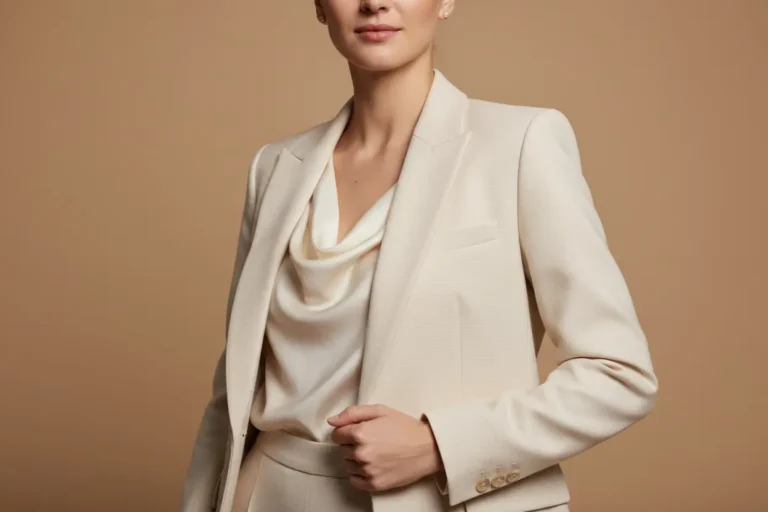
The fashion industry has one of the highest costs-per-image in commercial photography — model fees, location, styling, retouching — which makes it one of the sectors with the most to gain from AI image generation. This guide covers how fashion brands, designers, and retailers are using AI across the product lifecycle.
Applications in fashion
- Virtual product sampling: Generating photorealistic images of garments before physical samples are produced — significant for pre-order campaigns and sustainable brands reducing sample waste.
- Lookbook and editorial production: Placing products on AI-generated models in diverse settings without scheduling a full editorial shoot for every collection.
- Virtual try-on: Generating images of a specific garment on different body types and proportions to give customers a more accurate purchase preview.
- Campaign ideation: Generating multiple visual directions for a campaign concept before committing production budget to any one approach.
At this stage, having access to an the AI image generator fashion brands prefer can make the difference between iterating fast and waiting days for production to catch up.
Best tools for fashion applications
Midjourney v7 — best for editorial and lookbook imagery
The aesthetic quality of Midjourney’s outputs aligns well with fashion editorial. The painterly, considered look works particularly well for premium and luxury fashion brands where image quality signals brand positioning. Prompts specifying ‘editorial fashion photography’, ‘Vogue editorial’, or specific photographer references produce consistently strong results.
FLUX 2 Pro — best for catalog and product imagery
For product-on-model photography that appears in e-commerce listings and catalog pages, FLUX 2 Pro produces photorealistic results that are difficult to distinguish from professional studio photography at a fraction of the production cost.
Stable Diffusion with fashion LoRAs — best for brand-specific style
Fashion brands with a distinctive visual identity can fine-tune Stable Diffusion models on their own imagery to produce outputs that match their established aesthetic consistently across large volumes of generated content.
Fashion use case overview
| Use case | Traditional approach | AI approach |
| Pre-season lookbook | Full shoot, $20k-$100k+ | AI generation + human direction, $2k-$10k |
| E-commerce product images | Studio shoot per SKU | AI generation from reference images |
| Virtual try-on | 3D modeling per garment | AI generation from 2D product photos |
| Campaign concept | Mood board + expensive test shoot | AI-generated concept images |
FAQs
Can AI replace fashion models entirely?
For catalog imagery, e-commerce product pages, and virtual try-on, AI-generated model images are increasingly production-grade. For editorial and celebrity-driven campaigns, human models still deliver results AI does not replicate.
How do I generate a garment on an AI model accurately?
The most reliable approach is image-to-image generation: photograph or render the garment flat or on a dress form, then use that as an input reference alongside a detailed prompt.
Are AI fashion images acceptable for luxury brands?
AI fashion imagery that reads as editorial photography can work for luxury brands; imagery that looks obviously AI-generated is incompatible with luxury positioning.
