
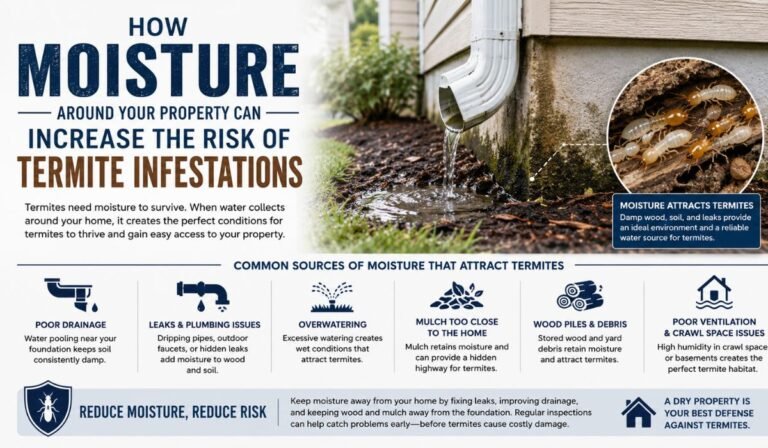
Termites are strongly linked to moisture. While they can damage dry timber once they gain access, damp conditions often make a property far more attractive to them in the first place. Moist soil, leaking pipes, blocked gutters, poor drainage, wet garden beds, and poorly ventilated subfloors can all create the type of environment termites need to survive and spread.
Many homeowners focus only on visible timber damage, but the real issue often starts outside or underneath the property. A small leak, a damp corner, or water pooling near the foundation can give termites the conditions they need to move closer to the building. This is why moisture management should be a key part of long-term termite control.
Understanding how moisture increases termite risk can help property owners take action before an infestation becomes serious.
Why Termites Are Attracted to Moisture
Termites need moisture to survive. Damp soil helps them move safely underground, build mud tubes, and remain protected from heat, light, and dry air. When moisture is present around a property, termites are more likely to find the area suitable for nesting, feeding, and travelling.
Moisture also softens timber and other cellulose materials, making them easier for termites to attack. Timber that has been exposed to water for a long time may decay, weaken, and become more appealing to termites. This is why leaking pipes, wet timber, and damp subfloor areas are often linked to termite activity.
A property does not need to be visibly flooded to attract termites. Even slow moisture build-up over time can create a hidden risk. This is why routine checks and proper termite control measures are important for homes with drainage issues, garden beds, or ageing plumbing.
Poor Drainage Around the Home Can Create Termite Pathways
Poor drainage is one of the most common moisture problems around residential properties. When water does not flow away from the building, it can collect near foundations, garden edges, patios, and external walls. Over time, this keeps the surrounding soil damp and creates easier travel conditions for termites.
Termites often move through soil before entering a home through cracks, slab edges, weep holes, pipe penetrations, or timber-to-ground contact points. Damp soil near these areas increases the chance of termite activity reaching the structure.
Homeowners should watch for water pooling after rain, soil that stays wet for days, blocked stormwater drains, or garden beds that sit too close to walls. These issues may seem minor at first, but they can slowly increase the risk of termite infestation.
Improving drainage, clearing blocked drains, and making sure water flows away from the property can reduce this risk.
Leaking Pipes Can Create Hidden Termite Problems
Leaking pipes are especially risky because the moisture is often hidden behind walls, under floors, inside cupboards, or beneath concrete slabs. Termites are attracted to these damp areas because they provide shelter and water close to timber or other building materials.
A small leak under a bathroom vanity, kitchen sink, laundry cabinet, or outdoor tap can keep nearby timber damp for months. If termites are already active in the soil nearby, this moisture can draw them closer to the home.
Common warning signs include swollen cabinetry, damp smells, mould patches, peeling paint, soft skirting boards, or flooring that feels uneven. These signs should not be ignored, especially in areas connected to plumbing.
Fixing leaks quickly is an important part of termite prevention. It also supports better long-term termite control because removing moisture makes the property less attractive to termites.
Blocked Gutters and Downpipes Can Increase Termite Risk
Blocked gutters are another moisture issue that many property owners overlook. When gutters fill with leaves, dirt, and debris, rainwater cannot drain properly. Water may overflow onto walls, fascia boards, roof cavities, and the ground near the foundation.
Over time, this can cause timber rot, damp wall sections, and wet soil close to the building. These conditions can increase termite activity because termites are drawn to both moisture and weakened timber.
Downpipes also need to direct water away from the house. If downpipes discharge too close to the foundation, they can keep the surrounding soil damp and create a favourable termite pathway.
Regular gutter cleaning, downpipe checks, and roof drainage maintenance can help reduce moisture build-up and lower the risk of termite infestation.
Damp Subfloors Are a Major Termite Risk
Subfloor areas are one of the most common places where termites spread unnoticed. These spaces are often dark, poorly ventilated, and close to soil. If moisture builds up under the home, termites may find ideal conditions for movement and feeding.
Poor ventilation, leaking pipes, blocked vents, rising damp, and poor site drainage can all contribute to subfloor moisture. Timber bearers, joists, flooring supports, and stored materials under the home may become vulnerable if the area stays damp.
Because homeowners rarely inspect subfloors, termite activity can continue for a long time before visible signs appear inside the home. By the time floorboards feel soft or uneven, the damage may already be advanced.
A professional termite inspection can help identify moisture problems in subfloor areas and recommend steps to reduce the risk.
Garden Beds, Mulch, and Landscaping Can Hold Moisture Near Walls
Garden beds can improve the look of a property, but they can also create termite risk when placed too close to the building. Soil, mulch, and organic matter hold moisture, especially after rain or watering. If these materials sit against external walls, they can provide termites with a protected entry point.
Mulch is a particular concern because it contains cellulose and holds moisture close to the soil. While mulch does not automatically mean termites will infest a property, it can create a more suitable environment when combined with poor drainage or hidden entry points.
Garden beds should be kept below weep holes and away from timber structures. Soil should not be built up against walls, and watering systems should not constantly wet the foundation area.
Good landscaping choices can make a real difference in termite prevention.
Air Conditioning Units and Hot Water Systems Can Add Moisture
Outdoor air conditioning units, hot water systems, overflow pipes, and drainage points can create localised damp areas if not managed properly. Constant dripping or poor water discharge can keep the soil wet in one spot for long periods.
These damp patches may not seem serious, but termites can use them as moisture sources. If the area is close to external walls, decking, timber posts, or pipe penetrations, the risk becomes higher.
Property owners should check that overflow pipes and condensation drains discharge away from the house. Any constant damp patch near the building should be investigated and fixed.
Small maintenance steps like this can support effective termite control and reduce the chance of hidden termite entry.
Timber in Contact With Damp Soil Is a Serious Concern
Timber that touches damp soil creates a direct invitation for termites. This can include fence posts, garden edging, deck supports, timber steps, stored firewood, old tree stumps, retaining walls, and untreated outdoor timber.
When timber remains damp, it becomes easier for termites to attack. If this timber is close to the house, termites may use it as a starting point before moving toward the main structure.
Firewood, timber offcuts, cardboard, and other cellulose materials should not be stored against external walls or directly on the ground near the home. Outdoor timber structures should also be inspected regularly for signs of damage or mud tubes.
Removing unnecessary timber and keeping outdoor wood dry can reduce termite pressure around the property.
Why Moisture Control Should Be Part of Termite Prevention
Many termite problems are not caused by one issue alone. They often develop when several risk factors work together, such as moisture, timber access, poor ventilation, and hidden entry points. This is why termite prevention should focus on the whole property, not just one visible area.
Moisture control helps make the property less attractive to termites. It does not replace professional inspections or treatment, but it reduces the conditions that allow termites to survive and spread.
Homeowners should regularly check gutters, drainage, plumbing, garden beds, subfloors, and outdoor timber. When moisture issues are found early, they are usually easier and cheaper to fix.
A professional inspection can also identify termite risks that may not be obvious during normal home maintenance.
Conclusion
Moisture around a property can greatly increase the risk of termite infestations. Damp soil, leaking pipes, blocked gutters, wet subfloors, garden beds, and timber in contact with the ground can all create conditions that attract termites and help them spread.
The best approach is to stay proactive. Fix leaks quickly, improve drainage, keep gutters clear, reduce dampness under the home, and avoid storing timber close to the building. These simple steps can reduce termite risk and support stronger long-term termite prevention.
Professional inspections and proper termite control are also important, especially if there are signs of moisture damage, soft timber, mud tubes, or previous termite activity. Acting early can help protect the structure, value, and safety of the property.
FAQs
Does moisture always mean termites are present?
No, moisture does not always mean termites are present. However, damp conditions make a property more attractive to termites and can increase the risk of future infestation. Moisture problems should be fixed early to reduce this risk.
What are the most common moisture problems that attract termites?
Common issues include leaking pipes, blocked gutters, poor drainage, wet subfloors, overwatered garden beds, dripping air conditioning units, and timber sitting directly on damp soil.
Can termites infest a home through wet soil?
Yes, termites often move through soil and can use damp ground as a protected pathway toward a building. They may enter through cracks, slab edges, pipe gaps, or timber-to-soil contact points.
How can I reduce moisture around my property?
You can reduce moisture by fixing leaks, clearing gutters, improving drainage, keeping garden beds away from walls, ensuring subfloors are ventilated, and directing water away from the foundation.
Should I get a termite inspection if I find damp timber?
Yes, damp timber should be checked, especially if it is close to the ground, near plumbing, or connected to structural areas. A termite inspection can confirm whether termites are active or whether the area is only moisture-damaged.
