
What Are Polysorbates — and Why Do Grades Matter?
Polysorbates are non-ionic surfactants and emulsifiers derived from sorbitol and fatty acids through a process called ethoxylation. The number after the name — 20, 60, or 80 — tells you exactly which fatty acid is attached and how the molecule behaves.
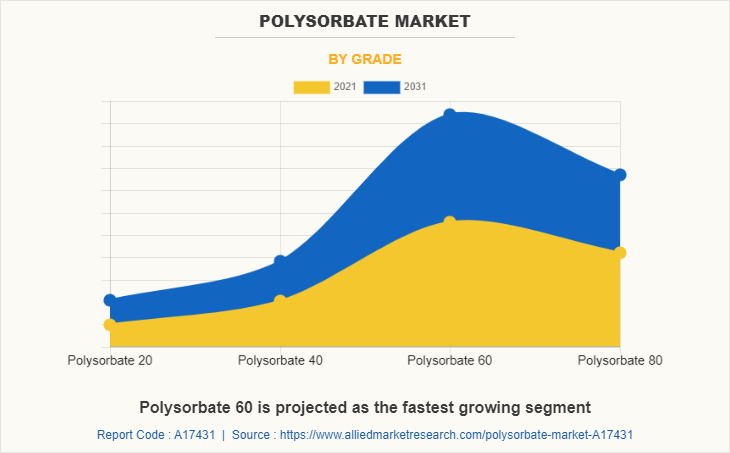
Polysorbate 20 (Tween 20) — derived from lauric acid. Water-soluble, mild, widely used in personal care and light-duty formulations.
Polysorbate 60 (Tween 60) — derived from stearic acid. Semi-solid at room temperature, excellent in food emulsification and cosmetic creams.
Polysorbate 80 (Tween 80) — derived from oleic acid. The most commercially prevalent grade. Used in food, agrochemicals, and industrial applications for its superior oil-in-water emulsification.
The differences are technical, but the commercial implications are real. Buyers who substitute grades without understanding HLB values and compatibility profiles often pay for it in formulation instability. Choosing the right grade from the right supplier is more than a procurement decision.
Key Applications Across Industries
The versatility of polysorbates is precisely why demand is spread across so many verticals. Here’s where these emulsifiers are doing real work:
- Personal Care & Cosmetics:Polysorbate 20 dominates in facial cleansers, micellar waters, and toners — its gentle solubilizing action makes it a go-to for sensitive skin formulations. Polysorbate 80 finds heavy use in hair care products and body lotions.
- Food & Beverage:Polysorbate 60 and 80 are approved emulsifiers in baked goods, ice cream, and whipped toppings. PS60 prevents oil-water separation in sponge cakes; PS80 stabilizes flavour emulsions in beverages.
- Agrochemicals:PS80 is a critical formulation aid in pesticide emulsifiable concentrates and wettable powders. Its ability to keep active ingredients uniformly dispersed directly impacts field efficacy.
- Industrial & Oil Field:Used as demulsifiers, wetting agents, and dispersants in metalworking fluids, textile processing, and oilfield chemical formulations.
- Veterinary Products:Polysorbate 80 serves as a carrier and solubilizer in injectable and oral veterinary formulations.
Why Is Global Demand for Polysorbates Rising?
Several converging forces are pushing polysorbate consumption upward across all three grades.
The clean beauty movement, paradoxically, has not hurt polysorbate demand. While formulators are dropping parabens and sulphates, polysorbates remain widely accepted as low-irritation, biodegradable alternatives to harsher surfactants. Personal care brands in Europe and North America are actively reformulating with PS20 as a gentler solubilizer.
In the food industry, rising demand for processed and convenience foods — especially across Southeast Asia and the Middle East — is directly translating to higher PS60 and PS80 consumption. Emulsifier-dependent categories like instant noodles, bakery premixes, and ready-to-drink beverages are growing fast in these regions.
The agrochemical sector is another consistent driver. With precision agriculture demanding more stable, low-dose formulations, chemical manufacturers are leaning on PS80 and similar emulsifiers to maintain efficacy at reduced active ingredient concentrations. That’s a structural shift, not a seasonal bump.
Key Benefits for Manufacturers and Bulk Buyers
- Formulation flexibility:All three grades can be combined or layered for specific HLB requirements, giving formulators wide latitude.
- Cost-in-use efficiency:Polysorbates are effective at relatively low use levels (0.1–3% typically), meaning cost impact per finished product is modest despite raw material costs.
- Regulatory acceptance:PS20, PS60, and PS80 hold approvals from USFDA, EFSA, and other major regulatory bodies — reducing compliance burden for manufacturers in regulated industries.
- Supply chain maturity:Unlike more exotic specialty emulsifiers, polysorbates benefit from a well-established global supply chain with multiple qualified sources.
- Scalability:These are commodity-adjacent specialty chemicals — volumes can scale without significant formulation rework.
What Should You Look for When Choosing a Polysorbate Supplier?
This is where procurement decisions often go sideways. Price per kilogram is the starting point, not the endpoint.
- Purity and specification consistency:Ask for CoA data across multiple production batches. Variation in peroxide values or moisture content can directly affect shelf life in finished products.
- Manufacturing compliance:Food-grade and cosmetic-grade polysorbates require GMP-aligned manufacturing. Verify whether the supplier holds relevant certifications (ISO, GMP, HACCP where applicable).
- Packaging and logistics capability:For bulk buyers, the supplier’s ability to deliver in IBC totes, drums, or flexi-bags — and on reliable lead times — matters as much as the product itself.
- Technical support:A good supplier doesn’t just ship product. They should be able to provide formulation guidance, safety data sheets, and compatibility information.
- Export track record:If you’re importing from India or China — two dominant production hubs — check whether the supplier has experience with your target market’s import documentation requirements.
Global Demand & Supply Landscape
China remains the largest producer of polysorbates globally, with significant manufacturing capacity concentrated in Jiangsu and Shandong provinces. However, supply chain disruptions post-2020 have accelerated a real diversification trend. Buyers in the US, EU, and Southeast Asia are actively qualifying alternate suppliers — including manufacturers based in India.
India has emerged as a meaningful player in the polysorbate export market, particularly for PS80. Competitive raw material costs, improving GMP infrastructure, and growing export experience have made Indian-origin polysorbates an increasingly serious option for global buyers.
In Europe, environmental regulations (particularly REACH compliance) continue to shape sourcing decisions. Buyers are scrutinizing the EO (ethylene oxide) origin and processing standards of their polysorbate suppliers more carefully than before.
The US market, meanwhile, shows stable growth in food-grade PS60 and personal-care PS20, driven by continued investment in domestic personal care manufacturing and the formulation of cleaner-label food products.
Is the Supply of Polysorbate 80 at Risk in Certain Markets?
Selectively, yes. PS80 has the broadest industrial usage base, and when raw material costs for oleic acid fluctuate — as they have during periods of palm oil market volatility — downstream PS80 availability can tighten. Buyers who require consistent volume should consider establishing relationships with more than one qualified supplier and maintaining a modest safety stock, particularly ahead of peak agrochemical formulation seasons.
Whether you’re a formulator evaluating emulsifier options, a procurement lead searching for a reliable bulk supplier of polysorbate 20, 60, or 80, or a manufacturer looking to qualify a new source — the fundamentals haven’t changed: specification consistency, regulatory compliance, and supply reliability are non-negotiable. The market for these emulsifiers is growing, and the window to lock in strong supplier partnerships at favorable terms is open now.
If you’re looking for a technically competent, export-ready partner for industrial-grade or food-grade polysorbates, it’s worth having a direct conversation with manufacturers who can back their claims with data.
