
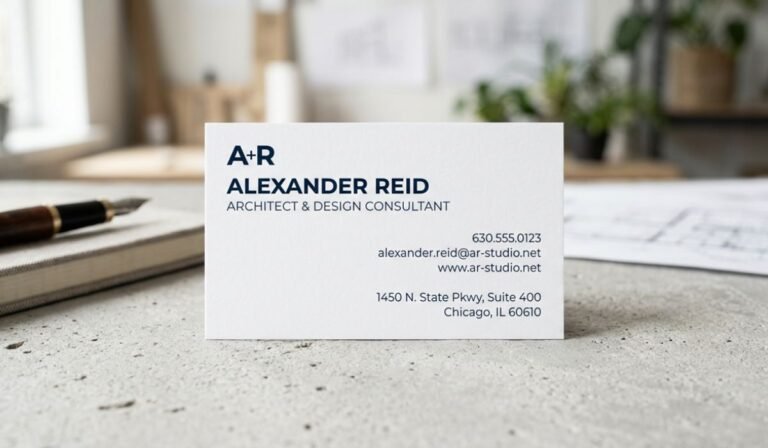
In our experience, cards with clear branding and fewer distractions tend to generate more follow-up enquiries than designs packed with excessive information.
A surprising number of networking opportunities slip away before a conversation even begins. Not because the service is poor. Not because the company lacks expertise. The problem is often how the information is presented.
Someone receives a business card, glances at it for two seconds, and forgets it moments later.
That is why modern business cards are no longer simply contact information printed on paper. They have become miniature brand assets. A well-designed card says a lot about you before a prospect ever lands on your website or sends an enquiry. It quietly signals that you’re professional, that you sweat the details, and that you know what you’re doing.
Why Business Card Design Still Matters in a Digital World
The rise of the digital business card has not eliminated the need for printed business cards. Instead, it has changed expectations.
Professionals now expect a card to do more than display a phone number and email address. They want something memorable. Something that reflects the quality of the business behind it.
Plenty of successful UK companies use printed and digital business cards side by side, so prospects can tap straight through to your online details while still getting the impact that only a physical card in the hand delivers.
Modern Business Card Design Trends That Deliver Results
Minimalist Business Card Design with Strong Branding
One of the most effective approaches remains simplicity.
Clean typography, generous spacing and carefully selected colours often outperform cluttered layouts. Professionals frequently make the mistake of trying to include every detail on a small card.
The most memorable business cards usually focus on:
- A strong logo
- Essential contact information
- Consistent brand colours
- Clear visual hierarchy
When customers can quickly understand who you are and what you do, your card becomes significantly more effective.
Premium Finishes That Create a Lasting Impression
Print finish plays a major role in perceived quality.
Many customers invest heavily in branding but choose the cheapest possible print specification. The result often feels underwhelming.
The finish you choose can really shape how people read your brand. A matt laminated card looks clean and professional, while soft-touch lamination gives it that bit of extra polish. Spot UV is handy for drawing the eye to a logo or a key part of the design, lifting it off the card without taking over. Foil finishes bring a real sense of luxury, which is why you’ll often see them on cards from businesses going for a more exclusive feel. Get the finish right and it backs up everything your brand stands for, keeping your card in someone’s mind long after the meeting’s wrapped up.
More and more business card designs now make room for a QR code, and it’s easy to see why. Used well, that little square can take someone straight from the card in their hand to wherever you want them to go:
- Portfolio pages
- Booking systems
- Contact forms
- Social media profiles
- Digital business card platforms
The trick is to keep things tidy. A QR code that’s too big tends to take over the whole layout and drags down the look of the card.
Understanding Business Card Size and Dimensions UK Buyers Prefer
One of the most common questions involves business card dimensions.
While custom formats exist, standard sizing remains popular because it fits wallets, card holders and networking accessories comfortably.
| Business Card Size | Dimensions | Common Usage |
| Standard UK Business Card | 85mm x 55mm | Most professional applications |
| Square Business Card | 55mm x 55mm | Creative industries |
| Mini Business Card | 85mm x 25mm | Promotional campaigns |
| Folded Business Card | 85mm x 110mm (folded) | Extra space for content |
Understanding standard business card measurements early helps avoid design issues later during production.
When creating artwork, always include bleed and safe zones to ensure accurate trimming and professional results.
Finishes That Support Your Brand Identity
Gloss, silk, matt and soft-touch laminations all create different impressions.
A restaurant promoting an upscale dining experience may benefit from luxurious soft-touch finishes. A construction company may prioritise durability and readability.
Interestingly, many businesses ordering printed marketing materials such as flyers, leaflets, premium restaurant menus and posters find that maintaining consistent finishes across products strengthens brand recognition.
The strongest brands rarely treat their business cards as standalone items. They integrate them into a wider print strategy.
Common Business Card Design Mistakes Professionals Make
A professionally printed card cannot rescue a poorly planned design.
One issue seen repeatedly is overcrowding. Businesses try to include every service, every social media profile and every contact option.
Having worked with businesses across a wide range of industries, we’ve found that simple, well-structured designs consistently outperform overcrowded layouts when it comes to memorability and engagement.
Another common mistake involves choosing fonts that look stylish on screen but become difficult to read in print.
Poor image resolution, inadequate bleed settings and inconsistent branding also create unnecessary problems during business card printing.
Good design is not about adding more. It is often about removing distractions until the most important information becomes impossible to miss.
How to Create Business Cards That Generate More Enquiries
The highest-performing business cards are designed around user behaviour, not personal preferences.
Ask yourself:
Who will receive this card?
What action should they take next?
What information matters most during those first few seconds?
A solicitor may prioritise trust and authority. A graphic designer may focus on creativity. A restaurant owner may emphasise both visual identity and booking details.
The answers influence everything from layout and typography to paper choice and finishing options.
This strategic approach helps transform a simple business card print project into a genuine marketing asset.
Conclusion
Think about what actually happens after you meet someone. The business card you hand over is often the one thing they keep. The conversation ends, everyone moves on, but that little card stays put in a wallet or on the corner of a desk, quietly reminding them who you are, what you do, and why it might be worth getting back in touch.
Sure, most networking happens on a screen these days. Even so, a properly printed card hits differently. There’s a personal connection in handing one over that a saved contact or a LinkedIn request never really manages. And it’s not just the design. It’s the card’s weight, finish, and how it feels when someone turns it over. All of that quietly shapes what they remember about you.
You’ve got options, too. Spot UV cards that catch the light, premium triplex, tough plastic ones, or the dependable 300 GSM classic. The choice is yours, but the point doesn’t change: show your brand off the right way and make yourself a little harder to forget.
Whether you’re attending networking events, meeting clients face-to-face, or building awareness for a growing business, investing in professionally printed business cards remains one of the simplest ways to make a lasting impression. With the right design, paper stock and finish, a business card becomes far more than contact information. It becomes a practical marketing tool that continues working long after the meeting ends. At I You Print, we produce high-quality business cards that help businesses present themselves with confidence, combining premium materials, sharp print quality and professional finishes to create cards that people remember and keep.
