
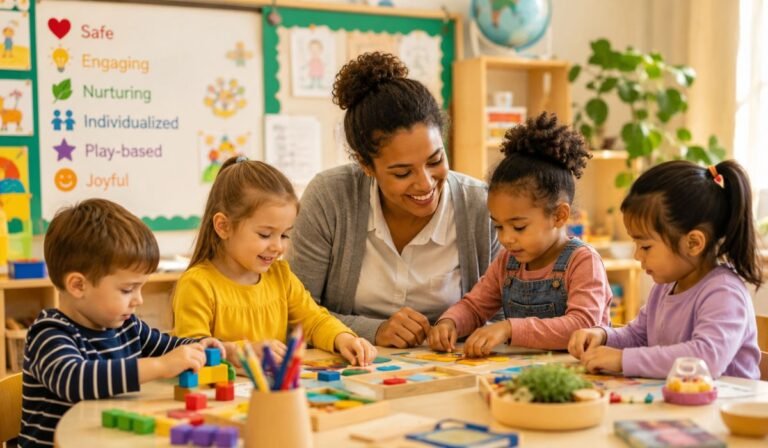
Children are natural learners long before they enter a classroom. They explore, observe, question, experiment, and make sense of the world through everyday experiences. Yet the transition into formal education can either strengthen that curiosity or gradually replace it with routine. This is why choosing among private schools in Singapore involves far more than comparing facilities, class sizes, or academic results.
The most meaningful early education experiences create an environment where children feel confident to think independently, solve problems, and enjoy learning itself. These early foundations often influence not only school performance but also how children approach learning throughout their lives.
A Great Start Encourages Curiosity Instead of Simply Delivering Answers
Young children rarely need encouragement to ask questions. They naturally wonder why things happen, how objects work, and what might happen next. The challenge for educators is not creating curiosity but protecting it. When curiosity becomes part of everyday learning, children begin viewing education as an exciting process of discovery instead of a series of tasks to complete.
An effective early learning environment allows children to:
- Investigate ideas through exploration rather than memorization.
- Ask questions without worrying about being wrong.
- Observe patterns and make their own discoveries.
- Develop confidence by finding answers independently.
Confidence Grows Through Participation, Not Perfection
Many people associate confidence with praise, but genuine confidence develops differently. It grows when children are encouraged to participate, make decisions, solve problems, and recover from mistakes with guidance rather than fear. These experiences teach children that learning is not about always having the correct answer. It is about developing the willingness to keep trying, improving, and growing.
Early learners build confidence when they have opportunities to:
- Share ideas during discussions.
- Work with classmates on simple challenges.
- Make age-appropriate choices during activities.
- Present their thinking without fear of criticism.
- Reflect on what they have learned.
Independence Begins with Everyday Responsibilities
One of the most valuable outcomes of early education is the gradual development of independence. This quality does not emerge suddenly in secondary school or university. It develops through small daily experiences that encourage children to take ownership of their learning. These seemingly ordinary experiences build responsibility, decision-making, and self-management skills that continue supporting students throughout their academic journey.
Simple responsibilities help children become more independent, including:
- Organising learning materials.
- Completing age-appropriate tasks.
- Managing classroom routines.
- Making thoughtful choices during activities.
- Solving simple problems before seeking help.
Learning Becomes Stronger When Children Connect Ideas
Children learn most effectively when knowledge feels meaningful rather than isolated. Instead of treating every subject as completely separate, strong early education encourages learners to recognise relationships between different ideas and experiences.
For example, a simple gardening activity can introduce science through plant growth, mathematics through measuring, language through observation, and creativity through drawing or storytelling. Learning becomes richer because children understand how different concepts work together in everyday life.
This integrated approach helps students develop a deeper understanding instead of memorising information only for short-term recall. It also prepares them to think more flexibly as they encounter increasingly complex learning in later years.
Relationships Shape the Learning Experience Every Day
The quality of early education is influenced as much by relationships as by curriculum. Children learn best when they feel understood, respected, and encouraged to participate. Positive interactions with teachers and classmates create a sense of belonging that allows learning to happen naturally. When children feel emotionally secure, they are more willing to explore new ideas, take appropriate risks, and remain engaged in learning.
Meaningful relationships help children:
- Develop effective communication skills through everyday conversations.
- Learn cooperation by working with classmates on shared activities.
- Build empathy by listening to different viewpoints and respecting others.
- Feel comfortable expressing ideas and asking for support when needed.
The Right Learning Environment Develops Skills That Continue to Grow
The purpose of early education should not be limited to preparing children for the next academic year. It should help them build abilities that remain valuable throughout every stage of education and beyond. Among private schools in Singapore, parents are increasingly looking for learning environments that develop skills such as critical thinking, creativity, communication, collaboration, and adaptability alongside academic knowledge.
These abilities help students respond confidently to new situations, solve unfamiliar problems, and continue learning as the world around them changes. Rather than measuring success only through early academic achievement, a strong learning experience prepares children to become capable learners who remain curious long after the early years have passed.
Parents Should Look Beyond Academic Readiness
It is natural for parents to ask whether their child will be ready for primary school. An equally important question is whether the school is helping the child become ready for lifelong learning. The answers to these questions often reveal more about the quality of education than academic worksheets or short-term learning outcomes.
When evaluating an early education programme, parents may benefit from considering:
- Does the classroom encourage children to think independently?
- Are mistakes treated as valuable learning opportunities?
- Is curiosity encouraged through meaningful exploration?
- Do children actively participate rather than simply follow instructions?
- Does the environment support both academic and personal development?
Bottom Line
A great learning experience in early education is not defined by how quickly children master academic skills but by how they develop as learners. When curiosity is encouraged, confidence is nurtured, independence is supported, and meaningful relationships become part of everyday learning, children build foundations that extend far beyond the classroom. These experiences shape how they approach challenges, adapt to change, and continue learning throughout life, making early education one of the most important investments in a child’s future.
One World International School (OWIS) believes that meaningful education begins with inspiring curiosity, encouraging independent thinking, and supporting every child’s individual growth. Through internationally minded learning pathways and child-centred approaches inspired by the philosophy of a Montessori school, they help students build strong foundations that prepare them for future academic success and lifelong learning.
