
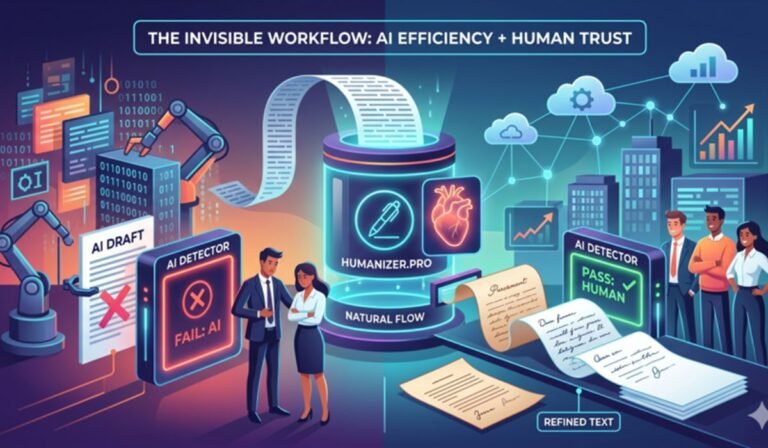
The digital marketing industry is currently operating under a poorly kept secret: almost every agency, boutique firm, and freelance copywriter is using generative artificial intelligence to some degree. The economics of modern content creation practically demand it. When clients expect thousands of words of SEO-optimized blog posts, localized landing pages, and engaging social media copy delivered at breakneck speeds, relying solely on a blank Google Doc and a blinking cursor is a recipe for burnout and shrinking profit margins.
However, this technological leap has created a massive new point of friction between agencies and their clients. While clients want the rapid turnaround times and lower costs associated with AI assistance, they are simultaneously terrified of the consequences. Brands are hyper-aware of Google’s strict core updates penalizing programmatic spam, and they are equally terrified of the reputational damage that comes from publishing a robotic, soulless article. As a result, client contracts now frequently include strict clauses demanding that all deliverables pass rigorous AI detection software before an invoice is paid.
This creates the ultimate “Agency Dilemma”: How do you scale your content output using AI to maintain your profit margins, while ensuring the final deliverable reads with the idiosyncratic warmth of a human expert and scores a 0% on premium AI detectors?
The Rise of the “Invisible” Workflow
The answer lies in completely restructuring the drafting pipeline. In the early days of generative text, copywriters would simply prompt a language model, copy the output, fix a few grammatical quirks, and send it to the client. Today, that lazy workflow is a guaranteed way to lose a contract. Detectors like Originality.ai, GPTZero, and Turnitin are designed to catch the predictable, mathematically perfect sentence structures that standard language models produce.
To survive in this high-stakes environment, savvy content teams have integrated a crucial middle step into their operations. Before any draft reaches a human editor’s desk for final fact-checking, it is processed through a free undetectable AI humanizer. This specialized software layer serves a very specific and highly technical purpose: it fractures the predictable mathematical patterns of machine-generated text.
When a standard AI writes, it chooses the most statistically probable next word, resulting in a low “perplexity” score. It also writes sentences of very similar lengths, resulting in low “burstiness.” A high-quality humanizing algorithm intentionally disrupts these patterns. It injects the natural chaos of human cognition—following a sprawling, 30-word complex sentence with a punchy, three-word fragment. It replaces the cliché transition phrases that detectors look for (like “In conclusion” or “It is crucial to note”) with conversational, industry-specific phrasing.
Preserving the Client’s Brand Voice
Bypassing detection software is only half the battle. The true value of a professional-grade text converter lies in its ability to adapt to a specific brand voice.
If you are a marketing agency writing for a disruptive B2B SaaS startup, the tone needs to be authoritative, slightly edgy, and highly technical. If you are writing for a luxury wellness brand, the tone needs to be soothing, sophisticated, and deeply empathetic. Raw AI outputs default to a boring, middle-of-the-road “Wikipedia tone” that fits neither of these profiles.
When you run a raw draft through an advanced humanization process, you aren’t just scrambling words to trick a scanner; you are restoring the stylistic nuance that makes brand storytelling effective. The technology restructures the syntax so that the content flows naturally, allowing the human editor to spend their valuable time adjusting the final strategic messaging rather than manually rewriting hundreds of robotic-sounding paragraphs.
The Economics of Agency Profitability
From a business operations standpoint, manual editing is the enemy of scale. If an agency charges $300 for a comprehensive pillar article, and a senior editor has to spend three hours manually rewriting an AI draft to make it sound human and pass a detector, the profit margin evaporates. The agency is essentially paying premium hourly rates for low-level line editing.
By automating the “humanization” phase, agencies can dramatically reduce the time spent in the editing bottleneck. A draft that would have taken three hours to sanitize can be restructured in seconds. The human editor then only needs 20 minutes to fact-check, format, and add internal links. This exponential increase in operational efficiency allows freelance writers to take on more clients, and agencies to scale their output without needing to constantly hire and onboard new personnel.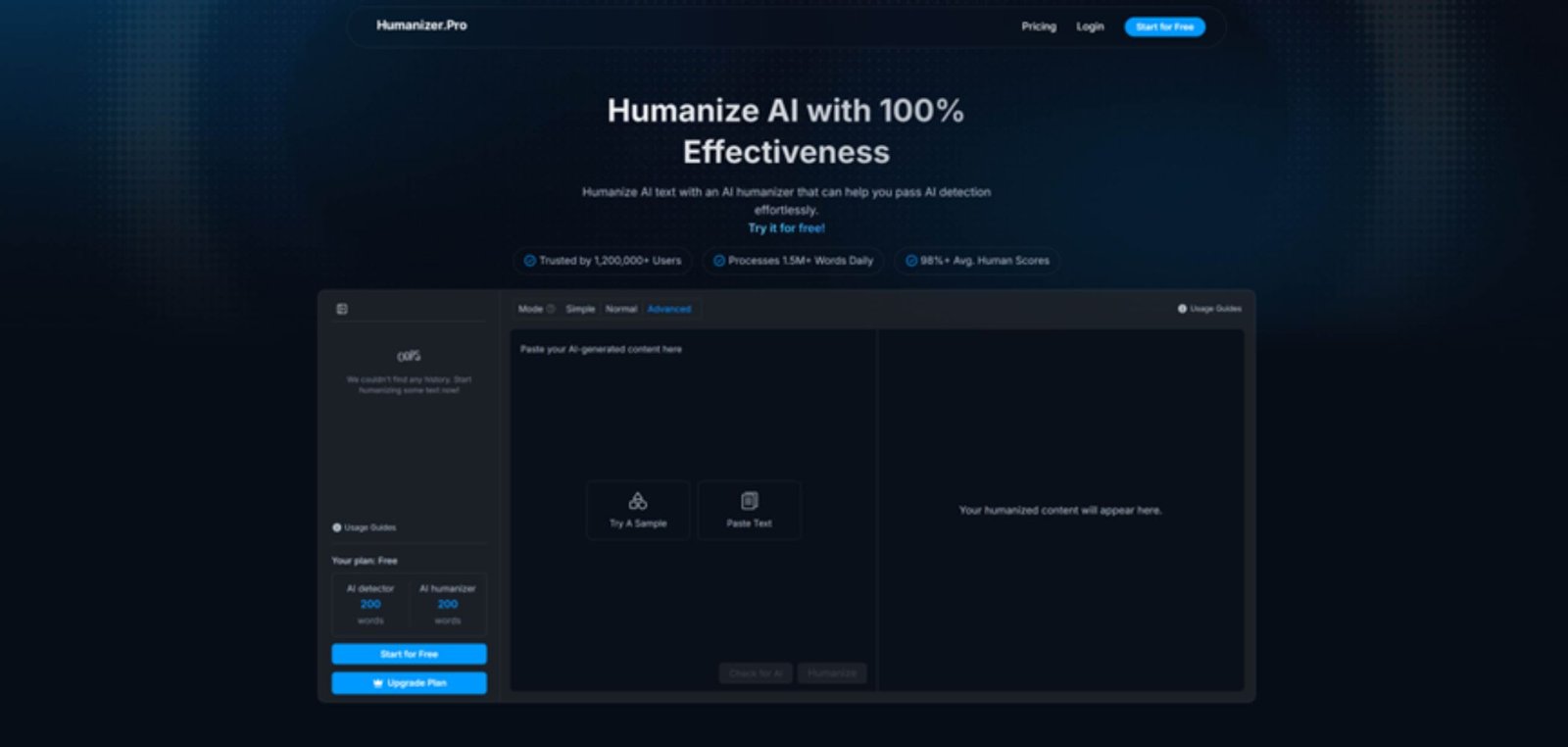
Safeguarding the Artistic Blueprint
Ultimately, the advancement of technology should not be an excuse for creative stagnation; it should be the ultimate springboard for human imagination. In this era of abundance, quantity has been commoditized. Only the words that carry warmth, that fluctuate with emotion, and that touch the reader’s spirit will be remembered by the world. For creators who wish to not only survive the efficiency revolution but to lead it with charisma and authority, choosing to intelligently integrate humanizer.pro is the most decisive move you can make to safeguard the soul of your stories in a sea of synthetic noise.
