
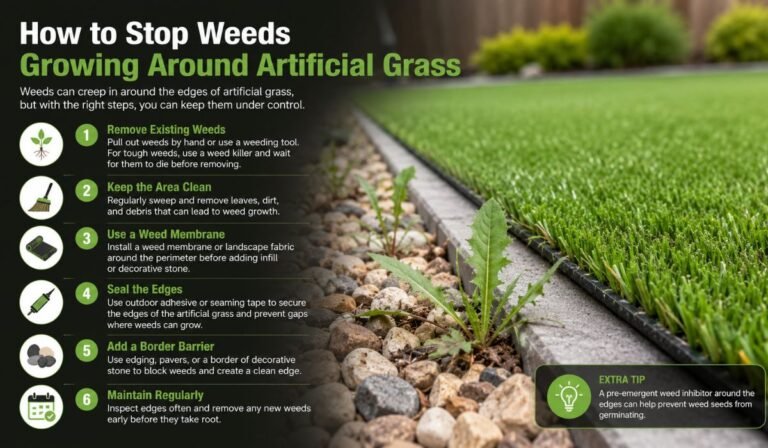
Artificial grass is often chosen because it cuts down on many of the problems that come with a natural lawn. There is no mowing every weekend, no bare muddy patches after rain, and usually far less day-to-day upkeep. But one thing that can still catch homeowners off guard is weed growth.
The good news is that weeds are usually much less of a problem with artificial grass than with real turf. The less welcome news is that they can still appear, especially around the edges, joins, borders, and nearby planting areas. When that happens, many people assume the grass itself has failed. In reality, weeds growing around artificial grass are usually a maintenance or installation issue rather than a sign that the lawn was a bad choice.
If you are trying to stop weeds around artificial grass, the key is understanding where they come from, why they gather around certain spots, and what practical steps actually keep them under control long term.
Why Weeds Appear Around Artificial Grass in the First Place
One of the biggest misunderstandings about artificial grass is that it completely eliminates weeds forever. It does reduce them significantly, but it does not create a sealed outdoor surface where nothing can grow.
Weeds usually appear around artificial grass for one of three reasons.
The first is that seeds blow in naturally from surrounding areas. This is simply part of outdoor life. Wind carries seeds from flower beds, neighbouring gardens, fence lines, and nearby plants. If those seeds land in debris or damp organic matter near the edge of the lawn, they can begin to grow.
The second is that weeds may come from the perimeter, especially if the borders around the grass are not kept tidy. If weeds are thriving in nearby soil, gravel, cracks, or planting beds, they can gradually spread or seed into the edges of the lawn.
The third is installation. If the ground beneath or around the artificial grass was not prepared properly, weeds may find ways to emerge near the perimeter. Missing or poorly fitted weed membrane, weak edge detailing, and rushed groundwork all make weed problems more likely later on.
So while the surface may be artificial, the environment around it is still a living outdoor space. That is why weed prevention needs to focus not just on the grass itself, but on the surrounding areas too.
The Difference Between Weeds Around the Grass and Weeds Through the Grass
This is an important distinction because the fix is not always the same.
Weeds growing around artificial grass usually come from edges, nearby borders, or windblown seeds settling into built-up debris. These are the most common and usually the easiest to manage.
Weeds growing through artificial grass are more often linked to installation problems underneath the surface. That can mean poor site preparation, old roots left behind, or an ineffective weed barrier.
If most of your weed problem is around the edges, that is usually a maintenance and perimeter issue. If weeds are appearing in multiple points through the middle of the lawn, that may suggest the sub-base or membrane needs attention.
Knowing which type of problem you have helps you respond properly instead of treating the wrong cause.
Keep the Edges Clean and Clear
If you want to stop weeds growing around artificial grass, the simplest and most effective habit is to keep the edges clean.
Weeds love the kind of conditions that build up slowly and go unnoticed: damp leaves, trapped dust, bits of soil, moss, and garden debris sitting at the border of the lawn. Once that material collects, it creates a perfect little bed for windblown seeds to settle and grow.
That is why regular brushing and clearing matter. You do not need a complicated maintenance routine, but you do need to stop the perimeter from becoming a buildup zone.
Use a stiff but suitable outdoor brush to sweep away leaves, loose soil, seed heads, and other debris from:
- fence lines
- wall edges
- border joins
- corners
- paving transitions
- areas beneath planters or furniture
This kind of simple upkeep often makes a much bigger difference than people expect.
Do Not Ignore Nearby Borders and Beds
Artificial grass can look neat on its own, but if the flower beds, gravel strips, or fence lines beside it are full of weeds, the problem will keep returning.
This is one reason some homeowners feel like they are constantly battling weed growth even though the lawn itself is artificial. The weeds are not really starting in the grass. They are coming from the areas around it.
To reduce the problem, keep surrounding borders under control:
- remove visible weeds before they seed
- avoid letting overgrown edges spill into the lawn
- tidy gravel or decorative stone borders regularly
- keep soil from washing or blowing onto the edge of the turf
A clean perimeter creates a cleaner lawn. It really is that simple.
This matters even more in family gardens or busy outdoor spaces where the edge of the lawn meets patios, beds, and play zones, especially in areas where homeowners compare options like artificial grass in Cambridge and want a finish that still looks tidy after months of real everyday use.
Brush the Surface Regularly
Brushing the lawn does not just help the fibres stand up. It also helps reduce the conditions weeds need to establish themselves.
When you brush artificial grass, you disturb settling debris before it has time to become compacted into the surface. That means seeds are less likely to root into fine organic buildup. It also helps keep the lawn fresher and drier around the edges, which reduces the kind of damp, neglected feel that weeds tend to love.
You do not need to brush obsessively. For most gardens, an occasional brush is enough, with a bit more attention during autumn or after windy weather when seeds and leaves are more likely to gather.
Rinse and Clean When Needed
Dust, soil, pet residue, and organic matter do not just affect appearance. They can also make weed growth more likely by helping create a more hospitable surface at the perimeter.
A simple rinse with water from time to time helps wash away buildup, especially after dry spells followed by wind or after heavy use. If pets use the garden or if dirt tends to collect in certain areas, a proper artificial grass cleaner can help keep the surface cleaner overall.
This is not about trying to sterilise the garden. It is about reducing the kind of residue that makes it easier for seeds to settle and sprout.
Use a Weed Treatment Carefully and Early
If weeds do start to appear, dealing with them early makes the whole job easier.
Small weeds around the edge of artificial grass can often be removed by hand, especially if they have not been there long. If the roots are shallow and the area is dry enough, this is often the easiest option.
For more persistent growth, a suitable weed treatment may help. The best approach is usually to use something appropriate for the surrounding area and apply it carefully rather than soaking the whole lawn unnecessarily. If children or pets use the garden, always choose treatments with that in mind and follow product instructions closely.
For light weed issues, some homeowners prefer gentler options first. For more stubborn growth along fence lines or borders, stronger treatment may be needed. What matters most is catching the problem before it spreads or goes to seed.
Check Whether the Weed Membrane Is Doing Its Job
If weeds seem to keep reappearing in the same spots, especially close to the perimeter or along joins, it may be worth considering whether the original installation was done well enough.
A proper weed membrane beneath artificial grass helps prevent upward weed growth while still allowing drainage. If it was skipped, badly installed, or damaged at the edges, the lawn will always be more vulnerable.
This does not always mean the whole lawn has to come up. Sometimes the issue is local to a border or corner where the membrane was not extended properly or where the edge detail has weakened over time.
If weeds are persistent and repeated in one area, it may be a sign that the problem is underneath rather than on top.
Be Careful with Hot Water and Harsh DIY Fixes
You will often see home remedies suggested for weed removal, but it is worth being careful.
Boiling water, harsh chemicals, and aggressive scraping can create new problems if used carelessly around artificial grass. Extremely hot water can damage fibres or backing. Sharp tools can loosen edges or scar the surface. Strong chemicals can affect surrounding materials, especially if pets and children use the garden.
That is why gentle and targeted treatment is usually better than aggressive DIY shortcuts. The goal is to stop the weeds, not damage the lawn in the process.
Prevention Is Better Than Repeated Cure
The most effective long-term approach is not to keep treating weeds after they appear. It is to reduce the conditions that allow them to return.
That means:
- keeping the edges tidy
- brushing away seeds and debris
- maintaining nearby borders
- clearing leaf buildup
- acting quickly on early growth
- checking that drainage and membrane performance are still sound
Artificial grass usually gives you a much lower-weed garden than natural turf, but it still responds best to light, steady upkeep rather than neglect followed by panic.
When It May Be Time to Get Help
If the weeds are only occasional and around the edges, you can usually manage the problem yourself. But if growth keeps returning in the same locations, or if weeds are appearing through the middle of the lawn, it may be worth getting the installation checked.
Persistent weed issues can point to:
- weak perimeter detailing
- damaged membrane
- poor base preparation
- surrounding drainage or soil problems
- badly controlled adjacent borders
In that situation, repeated surface treatment may not solve the real cause.
Final Thoughts
Artificial grass does a very good job of reducing weed problems, but it does not remove them completely. If you want to stop weeds growing around artificial grass, the real answer is not one single spray or treatment. It is a mix of good perimeter care, light regular maintenance, early removal, and proper installation beneath the surface.
Most weeds around artificial grass start at the edges, where debris, soil, and damp buildup give seeds a chance to settle. Keep those areas clean, deal with nearby borders, and act early when small weeds appear, and the problem usually stays manageable.
In other words, artificial grass is not weed proof, but it is much easier to keep under control than a natural lawn. With the right approach, you can keep the surface looking clean, neat, and far less frustrating to live with all year round.
