
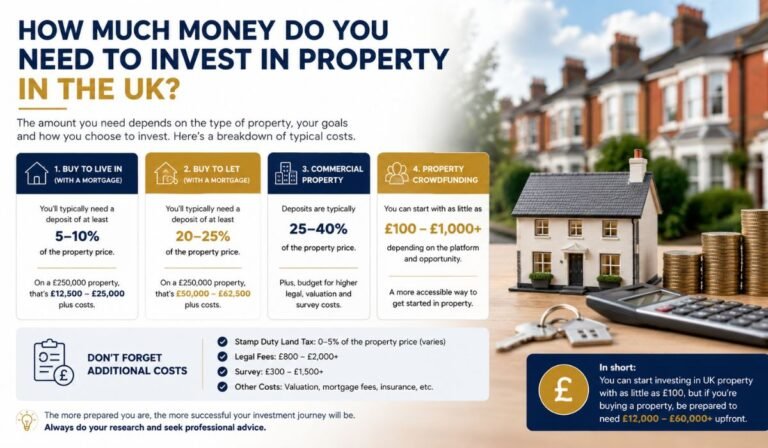
A practical guide to upfront costs, deposits, and what your budget can realistically achieve
When people first think about investing in property, one of the earliest questions they ask is a simple one: how much do I need? It feels like a straightforward question, but the honest answer is that it depends on a lot of variables. Your location, your strategy, whether you plan to use a mortgage, and what you expect the investment to do for you will all shape the number.
The sticker price of a property is only the beginning. A successful investment requires budgeting for a whole range of upfront costs and ongoing expenses that many first-time investors overlook. Understanding the full financial picture before you commit is not just sensible – it is essential.
The Answer Depends on Your Strategy
There is no magic figure that works for every investor. Someone buying a property outright in a regional city will need a completely different pot of money from an investor using mortgage finance in London. An off-plan buyer may face a staged payment schedule very different from someone completing on a finished property. The right budget for you is the one that fits your goals.
Several factors shape how much you will realistically need:
Location
Property prices vary enormously across the UK. A two-bedroom apartment in central Manchester, Liverpool or Leeds will cost a fraction of what you would pay for something comparable in parts of London or the South East. Where you invest determines everything else.
Property Type
Apartments, houses, student accommodation and purpose-built new-builds each carry different price points, different ongoing costs and different financing dynamics. Some have higher service charges; others need more maintenance.
Deposit Size
A larger deposit reduces your borrowing, lowers your monthly repayments and typically gives you access to better mortgage rates. It can also make the difference between a property that generates positive cash flow and one that does not.
Mortgage Availability
Lenders have their own criteria, and your ability to borrow will influence your options. A good mortgage broker can help you understand what is achievable before you start looking.
Cash Purchase vs Mortgage Finance
Buying outright removes the complexity of mortgage finance and interest rate risk. But it ties up significantly more capital, which can limit flexibility if you plan to build a portfolio over time.
Off-Plan Payment Structures
Some new-build developments allow you to spread payments across the construction period, meaning you do not need the full purchase price on day one. This can make certain opportunities accessible with less immediate capital.
Investment Goals
An investor focused on generating monthly rental income will prioritise yield. An investor thinking about long-term capital growth will focus on location fundamentals and future demand. Knowing what you want from the investment helps define the budget you need.
Risk Tolerance
Some investors are happy to take on more complex or higher-risk strategies in pursuit of stronger returns. Others prefer stability and predictability. Your appetite for risk should always inform the scale and structure of your investment.
The Main Costs of Buying an Investment Property
The purchase price is what most people fixate on. But by the time you have completed on a property, you will have paid considerably more than the headline figure. Here is where that money tends to go.
Deposit
For financed purchases, the deposit is usually the largest single upfront expense. Buy-to-let mortgages typically demand larger deposits than residential ones, so this is often where the bulk of your capital is committed.
Stamp Duty
Investment properties attract additional stamp duty charges on top of standard rates. These are applied on a tiered basis and can add a meaningful sum to your total purchase cost, particularly at higher price points. Factor this in from the very beginning.
Legal Fees
You will need a solicitor or conveyancer to handle the legal aspects of the transaction. Fees vary, but budgeting between £1,000 and £2,000 is a reasonable starting point for a straightforward purchase.
Mortgage Arrangement Fees
Many lenders charge a fee to set up a buy-to-let mortgage. These can sometimes be added to the loan, but adding them increases the total interest you pay over the mortgage term, so it is worth thinking about whether to pay upfront.
Valuation and Survey Costs
Lenders require an independent valuation before approving a mortgage. Beyond this, you may also choose to commission a homebuyer survey or a full structural survey depending on the age and condition of the property. It is money well spent if it reveals problems before you commit.
Reservation and Exchange Deposits
For new-build and off-plan developments, a reservation fee is typically required to secure the property. This is followed by an exchange deposit when contracts are signed, which is usually 10% of the purchase price. These amounts are non-refundable if you pull out after exchange.
Completion Funds
On completion, you pay the remaining balance along with any outstanding fees. For financed purchases this is where the mortgage draws down. For cash buyers, the full amount is required.
The key point is that all of these costs should be in your budget from day one, not treated as unexpected extras after the fact.
How Much Deposit Do You Need for a Buy-to-Let Property?
This is one of the most frequently asked questions among new investors, and the answer has shifted over time as lending criteria have tightened. Buy-to-let mortgages are treated differently from residential mortgages because lenders view them as a higher-risk proposition.
When assessing a buy-to-let application, lenders typically consider:
- The expected rental income and whether it comfortably covers the mortgage payment
- Your personal income and overall financial position
- The type and condition of the property
- The loan-to-value ratio you are seeking
- Wider market conditions at the time of application
Putting down a larger deposit usually opens up a wider choice of lenders, reduces your monthly costs and provides a better buffer if rental income dips or interest rates rise. Rental income projections are particularly important – most lenders want to see that rent will cover the mortgage payment by a meaningful margin, often 125% or more at a stressed interest rate.
Because lending rules evolve and vary between providers, speaking to an experienced mortgage broker before you commit to any strategy is one of the most sensible things you can do.
What Extra Costs Do Investors Often Overlook?
For many first-time investors, the surprises come after completion. The property is purchased, the paperwork is done – and then the ongoing expenses start arriving. These costs can make a real dent in your returns if you have not planned for them.
Service Charges
If you buy in an apartment building or managed development, you will pay a service charge to cover the upkeep of communal areas. These charges vary widely and in some developments can be significant. Always ask for the most recent service charge accounts before buying.
Ground Rent
Some leasehold properties still carry ground rent obligations, though legislation in this area has been tightening. Make sure you understand the lease terms and whether any ground rent is escalating.
Letting Agent Fees
If you use a letting agent to find tenants and manage the property, expect to pay around 10% to 15% of monthly rent for a full management service. It is a worthwhile cost for many investors, but it needs to sit inside your net yield calculations.
Maintenance and Repairs
Every property needs upkeep. Boilers break down, roofs leak, appliances fail. A sensible rule of thumb is to hold back a percentage of your annual rental income as a maintenance reserve, so unexpected repairs do not come as a financial shock.
Landlord Insurance
Standard buildings insurance does not cover you as a landlord. You will need a specialist policy that protects against property damage, loss of rental income and liability. Premiums vary by property type and location.
Furnishing Costs
Whether you let a property furnished or unfurnished depends on your target market. Student accommodation and city-centre apartments are more commonly let furnished. The initial outlay can run into several thousand pounds.
Void Periods
No property is let 100% of the time. Between tenancies there will be periods when no rent comes in, but your mortgage, insurance and other costs continue. A realistic financial model should build in one to two months of void time per year.
Tax and Professional Costs
Rental income is subject to income tax, and you may also face capital gains tax when you eventually sell. Professional advice from an accountant who specialises in property investment can save you more than it costs.
Compliance Costs
Landlords have legal obligations around gas safety, electrical safety, energy performance, fire safety and more. Regular inspections and certifications are not optional – and the cost of staying compliant should always be factored in.
How Much Money Do You Need for Off-Plan Property Investment?
Off-plan investment works differently from buying a completed property. Rather than paying everything at once, you are committing to purchase something that does not yet exist in its finished form, with payments spread across a schedule tied to construction milestones.
[Backlink placeholder: Link the phrase “off-plan property investment” to a relevant Aspen Woolf off-plan or property developments page.]
A typical off-plan payment structure looks something like this:
Reservation Fee
A relatively small payment – often a few thousand pounds – secures the property for you and takes it off the market while contracts are prepared.
Exchange Deposit
Once contracts are exchanged, a larger deposit is required. This is typically 10% to 20% of the purchase price and is non-refundable if you withdraw after this point.
Staged Payments
Some developments require further payments at specific points during construction. Not all do – check the contract carefully.
Completion Balance
When the property is finished and ready for handover, the remaining balance is due. This is usually when mortgage finance is arranged and drawn down.
The attraction of this structure is that it gives investors time to organise their finances before completion, and in rising markets, early-stage pricing can sometimes reflect a discount to the eventual completed value. However, off-plan investment carries its own risks: construction delays, developer difficulties, changing market conditions and the challenge of securing finance at completion if lending criteria have tightened. Due diligence on the developer’s track record and the contract terms is essential before committing.
Can You Start Investing with £50,000?
In certain parts of the UK, yes. A £50,000 budget can potentially stretch to a deposit plus purchasing costs on a buy-to-let property in some regional markets where prices are more accessible. But the word “potentially” is doing a lot of work in that sentence.
Whether £50,000 is genuinely enough depends on the purchase price, the deposit percentage required by your lender, stamp duty, legal fees, mortgage costs and whether you have anything left over as a financial buffer. Investors working at this level of capital need to model everything carefully:
- Purchase price and deposit requirement
- Stamp duty liability
- Legal and mortgage arrangement fees
- Emergency maintenance reserve
- Ongoing running costs and void periods
The real question is not simply whether £50,000 can buy you a property – it is whether it leaves you with enough financial resilience to manage that investment responsibly once you own it.
What Can You Do with a £100,000 Budget?
A £100,000 budget generally opens up a meaningfully wider range of options. You have more flexibility over which markets you enter, what mortgage structure you use and whether you want to keep some capital in reserve rather than committing everything to a single purchase.
With this level of capital, investors often consider:
- Using it as a larger deposit on a higher-value property to improve mortgage terms
- Accessing stronger regional rental markets with better yield potential
- Exploring new-build or off-plan developments where staged payment structures suit the budget
- Splitting the capital across more than one opportunity, depending on entry costs and strategy
More capital provides a cushion. It means you are better placed to handle maintenance surprises, absorb a void period without panic and take a longer view on performance. That said, a larger budget does not automatically mean better returns. The quality of the individual investment – the location, the price paid, the expected demand – matters more than the size of the pot.
Why Net Return Matters More Than Purchase Price
One of the most common mistakes new investors make is focusing almost entirely on what they can afford to buy. The more important question is what they will actually earn from the investment after all costs are taken into account.
Gross yield tells you the rental income relative to the purchase price. Net yield is what is left after you subtract running costs, management fees, maintenance, finance costs, voids and taxes. The two numbers can look very different, and it is the net figure that determines whether an investment is genuinely working for you.
Other factors to keep in mind:
Cash Flow
A property that generates positive cash flow every month gives you operational resilience. One that barely breaks even, or worse runs at a loss, requires ongoing capital input and is vulnerable to any change in circumstances.
Capital Growth
Over time, a well-chosen property in a strong location should appreciate in value. This long-term gain is a significant part of the overall return, but it should be considered alongside income rather than used to justify an investment that does not stack up financially in the near term.
Exit Strategy
How and when you eventually sell, refinance or restructure the investment is as important as the entry. Properties in strong locations with broad buyer appeal are easier to exit when the time comes.
Ultimately, having enough money to buy a property is just the starting point. A successful investment is one that keeps performing after every cost has been counted.
Frequently Asked Questions
How much money do I need to invest in property in the UK?
There is no single figure. The amount you need depends on the property price, your chosen location, the deposit required by your lender, stamp duty, legal fees and the ongoing costs of ownership. Investors should budget for the full financial picture – not just the purchase price.
How much deposit do I need for a buy-to-let property?
Buy-to-let mortgages typically require a larger deposit than residential mortgages, reflecting the higher risk that lenders associate with investment properties. The exact amount depends on the lender, the property and your personal financial circumstances. A mortgage broker can give you specific guidance.
Can I invest in UK property with £50,000?
In some regional markets, yes. A £50,000 budget may cover a deposit and associated costs on a lower-value property. However, the real question is whether that budget leaves you financially resilient enough to manage the investment properly – including maintenance costs, void periods and unexpected expenses.
Is £100,000 enough to invest in UK property?
Yes. £100,000 provides access to a solid range of opportunities, particularly outside London. It can work as a larger deposit on a higher-value property, as capital for a direct regional market purchase or as part of a diversified strategy across multiple lower-cost investments.
Conclusion
How much money you need to invest in property in the UK is ultimately determined by your goals, your preferred approach and the specific market you are targeting. There is no universal answer, but there is a universal principle: the investors who do best are rarely those who simply spend the most. They are the ones who understand every cost involved, model their numbers realistically and make decisions grounded in evidence rather than enthusiasm.
Whether you are entering the market for the first time with £50,000 or deploying a larger budget across several opportunities, the discipline of budgeting properly – accounting for everything from stamp duty to void periods – is what separates a good investment from an expensive mistake.
Property can be a powerful vehicle for building long-term wealth. But it rewards careful planning, thorough research and a clear-eyed view of the numbers behind every opportunity.
