
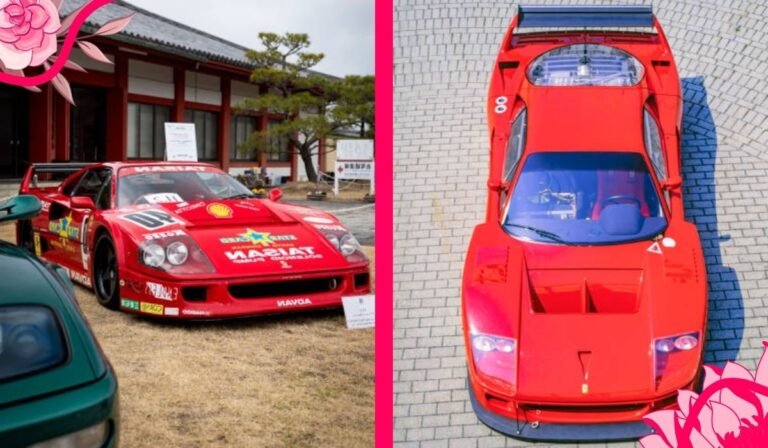
The Ferrari F40 is not just a car—it is an icon that defined an era of automotive excellence. Introduced in 1987, it marked a milestone for Ferrari, celebrating the company’s 40th anniversary and serving as the last Ferrari personally approved by the legendary Enzo Ferrari. At the time of its release, the Ferrari F40 was Ferrari’s fastest, most powerful, and most expensive road car, captivating enthusiasts worldwide with its raw performance and minimalist design. Its reputation as a pure, unadulterated supercar continues to captivate collectors, racers, and automotive fans more than three decades later. The Ferrari F40 remains a symbol of engineering mastery, speed, and the Ferrari spirit.
Quick Bio Information
Ferrari F40 Production Years: 1987–1993
Units Produced: 1,311 (including LM and Competizione)
Engine: 2.9-Liter Twin-Turbocharged V8
Power Output: 478–484 HP
Top Speed: 321 km/h (199 mph)
0–100 km/h Acceleration: 4.7 Seconds
Layout: Rear Mid-Engine, Rear-Wheel Drive
Designer: Pininfarina (Pietro Camardella and Aldo Brovarone)
Chief Engineer: Nicola Materazzi
Launch Date: July 21, 1987
Legacy Status: Iconic Supercar, Highly Coveted Collector’s Car
The Origins of The Ferrari F40
The story of the Ferrari F40 begins with the 288 GTO Evoluzione project, a racing-inspired model created to compete in the Group B category. Nicola Materazzi, Ferrari’s chief engineer, envisioned a car that could deliver extreme performance while remaining roadworthy. The discontinuation of Group B racing left the project without a purpose, but Enzo Ferrari’s desire to leave a lasting legacy turned the Evoluzione project into a fully realized road car. From the outset, the F40 was intended to be a celebration of speed and engineering, not a luxury vehicle. This focus on performance over comfort became a defining characteristic of the Ferrari F40.
Design Philosophy: Speed Meets Minimalism
The Ferrari F40’s design is a testament to the principle that form follows function. Crafted under the supervision of Aldo Brovarone at Pininfarina, with Pietro Camardella as the lead designer, the F40 features aerodynamic lines that are both stunning and purposeful. Panels made from carbon fiber, Kevlar, and aluminum reduced weight while enhancing strength. Its signature wedge shape, hidden headlights, and rear spoiler were all engineered to improve airflow and cooling, especially for its twin-turbocharged engine. Inside, the cabin embraced Spartan minimalism, removing carpets, sound systems, and unnecessary luxury features to prioritize performance. Every aspect of the F40 was about achieving speed, balance, and driver engagement.
Under The Hood: Engineering and Powertrain
The heart of the Ferrari F40 is a 2.9-liter twin-turbocharged V8 engine, producing between 478 and 484 horsepower, depending on the market specification. This high-revving engine delivers 577 Nm of torque, pushing the car from 0 to 100 km/h in just 4.7 seconds. The rear mid-engine layout and 5-speed manual transmission allow for precise handling, making the Ferrari F40 both fast and exhilarating to drive. Interestingly, this would be Ferrari’s last forced induction engine until 2014, highlighting the F40’s place as the culmination of an era of raw, mechanical engineering. The careful balance between engine power, lightweight construction, and aerodynamics made the F40 a machine built for pure driving pleasure.
Performance That Redefined Speed
When it comes to speed, the Ferrari F40 delivered performance that stunned the automotive world. Its top speed approached 321 km/h (199 mph), making it one of the fastest production cars of its time. The combination of turbocharged power, aerodynamic design, and lightweight materials allowed drivers to experience acceleration and handling like never before in a road car. Comparisons with contemporary supercars, such as the Porsche 959 and the Lamborghini Diablo, revealed that while the F40 was less refined, it offered a more visceral, driver-focused thrill. The car’s handling is precise, yet demanding, rewarding skilled drivers with an experience that feels more like racing than everyday driving.
Racing Legacy: F40 On The Track
The Ferrari F40’s performance was not limited to the streets. The F40 LM and F40 Competizione variants brought the car to the racetrack, competing in events such as the IMSA GTO championship and the BPR Global GT Series. These race cars were enhanced with lightweight modifications, upgraded suspension, and engine tuning, allowing them to remain competitive in endurance and GT racing. Drivers like Jean Alesi and Jean-Louis Schlesser showcased the F40’s capabilities on circuits around the world. Even though it was never a dominant force against newer supercars, the F40’s racing pedigree cemented its reputation as a performance-oriented machine designed for enthusiasts and professionals alike.
Inside The Ferrari F40: The Spartan Interior
Step inside the Ferrari F40, and you encounter a cabin designed for the driver, not comfort. The interior is stripped down, featuring racing-style seats, minimalistic dashboards, and polycarbonate windows. There are no carpets, door panels, or sound insulation—every decision was about reducing weight and enhancing focus on driving. This simplicity contributes to a direct connection between the driver and the car, allowing the full power and responsiveness of the F40 to be felt on every turn and straightaway. For many enthusiasts, this lack of luxury is what makes the F40 so authentic and thrilling.
Launch, Promotion, and Public Reception
The Ferrari F40 debuted on July 21, 1987, at Maranello, months ahead of schedule at Enzo Ferrari’s insistence. The launch showcased a car that was drastically different from typical supercars, emphasizing performance, rawness, and exclusivity. Public reception was mixed. Critics praised the speed and driving experience, while some considered the car a “speculator’s dream” due to its high price and rarity. Prices quickly escalated in the used market, cementing the F40 as both a collector’s item and a status symbol. Over time, appreciation for the F40’s engineering purity and racing-inspired design has made it one of the most celebrated supercars in history.
Legacy and Cultural Impact
More than thirty years after its release, the Ferrari F40 continues to influence automotive design and culture. Collectors, enthusiasts, and automotive journalists consider it a benchmark for raw, driver-focused supercars. Its combination of speed, minimalism, and racing heritage makes it an enduring icon, admired for its authenticity in a world where modern supercars often favor luxury and electronics. Shows, films, and automotive media frequently highlight the F40 as the ultimate expression of Ferrari’s engineering ethos, ensuring that its legacy will remain strong well into the future.
Why The Ferrari F40 Is A Must-Have For Enthusiasts
The Ferrari F40 is not just a car to be admired; it is a machine to be driven, felt, and experienced. Its enduring appeal lies in its unique blend of performance, rarity, and historical significance. Owning an F40 is owning a piece of automotive history—the last car Enzo Ferrari personally approved. Beyond performance, it offers collectors and enthusiasts a tangible connection to an era of pure, uncompromised supercar engineering. Today, its value continues to rise, making it one of the most coveted Ferraris in the world.
Conclusion: The Enduring Legacy of the Ferrari F40
The Ferrari F40 remains more than just a supercar—it is a symbol of pure automotive passion and engineering mastery. From its twin-turbocharged V8 engine to its lightweight, minimalist design, every detail was crafted with performance in mind. As the last Ferrari personally approved by Enzo Ferrari, it carries a unique historical significance, blending racing heritage with road-going excellence.
Even decades after its debut, the F40 continues to captivate enthusiasts and collectors, celebrated for its raw driving experience, precise handling, and timeless style. Its influence can still be seen in modern supercars, but nothing quite matches the unfiltered thrill and authenticity that the F40 delivers. Owning or even experiencing one is stepping into a legend—a car that redefined speed, style, and what it means to drive a Ferrari.
FAQs About Ferrari F40
What Makes The Ferrari F40 Special?
The Ferrari F40 is special because it combines raw performance, lightweight engineering, and racing heritage into a road-legal car. It was the last Ferrari personally approved by Enzo Ferrari, and its minimalist approach emphasizes speed and driver experience over luxury.
How Fast Is The Ferrari F40?
The Ferrari F40 can reach a top speed of 321 km/h (199 mph) and accelerates from 0–100 km/h in about 4.7 seconds, making it one of the fastest production cars of its era.
What Engine Does The Ferrari F40 Have?
It features a 2.9-liter twin-turbocharged V8 engine, delivering up to 484 horsepower, paired with a 5-speed manual transmission for precise and engaging driving.
How Many Ferrari F40s Were Made?
A total of 1,311 Ferrari F40s were produced, including special racing variants like the F40 LM and F40 Competizione, with only 213 originally destined for the U.S. market.
Is The Ferrari F40 Valuable Today?
Yes, the Ferrari F40 is a highly valuable collector’s car. Prices have appreciated significantly, reflecting its rarity, historical importance, and iconic status among supercar enthusiasts.
What Was The Ferrari F40’s Racing History?
The F40 competed in IMSA and GT racing events, particularly in the F40 LM and Competizione variants. These cars achieved notable results in endurance and GT championships, showcasing the model’s performance pedigree.
Why Do People Still Love The Ferrari F40?
The Ferrari F40 remains loved because it represents uncompromised speed, driving purity, and Ferrari heritage. Its raw, visceral driving experience is unmatched by modern supercars, making it a timeless classic.
People Also Read: Wii U: Nintendo’s Underrated Console That Paved The Way For The Switch
