
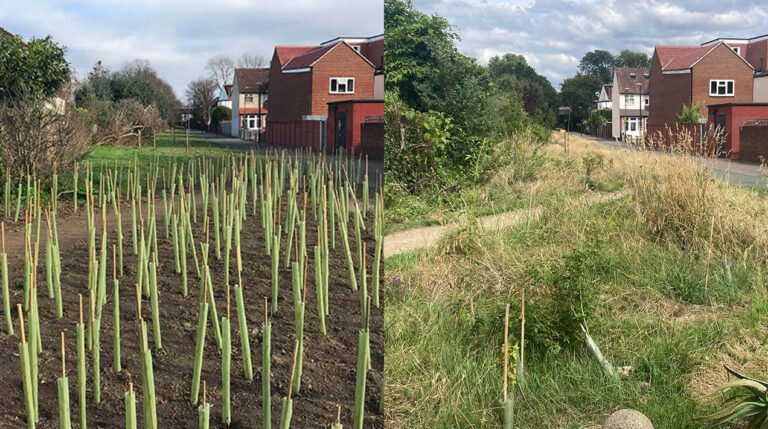
Trees have always faced challenges from wind, rain, pests, and ageing. What is changing is the frequency and intensity of those pressures.
Across the UK, climate change is creating conditions that place greater strain on trees, increasing the likelihood of branch failures, structural weaknesses, and even complete collapse.
Trees provide shade, improve air quality, and enhance property value, but they can also pose risks when their structural integrity is compromised. That’s why understanding how climate change affects tree health is becoming increasingly important for homeowners.
Rising Temperatures Put Trees Under Stress
Trees rely on a delicate balance of water, nutrients, and favourable growing conditions. As average temperatures continue to rise, that balance becomes harder to maintain.
Extended periods of heat increase water loss through leaves, forcing trees to work harder to stay hydrated. When moisture becomes scarce, growth slows, energy reserves decline, and trees become less capable of defending themselves against external threats.
Some species commonly found throughout the UK are particularly vulnerable to prolonged heat stress.
Trees such as beech, birch, and certain oak varieties can show signs of decline when exposed to repeated hot, dry summers. Symptoms often include premature leaf drop, thinning canopies, and reduced growth.
Heat stress rarely causes immediate tree failure. Instead, it weakens the tree gradually, making it more susceptible to structural defects that may not become apparent until a storm or strong wind exposes the underlying weakness.
More Frequent Storms Increase the Risk of Failure
One of the clearest links between climate change and tree failures is the rise in severe weather events.
Storms subject trees to enormous physical forces. High winds place pressure on branches, trunks, and root systems, testing their structural strength.
Trees that have already been weakened by drought, disease, or poor growing conditions are often unable to withstand these forces.
The UK has experienced several significant storm events in recent years that have resulted in widespread tree damage. Fallen trees and large branch failures can block roads, damage vehicles, disrupt power supplies, and pose serious safety risks to pedestrians.
Even mature trees that have stood for decades can become vulnerable when extreme weather exceeds the conditions they evolved to tolerate. This is particularly true in urban environments, where restricted rooting space can reduce a tree’s ability to anchor itself securely.
Regular inspections become especially valuable after severe weather, helping identify hidden cracks, root damage, and weakened limbs before they become a hazard.
The Challenge of Drought Followed by Heavy Rain
Climate change is not simply making the weather warmer. It is also making weather patterns more unpredictable.
Many parts of the UK are experiencing longer dry periods punctuated by intense rainfall events. This combination can be particularly damaging for trees.
During drought conditions, soil moisture declines and roots struggle to absorb enough water. Prolonged dryness can cause roots to die back, reducing the tree’s ability to absorb nutrients and maintain stability.
When heavy rainfall follows a drought, the ground can quickly become saturated. Waterlogged soils contain less oxygen, placing further stress on root systems. In severe cases, root rot may develop, weakening the tree’s foundation.
The situation becomes even more dangerous when strong winds arrive while the soil is saturated. Trees may appear healthy above ground, but can be uprooted more easily because their anchoring roots are compromised.
This combination of drought, flooding, and wind is increasingly recognised as a significant contributor to tree failures across both urban and rural landscapes.
Climate Change Is Helping Pests and Diseases Spread
Trees weakened by environmental stress become attractive targets for pests and diseases.
Warmer temperatures allow certain insect populations to survive winters more successfully, increasing their numbers and extending their active seasons.
Pests such as bark beetles can cause significant damage by disrupting the movement of water and nutrients within a tree.
At the same time, changing weather conditions can create ideal environments for fungal infections and plant diseases. Trees already struggling with drought or heat stress often have fewer resources to fight off these attacks.
Once disease or infestation becomes established, structural weaknesses can develop within the trunk, branches, or root system. These defects may remain hidden for years before eventually contributing to branch drop or complete tree failure.
Early detection remains one of the most effective ways to manage these risks and preserve long-term tree health.
Why Urban Trees Face Unique Challenges
Trees in towns and cities often face additional pressures that make them more vulnerable to climate-related problems.
Urban environments typically experience higher temperatures due to the heat island effect, where buildings, roads, and paved surfaces absorb and retain heat. This naturally intensifies drought stress during the summer months.
Space limitations also affect root development. Trees growing in narrow verges, small planting pits, or heavily compacted soils often have restricted root systems compared to their countryside counterparts.
These constraints reduce stability and limit access to water during dry weather. When extreme conditions arrive, urban trees wouldn’t have the necessary reserves to cope with that stress.
For local authorities and property owners, proactive tree management is increasingly important as climate pressures become unshakable realities.
The Importance of Professional Tree Inspections
Not every stressed tree presents an immediate danger, but identifying potential problems early can prevent costly damage and improve public safety.
Professional arborists are trained to spot warning signs that may be overlooked by untrained observers. These can include:
- Cracks or splits in the trunk;
- Dead or hanging branches;
- Fungal growth around the base;
- Cavities and decay;
- Leaning stems;
- Root plate movement;
- Sparse or declining canopies.
Regular assessments help determine whether a tree requires pruning, monitoring, support systems, or removal.
As climate-related stresses become more common, routine inspections should be viewed as a practical investment rather than a reactive measure.
Building Climate-Resilient Landscapes
While climate change presents significant challenges, some steps can improve resilience.
A smart approach is planting a diverse range of tree species. This reduces the risk of widespread losses from a single pest, disease, or weather event. Choosing species suited to future climate conditions can also improve long-term survival rates.
Good soil management, adequate watering during establishment, and ongoing tree maintenance services all contribute to stronger, healthier trees.
Strategic planting can also reduce wind exposure and improve overall stability. Communities, landowners, and local authorities all have a role to play in protecting the UK’s tree population as environmental conditions continue to evolve.
Conclusion
The evidence increasingly suggests that climate change is contributing to rising tree failures. But most tree failures do not happen overnight. They are often the result of years of accumulated stress that eventually reaches a tipping point.
That is why proactive management matters more than ever. Regular inspections, climate-conscious planting strategies, and professional tree care can help identify risks before they become hazards.
As weather patterns continue to shift, investing in tree health today will help protect both our landscapes and our communities for years to come.
