
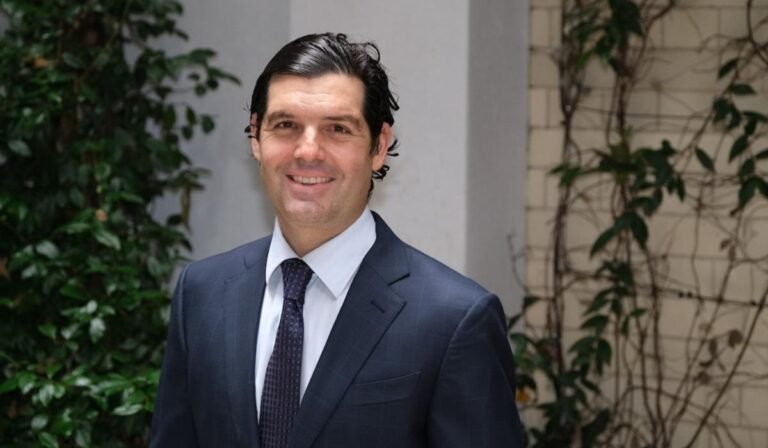
Ownership and control usually get treated as separable. Money goes in, professional managers run the business, and the investor watches from a comfortable distance. Alejandro Betancourt López rejects that split. His working thesis is that returns come from involvement, not from arm’s-length allocation, and he’s built his multi-industry investment group O’Hara Administration around that belief. The group is a family office, holding positions across consumer brands, banking, mobility, and technology, and Betancourt López tends to turn up inside those companies rather than above them.
That’s a real argument, not a slogan. It cuts against a large body of passive-investing orthodoxy that says diversification and detachment beat concentration and hands-on management. He’s wagering the other way, and the record bears it out. He concentrates, he takes formal authority, and he stays close enough to shape outcomes.
Two Models of Capital
Start with the choice itself. One model treats capital as fungible fuel: spread it widely, minimize involvement, accept the market’s average return. The other treats capital as a seat at the table, a claim on decisions rather than just a claim on profits. Betancourt López operates in the second mode. He takes board positions and active roles in his portfolio companies instead of holding shares passively.
The distinction has consequences. A passive holder can only exit when a company disappoints. An involved owner can intervene, replace leadership, redirect resources, or push a change of course before problems calcify. The cost is time and attention, both finite. You can’t sit on many boards and run each seat well, which is why the involved model tends to force concentration. Betancourt López seems to accept that willingly, treating a smaller number of deeper commitments as the price of the control he wants.
The Hawkers C-Suite as Proof of Concept
Hawkers shows the model in operation. The Spanish sunglasses company, based in Elche, became one of his signature holdings after he led a 50 million euro Series A in October 2017 and took the role of president. He’s the largest shareholder as well. That combination of capital and title sets up an involved-owner arrangement rather than a passive financial stake.
His actual responsibilities make the point concrete. He oversees fundraising, institutional relations, and managing the executive layer of CEO, CFO, and COO at the company. Managing the senior executives directly is the sharpest expression of the thesis. He isn’t merely holding equity and hoping the leadership performs; he’s positioned to shape who holds those roles and how they run them. He also didn’t found Hawkers. He backed an existing team, then embedded himself at the top of it. Backing operators and managing them are, in his hands, one continuous act rather than two separate decisions.
A Portfolio Built to Be Run, Not Watched
The pattern extends past a single company. With Auro New Transport, a ride-hailing venture in Spain, Betancourt López took a co-founding role, and he co-founded Banque de Dakar in Senegal through BDK Financial Group. Those are founding-level involvements, not late-stage checks written from a distance. Building a bank and building a mobility platform both demand operational commitment, and both sit inside the same portfolio as his consumer and technology positions.
Read together, the holdings suggest a portfolio designed to be run rather than observed. He gravitates toward regulated, harder-to-enter industries that deter other investors, the kind of fields where operational depth matters more than a quick trade. Those industries reward the involved owner and punish the tourist. You can’t manage a regulated bank or a licensed transport service from a spreadsheet. The choice of sectors and the choice of management style reinforce each other, and neither would work as well on its own.
The Argument That Involvement Drives Returns
The strongest evidence for the thesis is a number. Through O’Hara, Betancourt López took a large artificial intelligence position around 2019 and 2020, and it returned roughly 20 times its value by early 2025. Timing explains part of that. Conviction and involvement explain the rest, because an investor who commits early to an unproven sector has to stay engaged enough to hold through the uncertainty.
There’s a coherent logic underneath the results. Involvement produces information, and information sharpens decisions. An owner who manages the executive layer learns things a passive holder never sees, and that knowledge compounds across a portfolio. The counterargument is fair. Concentration and hands-on control raise the cost of being wrong, and they scale poorly, since attention stays capped no matter how much capital is available. His answer is to keep the number of commitments deliberately limited and to insist on the hiring rules behind his companies, backing operators who can carry most of the load. He treats distance as the absence of the very advantage that turned an early technology bet into a 20x outcome and a Spanish startup into a company he still presides over.
