
Diesel engines are built for heavy workloads, long service life, and dependable torque, which is why they are widely used in trucks, fleets, construction machinery, and industrial equipment. However, even the strongest diesel engine can develop problems when maintenance is delayed, fuel quality is poor, or early warning signs are ignored.
Understanding common diesel engine problems helps owners, operators, and maintenance teams respond before a small issue turns into expensive downtime. From hard starting and smoke to overheating and low oil pressure, diesel engine troubleshooting starts with knowing what each symptom may indicate. The sooner a problem is identified, the easier it is to protect engine performance, reliability, and long-term operating costs.
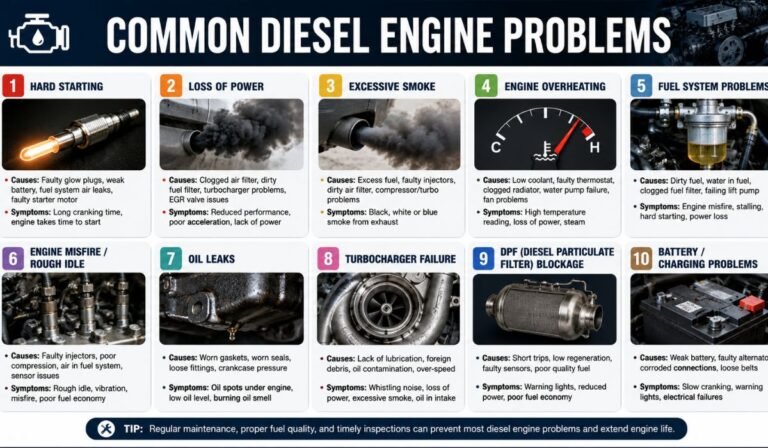
Hard Starting or No-Start Problems
Hard starting is one of the most common diesel engine problems, especially in cold weather or high-hour equipment. A diesel engine needs proper compression, clean fuel delivery, strong battery power, and functional glow plugs or intake heaters to start correctly. If one of these systems is weak, the engine may crank longer than usual, start rough, or fail to start at all.
Fuel-related causes include clogged filters, air in the fuel system, weak fuel pressure, or contaminated diesel. Mechanical wear can also make starting harder, especially when compression drops. In more advanced diesel engine diagnostics, technicians may also check timing, valve train condition, and worn camshaft symptoms of failure when starting problems appear alongside rough running or power loss.
For construction machinery, hard starting should never be ignored. A machine that struggles to start in the yard may fail completely once it is under load on a jobsite.
Loss of Power and Poor Acceleration
A diesel engine that feels weak, slow to respond, or unable to pull properly may have an air, fuel, turbo, or exhaust problem. Loss of power is especially noticeable in towing, hauling, and construction applications where the engine is expected to perform under load.
Common causes include clogged fuel filters, worn injectors, restricted air filters, boost leaks, turbocharger issues, or exhaust restrictions. In some cases, sensors or electronic controls may limit power to protect the engine from further damage.
Poor acceleration is not always caused by one failed part. It often requires proper diesel engine diagnostics to compare fuel pressure, boost pressure, airflow, exhaust flow, and fault codes. Replacing parts without testing can lead to unnecessary costs and longer downtime.
Excessive Exhaust Smoke
Exhaust smoke is one of the easiest diesel engine problems to notice, but the color of the smoke matters. Black smoke usually means the engine is getting too much fuel or not enough air. This may point to injector problems, a dirty air filter, turbo issues, or poor combustion.
White smoke may suggest unburned fuel, cold-start issues, low compression, or coolant entering the combustion chamber. Blue smoke usually indicates oil burning, which can come from worn piston rings, valve seals, or turbocharger oil leakage.
Some smoke may be normal during certain cold-start conditions, but heavy, persistent, or worsening smoke should be inspected. In construction machinery, smoke can also signal that the engine is working harder than it should, which can increase fuel use and accelerate wear.
Fuel System and Injector Issues
The fuel system is one of the most important areas in diesel engine troubleshooting. Diesel injectors must deliver fuel at the right pressure, timing, and spray pattern. When injectors become worn, clogged, or contaminated, combustion becomes less efficient.
Symptoms of fuel system problems can include rough idle, poor fuel economy, hard starting, smoke, misfires, hesitation, and reduced power. Dirty fuel, water contamination, old filters, and poor maintenance can all shorten injector life.
For engines used in construction, agriculture, and fleet work, fuel quality is especially important. Equipment often operates in dusty, demanding environments where contamination risks are higher. Regular filter changes and clean fuel practices can prevent many common diesel engine problems before they become major repairs.
Overheating and Cooling System Failures
Diesel engines generate significant heat, especially under heavy loads. Overheating can be caused by low coolant, a failing water pump, clogged radiator, damaged hoses, thermostat issues, or a restricted cooling system.
In construction machinery, overheating may also happen when equipment works for long periods in hot, dusty, or high-load conditions. If ignored, overheating can lead to head gasket failure, warped components, oil breakdown, and serious internal damage.
Cooling system inspections should be part of regular maintenance, not just emergency repair. Checking coolant level, hose condition, radiator cleanliness, and fan operation can help prevent costly failures.
Final Thoughts
Diesel engines are built for demanding work, but they still need consistent care and early attention when problems appear. Hard starting, power loss, exhaust smoke, injector issues, overheating, and low oil pressure can all point to deeper mechanical or fuel system concerns.
With proper diesel engine diagnostics and timely diesel engine troubleshooting, owners and operators can reduce downtime, protect equipment, and avoid turning minor issues into major repairs.
