
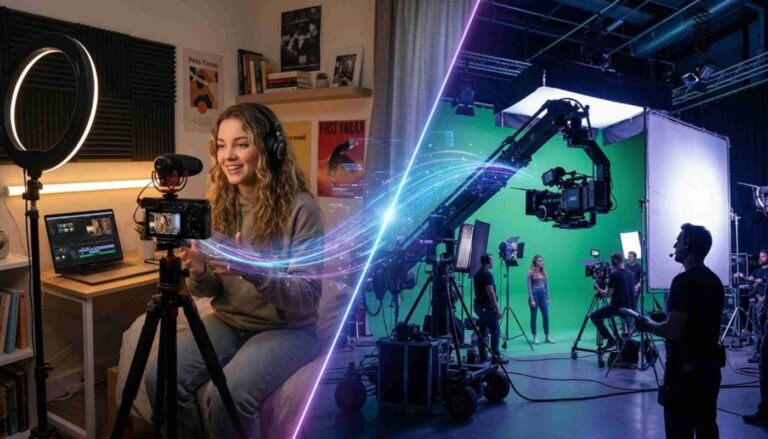
For years, there has been a clear divide between independent creators and large film studios. Hollywood productions were defined by high budgets, professional crews, and access to advanced equipment, while bedroom creators relied on limited tools and resources.
In 2026, that gap is shrinking faster than ever.
Advancements in AI are changing how content is created, making it possible for individuals to produce videos that were once only achievable in professional studios.
From Limited Setups to Scalable Production
Traditionally, producing cinematic content required cameras, lighting setups, editing software, and a team to manage each stage of production.
Today, creators are no longer limited by physical setups.
They can generate videos using prompts, refine scenes using references, and edit content within a single workflow. This shift allows creators to move faster and produce more without depending on large teams or expensive equipment.
Cinematic Control Is No Longer Exclusive
One of the biggest differences between amateur and professional production has always been control over visuals.
Film studios carefully manage camera movement, lens selection, and scene composition to achieve a cinematic look. Replicating this level of precision was difficult for individual creators.
That is now changing.
Modern workflows allow creators to influence how a scene looks and moves. From defining camera angles to controlling motion and pacing, creators now have tools that give them more creative direction over their output.
This shift is making cinematic storytelling more accessible.
Faster Creation Without Compromising Quality
Independent creators have always had speed on their side, but often at the cost of quality.
AI is helping balance both.
Creators can now produce videos quickly while maintaining visual consistency and detail. Instead of spending hours editing, they can generate and refine content in a much shorter time.
This allows them to:
- Publish consistently
- Respond to trends quickly
- Experiment with new formats
Speed combined with quality is a major factor in closing the gap with larger productions.
From Idea to Execution in One Workflow
Another major difference between bedroom creators and studios has been workflow efficiency.
Studios operate with structured pipelines, while individual creators often struggle with fragmented tools.
This is where the biggest shift is happening.
Instead of switching between multiple tools, creators are now working within unified systems where they can move from idea to final output more efficiently. An ai video generator enables creators to generate scenes, adjust motion, and refine visuals within a single environment.
This reduces complexity and allows creators to focus more on storytelling.
Consistency Across Content
Maintaining consistency is essential for professional-quality production.
Studios achieve this through detailed planning and controlled environments, but independent creators often struggle to maintain the same level of consistency.
AI is helping bridge this gap.
Creators can now maintain visual continuity across scenes, control how a video starts and ends, and ensure smoother transitions. This leads to content that feels more polished and cohesive.
Advanced Techniques Becoming Accessible
Techniques that were once limited to professional filmmaking are now becoming more accessible.
Creators can experiment with:
- Multi-directional camera movement
- Structured scene composition
- Controlled pacing and motion
These capabilities allow creators to produce more dynamic and engaging videos without traditional production setups.
Lower Costs, Greater Opportunities
Budget has always been a major limitation for independent creators.
AI is reducing production costs significantly.
Creators no longer need expensive equipment or large teams to produce high-quality content. This opens up opportunities for:
- Independent filmmakers
- Content creators
- Small businesses
Lower costs combined with better tools are creating a more level playing field.
A Shift Toward Creativity Driven Competition
As technology evolves, the focus is shifting from resources to creativity.
Audiences care more about storytelling, originality, and engagement than production scale alone. This gives independent creators a stronger position in the content landscape.
At the same time, studios are also adopting AI, which means both sides are now working with similar capabilities.
The real difference lies in how effectively those tools are used.
Conclusion
The gap between bedroom creators and Hollywood productions is no longer as wide as it once was.
AI is making high-quality video production more accessible, allowing creators to achieve better results with fewer resources. Faster workflows, improved control, and greater consistency are changing how content is produced.
As this trend continues, the line between independent creators and professional studios will become increasingly blurred.
