
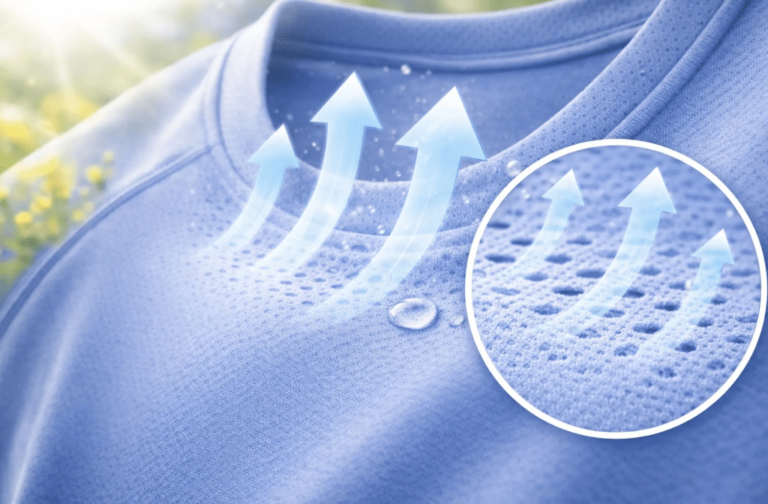
Sweat is not the enemy during a workout, but wet fabric clinging to the skin definitely is. Moisture-wicking fabrics solve this problem through fiber structure rather than any kind of coating, pulling sweat away from the body and spreading it across a wider surface so it evaporates faster. Understanding how this actually works helps explain why some gym shirts feel dry within minutes while others stay damp for hours.
How Moisture Wicking Fabrics Actually Work
The core idea behind moisture wicking fabrics comes down to capillary action, the same physical process that lets a paper towel pull up spilled liquid. Synthetic fibers like polyester are woven or knit with tiny channels running along their length, and these channels draw sweat away from skin toward the outer layer of fabric.
Moisture management clothing takes this a step further by using different fiber densities on the inside versus the outside of the garment. The inner layer stays looser to pull moisture off skin quickly, while the outer layer is woven tighter so sweat spreads thin and dries in contact with open air.
Cotton cannot do this because its fibers absorb water directly into their structure instead of channeling it outward, which is why cotton shirts get heavier and stay wet long after synthetic athletic apparel has already dried.
Why This Matters During Real Training Sessions
Sweat-resistant fabrics reduce the friction that causes chafing during long runs or repetitive lifting movements. When moisture sits against skin for extended periods, fabric rubs differently than it does when dry, and that difference is often where painful chafe marks start to form.
Sportswear technology built around wicking also helps regulate core body temperature, since evaporating sweat pulls heat away from the skin’s surface. This cooling effect is part of why athletes in hot climates or humid conditions specifically seek out gear labeled for moisture control rather than grabbing whatever shirt is closest.
Breathable performance wear combines wicking fibers with mesh ventilation panels to speed up evaporation even further. Placing these panels at high-sweat zones like the back and underarms lets air move directly through the fabric instead of relying purely on the wicking effect to do all the work.
Brands such as A4 Athletic Apparel design entire product lines around getting this balance right, since a shirt that wicks well but blocks airflow still ends up feeling clammy during intense effort.
Common Fabric Mixes Used for Wicking Performance
Activewear fabrics built for wicking usually combine polyester with a small percentage of spandex, giving the garment both moisture control and enough stretch to move with the body. Pure polyester wicks well but can feel stiff, while adding elastane fibers softens the hand feel without sacrificing the wicking channels.
Athletic clothing materials sometimes include nylon mixes as well, since nylon dries even faster than polyester in humid conditions, though it costs more to produce at scale. Higher-end running and cycling gear tends to lean on nylon mixes specifically because of this faster drying time during long endurance efforts.
Sports apparel makers also treat fabric with antimicrobial finishes to slow odor buildup, since bacteria thrive in the same damp conditions that wicking fabric is designed to eliminate quickly. This combination of wicking structure and odor control is now standard across most mid-to premium sportswear lines.
Reading Labels to Spot Genuine Wicking Technology
Not every shirt labeled as performance wear actually delivers strong wicking results, so checking fabric composition on the tag is worth the extra minute. A mix heavy in polyester with a small percentage of spandex is generally a reliable sign of real moisture-wicking fabrics rather than marketing language alone.
Looking for mesh panel placement also helps, since genuine performance pieces put ventilation exactly where the body sweats most rather than scattering decorative mesh in random spots. Brands committed to fabric performance, including Simplstc Apparel, tend to be transparent about fiber content and wicking technology directly on product pages, which makes comparison shopping easier for anyone building out a training wardrobe.
Caring for Wicking Fabric So It Keeps Working
Fabric softener coats fibers with a waxy residue that blocks the tiny channels responsible for wicking, so skipping it entirely protects performance over the life of the garment. A plain, mild detergent without added fragrance beads does a better job of preserving the fabric’s original structure through repeated washes.
Washing in cool water and avoiding high heat in the dryer also helps, since heat can degrade the elastane fibers that give wicking fabric its stretch and recovery. Air drying whenever possible extends the useful life of moisture wicking fabrics well beyond what aggressive machine drying allows.
Matching Wicking Fabric to Your Sport
Different sports put different demands on moisture wicking fabrics, so a single fabric weight rarely works well across every activity. Runners generally benefit from lighter, faster-drying fabric since output stays steady over long distances, while lifters often prefer a slightly heavier fabric that stays put during explosive movements without shifting or riding up.
Cyclists face a unique challenge since airflow at speed changes how sweat evaporates compared to stationary training. Fabric built specifically for cycling often includes extra ventilation panels along the spine, where airflow is weakest during a forward riding position.
Team sport athletes tend to prioritize durability alongside wicking performance, since contact and repeated washing put more stress on fabric than most solo training sessions do. Choosing gear built for the specific demands of a sport, rather than a generic all-purpose shirt, usually delivers noticeably better ease over a full season.
Common Mistakes That Undermine Wicking Performance
Layering a wicking base layer under a non-breathable outer piece traps moisture between the two garments instead of letting it evaporate, defeating the purpose of moisture wicking fabrics entirely. This mistake shows up often in cooler weather, when people reach for a heavier top without considering whether it will actually let vapor pass through to the outside air.
Over-washing with strong detergent can also strip the finishes applied to sweat-resistant fabrics during manufacturing, gradually reducing how well a garment wicks even if the base fiber structure remains intact. Using less detergent than the bottle recommends, and skipping bleach entirely, protects these finishes for a longer stretch of the garment’s life.
Buying based on look rather than fiber content is another common misstep, since two shirts can appear nearly identical while performing very differently once sweat enters the picture. Taking the extra minute to check the label before purchase remains one of the simplest ways to avoid disappointment with a new piece of athletic apparel.
Final Thoughts
Moisture-wicking fabrics do more than just feel dry; they actively support performance by managing temperature, reducing chafing, and keeping fabric lightweight through an entire workout. As sportswear technology keeps advancing, the gap between casual gym wear and genuine performance apparel will keep narrowing, giving everyday athletes access to fabric science that once belonged only to professional training kits.
