
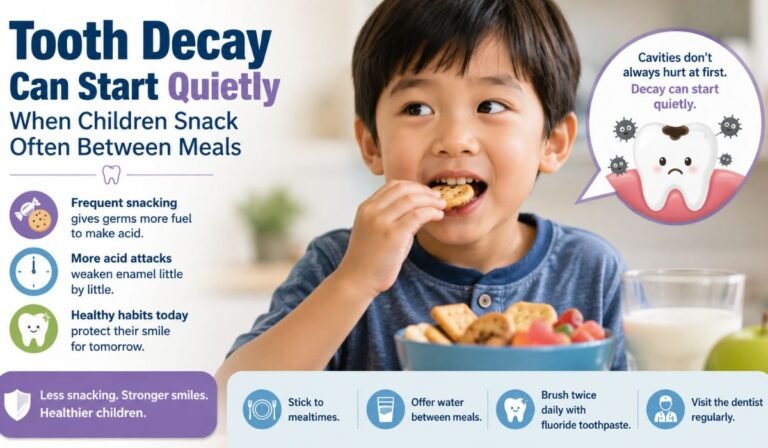
It often starts with small habits that seem harmless. A child grabs a few crackers after school, sips juice while watching television, or snacks throughout the afternoon between meals. Many parents focus on the amount of sugar their child eats, but frequency matters just as much. Constant snacking can quietly increase the risk of tooth decay long before any obvious signs appear.
Tooth decay in children develops gradually. In the early stages, there may be no pain or visible cavity at all. By the time a child complains of discomfort, the damage may already be significant. Frequent snacking is one of the most common reasons this happens.
Why Frequent Snacking Affects Teeth
Every time a child eats or drinks something containing sugar or carbohydrates, bacteria in the mouth produce acid. This acid attacks the tooth enamel for up to an hour after eating. Frequent snacking means the teeth are repeatedly exposed to acid throughout the day, with little chance to recover.
Saliva naturally helps protect teeth by neutralising acids and repairing minor enamel damage. However, when children snack constantly, saliva does not have enough time to restore the mouth’s balance before another acid attack begins. Over time, enamel weakens, and cavities can form. This process is particularly concerning for children because baby teeth have thinner and softer enamel than adult teeth. As a result, early tooth decay can progress more quickly.
It Is Not Just Lollies and Soft Drinks
Many parents associate tooth decay with obvious sugary treats like chocolates or soft drinks. While these certainly contribute, everyday snack foods can also increase risk. Crackers, flavoured yoghurt, dried fruit, fruit juice, muesli bars, and even some packaged “healthy” snacks contain sugars or starches that bacteria feed on. Sticky foods are especially problematic because they cling to teeth for longer periods.
Children who sip juice or sweetened drinks slowly throughout the day are also exposing their teeth to constant acid attacks. Even frequent grazing on small portions can become an issue when there is little time between eating.
Early Signs Often Go Unnoticed
Tooth decay rarely begins with a visible hole. One of the earliest warning signs is a dull white band or chalky patch near the gumline. Because these changes are subtle, many parents do not notice them until the decay worsens. As enamel continues breaking down, teeth may develop yellow, brown, or black areas. Some children experience sensitivity to cold foods or drinks before a cavity becomes obvious. Others may not show symptoms until the decay reaches deeper layers of the tooth.
Regular dental check-ups are important because dentists can often detect early decay before parents can see it themselves. A professional examination may identify areas where enamel is weakening, allowing preventive dental care before tooth filling treatment becomes necessary. Early intervention may also reduce the need for more extensive cavity treatment later.
Why Baby Teeth Still Matter
Some parents assume baby teeth are less important because they eventually fall out. In reality, untreated decay in baby teeth can create long-term problems. Baby teeth help children chew properly, speak clearly, and maintain space for adult teeth. Severe decay may lead to pain, infection, difficulty eating, or early tooth loss. In some cases, children require dental fillings or other dental treatment under general anaesthesia when decay becomes extensive.
Poor oral health in childhood can also affect confidence and school attendance. Children experiencing dental pain may struggle with concentration, sleep, and eating habits. Preventing decay early is far easier than treating advanced cavities later.
Practical Ways to Reduce Snacking Risks
Reducing constant snacking does not mean children can never enjoy treats. The goal is to give teeth enough recovery time between meals. Structured meal and snack times are generally better than continuous grazing throughout the day. Drinking water between meals helps rinse away food particles and supports saliva production. Fluoridated water also strengthens enamel and helps protect against decay.
Parents can also choose snacks that are less likely to stick to teeth. Cheese, plain yoghurt, fresh vegetables, nuts, and crunchy fruits tend to be better options than sticky or highly processed foods.
Brushing twice daily with fluoride toothpaste remains essential. Younger children usually need supervision because they may not brush thoroughly on their own. Most children require help with brushing until around eight years of age. Avoiding sugary drinks before bed is also important. Saliva flow decreases during sleep, making teeth more vulnerable overnight.
Why Prevention Is Easier Than Treatment
Tooth decay is one of the most common chronic health conditions affecting Australian children, yet much of it is preventable. The challenge is that decay often develops quietly. Parents may not realise there is a problem until the child experiences pain or visible cavities appear.
Creating healthy habits early can significantly reduce long-term dental issues. Limiting frequent snacking, encouraging water instead of sugary drinks, and maintaining regular dental visits all help protect developing teeth. Small daily routines have a much bigger impact than many families realise. Preventing decay is always simpler and less invasive than requiring dental fillings or more advanced tooth decay treatment in the future.
FAQs
- Does frequent snacking really cause tooth decay?
Yes. Frequent snacking exposes teeth to repeated acid attacks, which weakens enamel and increases cavity risk over time. - Are healthy snacks safer for teeth?
Not always. Some packaged “healthy” snacks still contain sugars or starches that contribute to tooth decay. - How often should children brush their teeth?
Children should brush twice daily using fluoride toothpaste, usually with adult supervision for younger children. - Why are baby teeth important if they fall out anyway?
Baby teeth support eating, speech, and the proper alignment of adult teeth. Untreated decay can cause pain and long-term dental problems. - What are the early signs of tooth decay in children?
Early signs may include white spots near the gumline, tooth sensitivity, or small areas of discolouration. - Is water better than juice between meals?
Yes. Water helps wash away food particles and does not expose teeth to sugar or acid like juice and soft drinks do.
