
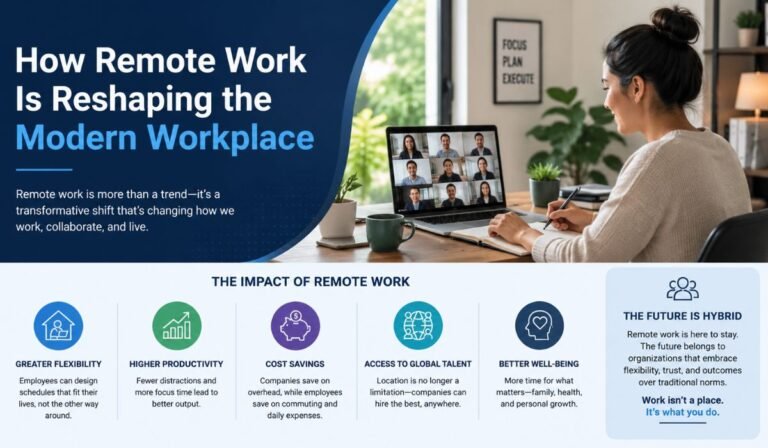
The workplace has undergone a dramatic transformation over the past few years. What was once considered a temporary solution has evolved into a long term shift in how businesses operate. Remote work is no longer limited to freelancers or tech startups. Companies of all sizes are embracing flexible work arrangements, allowing employees to work from home, coworking spaces, or even different countries.
This change is redefining productivity, collaboration, employee expectations, and the tools businesses rely on every day.
The Rise of Flexible Work Models
Modern employees increasingly value flexibility. Many professionals now prioritize work life balance alongside salary and career growth. As a result, organizations are adapting by offering hybrid and fully remote work options.
Businesses have discovered that remote teams can remain productive while reducing overhead costs associated with traditional office spaces. Employees also benefit from less commuting time, giving them more opportunities to focus on work and personal well being.
Technology as the Foundation of Remote Work
Remote work would not be possible without the right technology. Cloud platforms, project management software, video conferencing tools, and secure communication channels have become essential for daily operations.
Organizations now depend on digital infrastructure to connect teams across cities, regions, and even continents. This increased reliance on technology has also created new challenges related to device management, security, and accountability.
For companies managing distributed teams, solutions for tracking remote laptop across locations have become increasingly important. These tools help businesses maintain visibility over company assets while ensuring equipment remains secure and accessible regardless of where employees are working.
Changing Workplace Culture
Remote work has transformed workplace culture in significant ways. Traditional office interactions have been replaced by virtual meetings, online collaboration, and digital communication.
Managers are focusing more on outcomes and performance rather than physical presence. Trust, transparency, and effective communication have become critical factors in maintaining strong team relationships.
Organizations are also investing in virtual team building activities, regular check ins, and wellness initiatives to help employees stay connected and engaged.
New Challenges for Employers
While remote work offers many advantages, it also presents challenges. Companies must address cybersecurity risks, data protection concerns, employee isolation, and maintaining consistent productivity.
Some teams struggle with communication gaps, while others face difficulties coordinating across multiple time zones. Businesses need clear policies, reliable technology, and effective management practices to overcome these obstacles.
Investing in employee training and establishing clear expectations can help create a more successful remote work environment.
The Future of Work
Remote work is likely to remain a permanent part of the modern workplace. Many organizations are adopting hybrid models that combine the flexibility of remote work with the benefits of in person collaboration.
As technology continues to evolve, businesses will gain access to more advanced tools that improve communication, security, and operational efficiency. Companies that embrace these changes will be better positioned to attract talent, improve employee satisfaction, and remain competitive in a rapidly changing world.
Conclusion
Remote work is reshaping the modern workplace in ways that were difficult to imagine just a decade ago. Flexibility, technology, and evolving employee expectations are driving this transformation. Organizations that successfully adapt to remote and hybrid work models can create more productive, resilient, and future ready workplaces while meeting the needs of today’s workforce.
