

In spinning top battles such as Beyblade, the launcher isn’t just a tool, it’s a key part of performance. Whether you’re a casual player or a competitive blader, the choice between a string launcher and a ripcord launcher affects speed, control, and consistency. A detailed look at these differences can be found in discussions like string vs ripcord launcher for Beyblade, which compares how each type influences launch dynamics and handling.
From biomechanics to mechanical design, launcher type plays a crucial role in how energy is transferred to the spinning top and how reliably bladers can execute their strategies.
The Physics of Energy Transfer
Both string and ripcord launchers are designed to convert human input into rotational kinetic energy, but they do it in different ways.
A ripcord launcher uses a straight pull action: when you yank the ripcord, teeth on the strip engage with gears inside the launcher, transferring force directly to the Beyblade’s spinning mechanism. The speed of this pull, combined with the length and teeth design of the ripcord, determines how fast the Beyblade spins.
A string launcher, by contrast, wraps a cord around a central spool. As you pull the string, you rotate the spool, which in turn spins the Beyblade. Because the string wraps around the mechanism more times before disengaging, this design can potentially deliver higher rotational speed and longer acceleration periods.
From a mechanical standpoint, the number of rotations delivered before disengagement and the smoothness of force application differ significantly between ripcord and string designs.
Control and Consistency
Performance isn’t just about top speed; it’s also about repeatability and control.
Ripcord launchers often offer quick and straightforward pulls, which can be easier for beginners to master. However, their performance can vary more from launch to launch, depending on how forcefully and smoothly the ripcord is pulled. Slower or uneven pulls can result in lower spin or wobble.
String launchers tend to allow smoother and longer engagement between the pulling motion and the Beyblade’s spin mechanism. Because the cord typically unravels over a longer arc, users often experience more uniform acceleration, leading to more consistent spin rates from launch to launch.
Competitive bladers frequently value this consistency, as predictable behavior can be key when refining technique or timing.
Speed, Torque, and Launch Strategy
Different launchers generate different performance profiles. Ripcord launchers generally deliver high torque over a short engagement period, the characteristic abrupt transfer of force that gives the Beyblade a quick burst of rotational speed. This can be advantageous in situations where an initial speedy engagement grants an early advantage in the arena.
String launchers, on the other hand, distribute torque over a slightly longer pull. This can produce higher top rotational speeds under controlled conditions, though the optimal outcome depends on the blader’s coordination and pull technique.
The best launcher for a given player often depends on their individual strategy: beginners or players focusing on quick starts may prefer ripcord designs, while those focused on sustained spin or competitive consistency may gravitate toward string systems.
Ergonomics and User Experience
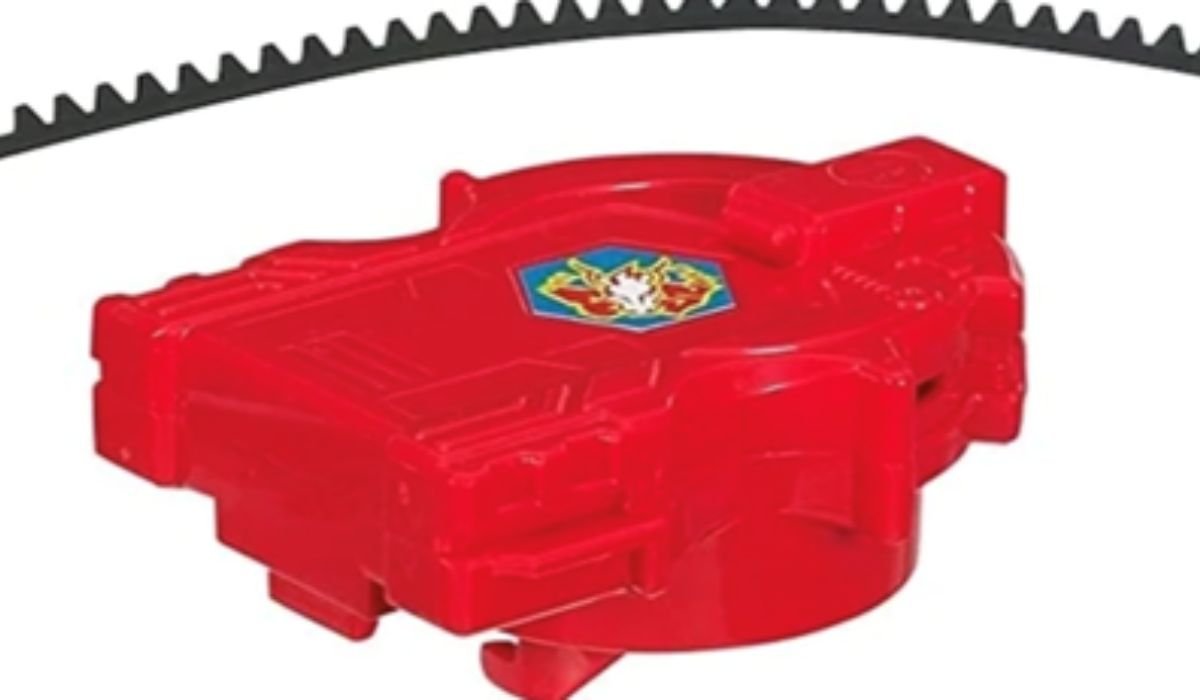
Ripcord launchers are typically lighter and simpler in construction. Their compact form factor makes them easy to grip and pull, which is appealing for younger or casual bladers.
String launchers may be slightly bulkier due to the mechanism required to reel and store the cord. Some players find that the wrapping motion feels slower or less direct than a ripcord pull. Others appreciate the steady, repeating motion of the cord, which can feel more ergonomic over repeated launches.
Ergonomics, like performance, often comes down to personal preference and play style.
Durability and Wear
From a mechanical perspective, the two designs also age differently. Ripcord teeth and plastic components can wear down over time, especially with aggressive pulls. This wear can reduce engagement precision and require more force for similar results.
String launchers rely on cord quality, spool tension, and smooth retraction mechanisms. Poor quality cord can fray or stretch with heavy use, which affects consistency. High-quality string mechanisms generally offer longer usable life and smoother pulls, though interactions between cord and spool should be inspected periodically.
Both systems benefit from maintenance awareness, cleaning debris from gears, avoiding excessive force, and replacing worn parts helps preserve performance.
Technique and Learning Curve
Ripcord launchers offer a more immediate learning curve: it’s easy to grasp the basic pull motion, which makes them suitable for younger or newer players. However, mastering the finesse required for consistent torque delivery takes practice.
String launchers may take a bit more coordination to optimize pull length and speed. But once mastered, many players find the technique beneficial in achieving controlled, repeatable performance, especially valuable in competitive play.
Strategic Implications in Play
Launcher choice affects more than just spin rates. It influences how a player approaches a match:
- Quick ripcord pulls can help with early positioning or bank attacks.
- Smoother pulls from a string launcher can support sustained stamina battles.
- Variations in pull force and timing can introduce tactical depth that players can exploit.
Each design offers unique opportunities depending on the player’s goals and the meta of competition.
Insights From Competitive Perspectives
Competitive communities emphasize that understanding your tools is as important as understanding your Beyblade components. Top players often evaluate launcher performance metrics, such as RPM (rotations per minute), initial torque, and torque decay, when refining techniques. Discussions within competitive circles underline that launcher choice should fit personal mechanics as much as theoretical performance.
Organizations and forums dedicated to performance analysis reinforce that technique and practice often outweigh raw hardware choice, though hardware still plays a supporting role.
