
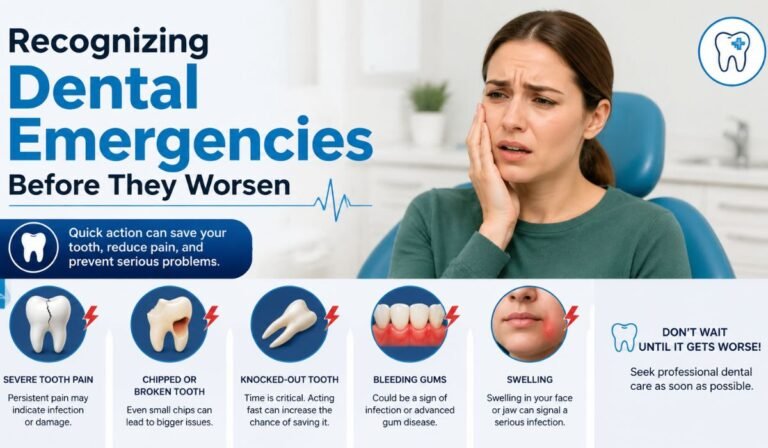
Are you facing a sudden toothache, swelling, or a knocked-out tooth?
A quick response can stop pain and keep an infection from growing.
This post will show clear signs to watch for, what to do right away, and when to call an emergency dentist.
Read on to protect your smile.
Signs of a Dental Emergency
Signs of a dental emergency may show up suddenly. Pay attention if you have severe pain, swelling, or bleeding in your mouth.
Severe toothaches with swelling or fever
If you experience these symptoms, don’t hesitate to contact an emergency dentist in Astoria for immediate assistance.
Severe toothaches with swelling or fever mean a dental infection or abscess. Pain may throb and wake you at night. Swelling can appear in the cheek, jaw, or face. Fever often shows that the body fights infection.
Seek emergency dental care to prevent the infection from spreading.
Apply a cold compress to reduce swelling. Do not apply heat, it can raise infection risk. Take over-the-counter pain medicine as directed. Call an emergency dentist right away for urgent treatment.
Next, learn how to handle knocked-out teeth.
Knocked-out teeth
After severe toothaches with swelling or fever, trauma can also remove a tooth from its socket. Act fast for the best chance to save the tooth.
Hold the tooth by the crown, not the root. Rinse it briefly with milk or saline, or use saliva if needed. Do not scrub or remove tissue fragments. Try to reinsert the tooth into the socket and bite on gauze to hold it.
If reinsertion is not possible, store the tooth in milk or the patient’s saliva. Seek emergency dentistry within 30 to 60 minutes for higher success rates. Control bleeding with firm pressure and cold compresses.
Emergency care cuts the risk of infection and long term dental damage.
Broken or chipped teeth
Following a knocked-out tooth, you may also face a broken or chipped tooth. A small chip may only affect appearance, but a large fracture can cause severe pain, bleeding, and swelling.
Exposed tooth pulp raises the risk of infection and abscess. Seek emergency dental care for intense toothache or a visible fracture that splits the tooth.
Cover sharp edges with dental wax or sugarless gum to protect your cheek. Save any tooth fragments in milk or saliva and bring them to the dentist for possible reattachment.
Uncontrolled bleeding or swelling
Uncontrolled bleeding or swelling can be serious. This often happens after an injury to the mouth. It can also occur from an infection or dental work complications. If a person cannot stop the bleeding, they need help right away.
Swelling may increase pain and could signal an abscess or severe infection.
Taking quick action is vital in these situations. Use a clean cloth or gauze to apply pressure on the area for about 10 minutes if there is bleeding. Ice wrapped in a cloth can help reduce swelling.
If symptoms do not improve, reach out to an emergency dentist immediately for care and treatment.
Common Causes of Dental Emergencies
Common causes of dental emergencies often stem from injuries, untreated infections, or problems during dental work. Understanding these factors can help you act quickly. For more information, keep reading.
Trauma or accidents
Trauma or accidents can lead to serious dental emergencies. A fall, sports injury, or car crash may damage your teeth. Knocked-out teeth are common in these situations. If a tooth gets knocked out, it needs immediate care to try and save it.
Accidents can also break or chip teeth. You might feel pain or swelling after an incident. Infection from untreated injuries can make matters worse too. Ignoring the pain could result in more problems down the road.
Quick action is important to protect your oral health now and prevent future issues related to trauma or accidents.
Untreated infections or decay
Inadequate dental health can lead to untreated infections or decay. These issues often start small but become increasingly serious over time. Tooth decay occurs when bacteria wear down the tooth’s surface.
This can cause pain and swelling. An abscess may form if an infection spreads into the gum or bone.
Overlooking these problems is perilous. Infections can spread, resulting in more severe health issues. Pain may heighten, leading to significant discomfort and emergency care needs.
Regular check-ups help identify these issues early and support good oral health. Addressing infections swiftly prevents further complications and ensures a healthier mouth overall.
Complications from dental procedures
Complications can happen after dental work. Some patients may get an infection in the treated area. Pain or swelling can also occur, making recovery tough. Sometimes, a tooth might become loose due to improper placement of crowns or fillings.
Bleeding is another risk during procedures. If it does not stop, it signals a problem that needs attention. Abscesses can form if bacteria enter through an open wound from treatment.
These issues require urgent care to prevent worsening conditions and protect oral health.
Immediate Steps to Take During a Dental Emergency
Rinse your mouth with warm water to clean the area. Use a cold compress on swelling or pain for relief.
Rinse with warm water
Warm water can help clean the mouth during a dental emergency. Use it to rinse away debris and blood from your teeth and gums. This may ease some pain and reduce swelling. It is important to avoid using cold water, as this might make pain worse.
After rinsing, do not use any harsh mouthwash or chemicals. Keep the area clean but gentle care is key. Taking these steps can prepare you for further treatment if needed. Always seek professional dental care as soon as possible after an emergency arises.
Apply a cold compress for swelling
Rinse your mouth with warm water to clean the area. Next, apply a cold compress for swelling. This can help reduce pain and inflammation quickly. Use a clean cloth or an ice pack wrapped in a towel.
Place it on the outside of your face where you feel the swelling. Keep it there for about 15-20 minutes at a time. Repeat this every hour as needed.
Cold therapy works by narrowing blood vessels and decreasing blood flow to the area. It also numbs the pain around swollen gums or cheeks, giving you relief until you see a dentist.
Preserve knocked-out teeth in milk or saliva
Keep knocked-out teeth safe in milk or saliva. Milk is best because it has the right nutrients to help keep the tooth alive. Place the tooth in a small cup of milk, covering it completely.
If milk isn’t available, use saliva instead. Put the tooth between your cheek and gums or place it in a small container with your spit.
Do not rinse or scrub the tooth. This can damage its tissues. Try to see an emergency dentist as soon as possible for proper care of your dental trauma. Fast action can save your tooth and improve oral health outcomes after a knock-out incident.
When to Contact an Emergency Dentist
Act fast when you face a dental emergency. Pain and swelling can signal serious issues. Contact an emergency dentist right away if you experience severe symptoms. Don’t wait; your oral health is important!
Conclusion
Recognizing dental emergencies can prevent bigger problems. Quick action is key to managing pain and damage. Seek help right away if you notice severe symptoms, like swelling or bleeding.
Good dental care means knowing when to act swiftly, ensuring better oral health for everyone. Take charge of your smile by staying alert and informed about dental issues.
