
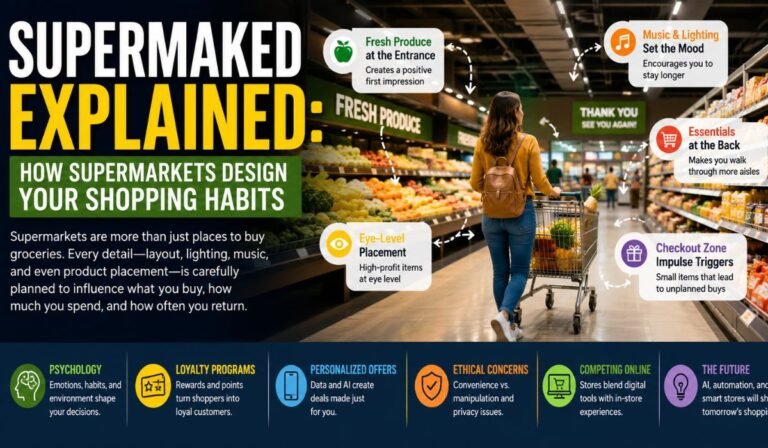
Supermarkets feel simple on the surface. You walk in, pick what you need, and leave. But the idea of Supermaked explains something deeper. It refers to the carefully designed system behind every supermarket that subtly shapes what you buy, how long you stay, and even how much you spend. From store layout to pricing psychology, everything is planned to guide your choices without you noticing it.
In 2026, modern supermarkets are more advanced than ever. They use behavioral science, digital tracking, and emotional triggers to influence shopping habits. This article explores how Supermaked strategies work and why they are so effective in everyday life.
The Psychology Of Shopping Behavior
Shopping is not purely logical. It is strongly influenced by emotion, routine, and environment. Most people think they buy only what they need, but studies in consumer behavior show that decisions are often made in the moment.
Supermarkets understand this deeply. They use decision fatigue, which means the more choices you face, the more likely you are to pick familiar or impulsive items. Bright packaging, familiar brands, and comforting store environments all reduce mental effort. This is why shoppers often leave with more than they planned.
How Supermaked Stores Shape Movement Patterns
One of the most powerful Supermaked strategies is store layout design. Supermarkets are built like guided paths, not random spaces. You rarely walk in a straight line to what you need.
Essentials like milk, bread, and eggs are often placed deep inside the store. This forces customers to walk through multiple sections, increasing exposure to other products. Wide aisles, angled shelves, and open spaces are all designed to control movement flow without feeling restrictive.
The Power Of The Entrance Experience
The moment you enter a supermarket is carefully engineered. Most stores begin with fresh produce like fruits and vegetables. This is not random. It creates an immediate impression of freshness, health, and quality.
Bright colors, natural textures, and open displays make customers feel comfortable and positive. This emotional start influences how they perceive everything else in the store. Even packaged goods feel more appealing after seeing fresh produce first.
Eye Level Strategy And Product Placement Control
Product placement is one of the strongest Supermaked tools. Items placed at eye level sell significantly more because they are easier to notice. This space is often reserved for high-margin or popular products.
Cheaper alternatives are usually placed lower or higher on shelves. Children’s products are placed at lower levels to attract younger attention. Even small adjustments in shelf positioning can dramatically change buying behavior, making this one of the most powerful retail strategies.
Impulse Buying And The Checkout Zone Effect
Impulse buying is a key driver of supermarket profit. End caps, aisle displays, and checkout counters are designed to trigger unplanned purchases.
Snacks, small electronics, and seasonal items are placed in high-visibility areas where customers make quick emotional decisions. The checkout zone is especially powerful because people are relaxed and waiting, making them more likely to add last-minute items like chocolate or gum.
Sensory Design: Music, Light, And Smell
Supermaked environments are built using sensory marketing. Soft background music slows down walking speed, encouraging customers to stay longer. Warm lighting creates comfort and relaxation, while bakery smells trigger hunger and emotional cravings.
Even temperature and aisle spacing influence mood. These sensory elements work together to create a pleasant shopping experience that subtly increases spending time and basket size.
Loyalty Programs And Behavioral Rewards
Loyalty programs are a major part of modern supermarket strategy. Customers earn points, discounts, and exclusive offers for repeat visits. This system builds a habit loop where shoppers feel rewarded for returning.
Over time, these programs create emotional loyalty, not just financial savings. People begin to prefer one store over another simply because of familiarity and reward accumulation.
Personalized Marketing And Smart Data Tracking
In 2026, supermarkets rely heavily on data. Every swipe of a loyalty card or app purchase creates valuable information about shopping habits.
Artificial intelligence analyzes this data to create personalized offers. For example, if you often buy snacks, you may receive targeted discounts on similar products. This makes promotions feel more relevant and increases the chance of repeat purchases.
Digital Tools And Mobile Shopping Integration
Mobile apps have become essential in Supermaked systems. They provide digital coupons, shopping lists, and real-time promotions.
Some supermarkets now use location-based notifications to send offers when customers are near the store. This digital integration connects online behavior with in-store shopping, making marketing more precise than ever before.
Ethical Concerns In Modern Supermaked Systems
While Supermaked strategies improve efficiency and sales, they also raise ethical questions. Some critics argue that these techniques manipulate consumer behavior without full awareness.
Healthier food options are sometimes less visible than processed snacks. Data tracking also raises privacy concerns, especially when customers do not fully understand how their shopping data is used. These issues highlight the need for transparency in modern retail systems.
Competition With Online Shopping Platforms
Supermarkets now compete directly with online retailers. E-commerce platforms offer convenience, fast delivery, and easy price comparisons.
To stay competitive, physical stores focus on experience. Fresh food, in-person selection, and instant product access remain strong advantages. Many supermarkets also offer delivery and pickup services to bridge the gap between digital and physical shopping.
Technology And The Future Of Supermaked Systems
The future of supermarkets is becoming more automated and intelligent. Self-checkout systems, smart shelves, and AI-driven inventory management are becoming standard.
Augmented reality tools may soon help shoppers scan products for recipes, nutrition, and discounts in real time. Robotics is also improving stock management and reducing waste. These innovations make shopping faster, more personalized, and more efficient.
Sustainability And Responsible Retail Growth
Modern Supermaked systems are also focusing on sustainability. Stores are reducing plastic use, improving energy efficiency, and minimizing food waste through smarter inventory tracking.
Some supermarkets now donate unsold food to local communities or use predictive systems to reduce overstocking. Sustainability is becoming a key part of retail strategy in 2026.
The Role Of Consumer Awareness
Understanding Supermaked strategies helps shoppers make better decisions. When people recognize how layout, pricing, and marketing influence behavior, they become more mindful buyers.
This does not mean avoiding supermarkets but shopping more consciously. Awareness helps reduce unnecessary spending and supports healthier, more intentional choices.
Supermaked And The Evolution Of Retail Psychology
Supermaked is part of a larger shift in retail psychology. Shopping is no longer just about products. It is about experience, emotion, and behavior design.
Retailers combine psychology, data science, and design thinking to create environments that feel natural but are highly strategic. This evolution shows how deeply science and commerce are connected today.
Final Thoughts: Becoming A Smarter Shopper
Supermaked systems are not designed to trick shoppers but to guide decisions in subtle ways. From store layout to digital personalization, every detail plays a role in shaping behavior.
The key takeaway is awareness. When you understand how supermarkets influence your habits, you gain control over your choices. Shopping becomes less about impulse and more about intention.
In a world where retail is becoming more intelligent every year, the smartest shopper is the one who understands the system behind the shelves.
FAQs About Supermaked
What Does Supermaked Mean In Simple Terms
Supermaked refers to the system supermarkets use to design store layouts, marketing strategies, and customer experiences to influence shopping behavior and increase sales.
Why Do Supermarkets Place Essentials At The Back
Essentials are placed at the back so customers walk through more aisles, increasing exposure to other products and encouraging additional purchases.
How Does Product Placement Affect Buying Decisions
Products placed at eye level or high-visibility areas are more likely to be bought because they are easier to notice and feel more accessible.
Why Do Supermarkets Use Music And Lighting
Music and lighting create a comfortable environment that slows down shopping pace and encourages customers to stay longer and spend more.
Are Loyalty Programs Really Beneficial For Customers
Yes, loyalty programs offer discounts and rewards, but they also encourage repeat visits and long-term shopping habits that benefit retailers.
How Do Supermarkets Use Customer Data
Supermarkets analyze purchase history to create personalized offers, targeted promotions, and predictive recommendations.
Is Supermaked Design Ethical
It depends on perspective. While it improves shopping efficiency and experience, some techniques raise concerns about manipulation and data privacy.
What Is The Future Of Supermaked Systems
The future includes AI-driven personalization, automation, smart shelves, and more sustainable retail practices.
Recommended For You: What Is Merfez? Meaning, Lifestyle Concept, And Creative Philosophy Explained
