
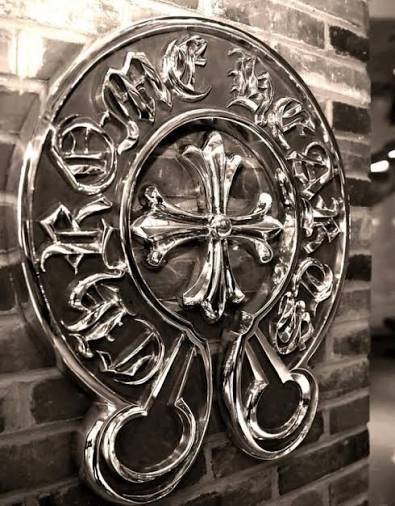
Both brands got famous off the back of famous people, but they pulled in completely different crowds. Chrome Hearts came up through rock stars and then the rap and modelling world. Represent grew out of the British scene and a younger, more everyday following. If you’ve ever wondered why one feels like a red-carpet name and the other feels like something your favourite footballer might actually own, this is why.
Chrome Hearts started with rockers
Before the rappers and the models, Chrome Heart was a rock brand. Back in the late 80s and early 90s, members of the punk and metal world helped put it on the map, the kind of musicians who wanted heavy silver and leather that matched the music. That biker-and-rock root is still baked into everything the brand makes, and it’s the reason the gothic crosses never feel like a costume on the right person.
The founder, Richard Stark, also kept the brand close to its famous friends rather than handing it to marketing departments, which is partly why those connections still feel genuine decades later.
Then the modern wave took over:
The brand’s second life came through music and fashion’s biggest names, and one person did more for that than anyone: Bella Hadid. She’s close to the Stark family, has worn the brand casually for years, and has appeared in its campaigns, so she isn’t just a fan who got papped once. She helped carry Chrome Hearts into a whole new generation’s wardrobe.
After that it spread fast. Rihanna has worn it for years, including some of her most talked-about looks. Jay-Z has been wearing it since the mid-2000s. The rap world took it on properly, with Playboi Carti and his red hoodies, Travis Scott layering it under puffers and varsity jackets, plus Drake, Offset and Cardi B all spotted in it. The Jenner side of things, Kendall and Kylie, brought it into the celebrity-party and street-style circuit. Even Timothée Chalamet has worn it on the fashion side. Karl Lagerfeld designed pieces with the brand too, which tells you it was never just a streetwear thing.
The common thread is that almost none of this was a paid campaign. People wore it because they wanted it, and that organic pull is exactly what gives the brand its weight.
Represent built its name differently
Represent’s story is younger and more British. The Heaton brothers started it in 2011 near Manchester, and early visibility came from endorsements by Justin Bieber and the band Rizzle Kicks around 2012. That early push helped, but the brand mostly grew the slow way, through the UK streetwear scene, its own social following, and a customer base that actually wears the clothes day to day rather than saving them for a photo.
It’s worth being straight about this. Represent Clothing doesn’t have the same wall of A-list names that Chrome Hearts does, and it doesn’t need it. Its following leans younger, more sports-adjacent and more grassroots, the kind of crowd that built the brand through word of mouth and consistent product rather than one viral celebrity moment. The fact that it grew into a serious business off that base says a lot about how loyal that audience is.
Funnily enough, Justin Bieber sits in both stories. He gave Represent an early lift and he’s also been a long-time Chrome Hearts wearer, which is a neat reminder of how these worlds overlap even when the brands don’t.
What do famous faces actually tell you?
Celebrity wardrobes are fun to look at, but they’re also useful if you’re deciding where your money goes.
With Chrome Hearts, the star power is part of why the brand holds its value. When this many genuinely influential people wear something for real, demand stays high and the pieces stay wanted on the resale market years later. That’s the upside.
The downside is the flip side of the same coin. All that visibility is exactly why there’s so much fake Chrome Hearts floating around. People see it on a celebrity, want it, search for it, and land on a site that has nothing to do with the brand. So treat the celebrity hype as a reason to be more careful about where you buy, not less. The brand has no official online store, and a famous face in a photo doesn’t make a random website real.
Represent’s celebrity link works in a quieter way. It tells you this is a brand people genuinely wear rather than collect, which fits everything else about it. You’re buying into a label built on everyday loyalty, and you can actually buy it safely from the brand directly, which matters more than any name attached to it.
Rockstar & Rappers Interest:
Chrome Hearts grew through rock stars, then rappers and models, with Bella Hadid leading the modern charge and names like Rihanna, Jay-Z, Playboi Carti and Travis Scott keeping it in the spotlight. Represent built up the harder way, off early Bieber-era attention and a loyal British streetwear following that wears it for real. One crowd made Chrome Hearts a collector’s name. The other made it represent a brand people actually live in. Knowing which kind of celebrity you’re buying into makes it a lot easier to spend your money well.
