
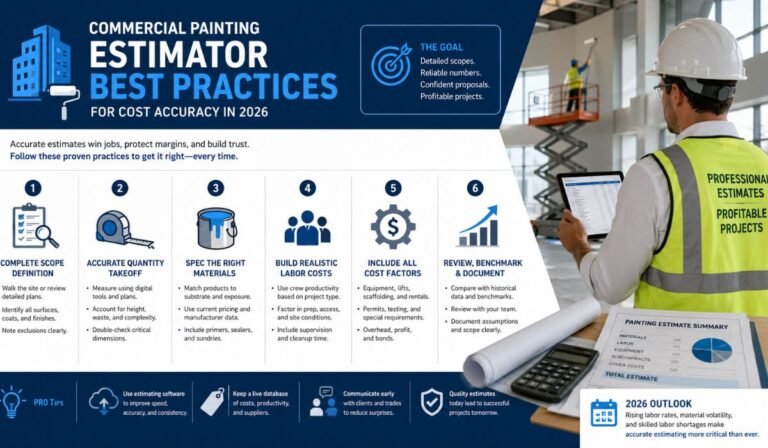
The commercial painting industry continues to evolve as material prices fluctuate, labor availability changes, and project expectations become more demanding. In 2026, accurate cost estimation has become one of the most important factors influencing project profitability and client satisfaction. Building owners, general contractors, facility managers, and painting contractors all rely on accurate estimates to make informed decisions before work begins.
A commercial painting estimator serves as the bridge between project planning and successful execution. Their ability to forecast expenses accurately helps prevent budget overruns, reduce disputes, and improve overall project performance. As commercial projects become larger and more complex, estimators must adopt proven practices that reflect modern construction realities.
Start With a Thorough Review of Project Documents
Accurate estimates begin with a detailed understanding of the project scope. Before calculating costs, estimators should carefully review all available drawings, specifications, schedules, and contract requirements.
Commercial painting projects often involve multiple surface types, specialized coatings, preparation requirements, and performance standards. Missing a single specification can result in significant cost discrepancies later.
For example, a project may require fire-resistant coatings, anti-graffiti finishes, moisture-resistant paint systems, or high-performance industrial coatings. Each of these requirements affects labor, materials, and equipment costs.
In 2026, successful estimators spend considerable time analyzing project documents before creating any pricing assumptions. This approach minimizes costly errors and creates a more reliable estimate.
Perform Detailed Quantity Takeoffs
One of the most common causes of inaccurate estimates is poor quantity measurement. Estimators must calculate painting areas carefully to ensure all surfaces are included.
Walls, ceilings, doors, trim, stairwells, exposed structural elements, and specialty surfaces should all be measured accurately. Estimators should also account for surface conditions that may require additional preparation work.
Digital takeoff software has become increasingly popular because it allows estimators to work directly from electronic drawings. These tools improve efficiency and reduce manual calculation errors.
However, technology should support professional judgment rather than replace it. Experienced estimators understand how to identify unique project conditions that software may overlook.
Account for Surface Preparation Requirements
Surface preparation is often one of the most underestimated aspects of commercial painting projects. Yet it can significantly affect labor hours and project costs.
Different surfaces require different preparation methods. Some areas may need pressure washing, sanding, patching, caulking, priming, rust removal, or existing coating removal before painting can begin.
A newly constructed office building will typically require less preparation than an older warehouse undergoing renovation. Estimators must evaluate these differences carefully during the planning stage.
In 2026, many commercial property owners are focusing on renovation and modernization projects rather than new construction. As a result, surface preparation has become an increasingly important factor in cost estimation.
Monitor Material Pricing Continuously
Material costs remain one of the most unpredictable aspects of commercial painting projects. Supply chain disruptions, transportation expenses, manufacturing costs, and economic conditions continue to influence paint pricing across the United States.
Estimators should regularly communicate with suppliers and maintain updated pricing databases. Relying on outdated cost information can create substantial budget gaps.
High-performance coatings, specialty finishes, and environmentally compliant products often experience pricing changes throughout the year. Estimators who stay informed about market conditions can provide more reliable forecasts.
Use Historical Project Data
Historical data is one of the most valuable resources available to modern estimators. Past project performance provides insights that improve future estimates.
Successful estimating teams maintain detailed records that include labor productivity, material consumption, equipment usage, and project challenges. These records allow estimators to compare new projects against similar completed work.
For example, a contractor who has completed multiple healthcare facilities can use previous performance data to estimate future hospital projects more accurately.
Historical information helps eliminate guesswork and creates a stronger foundation for decision-making.
Calculate Labor Costs Realistically
Labor typically represents the largest portion of a commercial painting budget. Even small labor estimation errors can significantly affect profitability.
Estimators should consider factors such as crew size, project complexity, accessibility, working hours, safety requirements, and productivity expectations. They must also account for regional wage differences and local labor market conditions.
A high-rise office building requires different labor planning than a single-story retail facility. Similarly, occupied buildings often require phased work schedules that affect productivity.
Evaluate Access and Equipment Requirements
Commercial painting projects frequently require specialized access equipment such as lifts, scaffolding, suspended platforms, or swing stages.
The cost of renting, transporting, maintaining, and operating this equipment must be incorporated into the estimate. Access challenges can significantly increase project expenses, especially on large commercial structures.
Estimators should assess building height, site conditions, work area restrictions, and safety requirements during the planning process.
Include Risk Assessments in Every Estimate
Risk management has become increasingly important in commercial construction and painting projects. Estimators should identify potential risks that could affect project costs and timelines.
Weather delays, material shortages, labor availability issues, project scope changes, and scheduling conflicts are common examples. Each risk should be evaluated and addressed appropriately.
Contingency planning allows contractors to prepare for unexpected events without jeopardizing project profitability.
The most successful estimators in 2026 understand that estimating is not simply about calculating costs. It is also about anticipating uncertainty and managing potential challenges before they occur.
Leverage Modern Estimating Technology
Technology continues to transform commercial estimating practices. Advanced software solutions now provide greater accuracy, efficiency, and collaboration than traditional methods.
Digital takeoff platforms, cloud-based estimating systems, Building Information Modeling integration, and automated cost databases help streamline the estimating process. Modern software reduces repetitive tasks and allows estimators to focus on analysis and decision-making. It also improves communication between estimators, project managers, and clients.
However, technology alone cannot guarantee accuracy. The most effective estimators combine software capabilities with practical construction knowledge and industry experience.
Partner With Professional Estimating Services
Many contractors are turning to professional estimating specialists to improve bid accuracy and manage growing workloads. Outsourced estimating support allows companies to access experienced professionals without expanding internal staff.
A qualified Painting Cost Estimator can help contractors prepare detailed estimates, analyze project risks, and improve bid competitiveness. This approach is particularly beneficial during periods of high bidding activity when internal resources may be limited. Professional estimating support also provides access to industry expertise, current market data, and specialized software tools.
Focus on Continuous Improvement
The most successful estimators never stop refining their processes. Construction methods, material technologies, labor markets, and client expectations continue to evolve.
Estimators should regularly review completed projects to compare estimated costs against actual performance. These evaluations help identify areas for improvement and strengthen future estimates. Ongoing training, industry certifications, software education, and market research also contribute to long-term success.
Cost accuracy remains one of the most important factors in commercial painting project success. Accurate estimates support better decision-making, stronger client relationships, improved profitability, and more predictable project outcomes.
Commercial painting estimators who focus on detailed project reviews, precise quantity takeoffs, realistic labor calculations, current material pricing, risk assessment, and modern technology are better positioned to deliver reliable results.
