
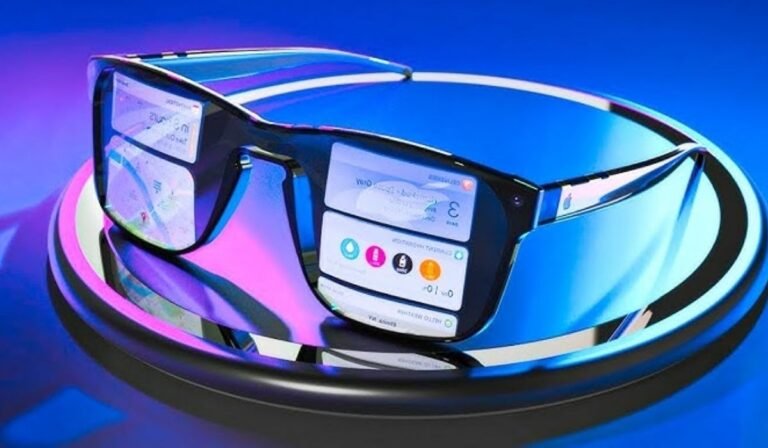
Smart glasses crossed a threshold this year. They ship to your door, pair with your phone or laptop, and handle tasks that seemed impractical just 18 months ago. But finding the best smart glasses 2026 has to offer still takes homework — the category has split in ways most buyers do not expect.
This guide breaks down which models lead, where the technology stands in mid-2026, and what trade-offs each design forces you to accept.

Two Kinds of Smart Glasses, Two Different Markets
The smart glasses market in 2026 runs on two tracks. AI-first glasses work as cameras, microphones, and voice assistants inside normal-looking frames — with no display. XR display glasses project a large virtual screen through Micro-OLED panels and USB-C, with claimed sizes varying widely by model and viewing distance.
That split shapes everything: price, daily utility, and how often you actually reach for the device. RayNeo, XREAL, and Viture lead the display camp, while RayNeo and several larger platform players also push toward AI+AR convergence — making the Smart Glasses landscape harder to navigate without knowing which camp fits your needs.
Picking the right camp is the single most practical step any buyer can take when evaluating the best smart glasses 2026 has put on the market. Here is a closer look at what leads in each category right now.
AI-First Glasses: All-Day Wearability, Zero Screen
AI glasses prioritize looking and feeling like regular eyewear. They pack a camera, open-ear speakers, and a voice assistant into frames light enough to wear from morning to night. You get hands-free calls, real-time photo capture, and AI queries — but no visual overlay at all.
Ray-Ban Meta Gen 2
The mainstream frontrunner in this camp at $379. It captures 3K video, streams music through directional speakers, and runs Meta AI for on-the-spot queries and visual lookups. Its biggest draw is social acceptance — most people cannot tell you are wearing a computer on your face.
Oakley Meta Vanguard
Built for sport and outdoor use at $499. It adds IP67 water resistance and Prizm sport lenses while sharing the same Meta AI core as the Ray-Ban. The frame is designed for sweat, sunlight, and movement rather than indoor all-day wear.
What You Give Up Without a Display
The catch is straightforward: no screen means no visual AR. You cannot read live subtitles, follow navigation arrows, or watch a film. For buyers searching for the best smart glasses 2026 can deliver with a visible display, the display-focused category below deserves closer attention.
XR Display Glasses: The Portable Big Screen
Display glasses connect to compatible phones, laptops, or handheld consoles through USB-C video output — adapters may be needed for HDMI devices — and project a large virtual screen whose size varies by model. For anyone seeking the best Smart glasses 2026 has produced with a visible display, this segment holds the strongest contenders.
Viture Beast
The premium option at $549. Viture Beast pushes 1,250 nits of brightness across a 58-degree field of view and includes 3DoF spatial anchoring — the virtual screen stays locked in place when you turn your head. For pure visual immersion, it sits at the top of the current class.
XREAL 1S
Priced at $449, the XREAL 1S pairs sharp 1200p resolution with built-in 3D conversion technology that adds depth to 2D content. It handles multi-monitor virtual setups smoothly and draws consistent praise from remote workers who treat it as a portable dual-screen workstation.
RayNeo Air 4 Pro
At $299, the Air 4 Pro costs less than its main rivals. It hits 1,200 nits with 60Hz/120Hz modes and is marketed by RayNeo as the world’s first HDR10 display glasses. Its 1080p resolution trails the 1200p in pricier rivals, but B&O-tuned quad-speaker audio and a 76-gram frame help close that gap.
How the Display Leaders Stack Up
The numbers below help cut through the noise. RayNeo approaches the Beast on brightness at a significantly lower price point. XREAL trails on brightness but offers strong on-device spatial features and 3DoF tracking for productivity use.
| Spec | RayNeo Air 4 Pro | Viture Beast | XREAL 1S |
| Price | $299 | $549 | $449 |
| Brightness | 1,200 nits | 1,250 nits | 700 nits |
| Resolution | 1080p per eye | 1200p per eye | 1200p per eye |
| Refresh Rate | 60Hz / 120Hz | 120Hz | 120Hz |
| HDR10 Support | Yes | No | No |
| Weight | ~76g | ~88g | ~82g |
| Spatial Anchoring | No | Yes (3DoF) | Yes (X1 chip, 3DoF) |
Hybrid Glasses and What Comes Next
A third category is forming: smart glasses that merge AI with a built-in display. Meta’s Ray-Ban Display combines a waveguide HUD with Meta AI and is now in limited release. XREAL showed Project Aura at Google I/O 2026 with a reported 70-degree field of view.
Google’s Android XR platform is becoming the software foundation for its partner ecosystem of headsets, AI glasses, and display glasses. This convergence may eventually reshape what qualifies as the best smart glasses for 2026 and beyond, but most hybrid devices remain in early access for now.
For shoppers today, the practical advice is straightforward: buy what works now. The current generation of AI glasses and display glasses already delivers daily value, and any future hybrid will only build on that same foundation.
How to Choose the Best Smart Glasses in 2026
With the models discussed here ranging roughly from $299 to $549 — and specialized AR glasses reaching well above $800 — the best smart glasses 2026 has available depend on matching the right product to a clear use case. The decision is simpler than it looks.
Match the Category to Your Need
Start with the core split. If you need a hands-free assistant, camera, and audio system you can wear all day without drawing attention, AI-first glasses fit. If you want a portable cinema, gaming display, or second monitor for remote work, display glasses are the answer.
- Do I need a screen, or just voice and camera?
- Will I connect to a console, phone, or laptop?
- Is all-day wearability more important than display size?
Check the Specs That Matter
Not all display glasses perform the same way. The gap between a strong pair and a mediocre one comes down to four specs that matter far more than marketing language or brand reputation. Check these numbers before buying:
- Brightness — 1,000 nits or above for daylight visibility
- Weight — under 80 grams for comfort beyond 30 minutes
- Refresh rate — 120Hz for smooth motion in gaming
- HDR support — richer contrast and color in movies and games
Set a Realistic Budget
The three display models compared here range from $299 to $549, though specialized options can exceed $800. Premium pricing buys wider FOV and spatial anchoring. The $299 tier now delivers specs that sat in the $500 range a year ago, including HDR10 support, 1,200-nit brightness, and recognized-brand audio.
Why the Air 4 Pro Earns Its Spot
The RayNeo Air 4 Pro is not a standalone AR computer, and it lacks built-in spatial anchoring — limitations worth knowing upfront. At $299, though, it brings HDR10 support, 1,200-nit brightness, 60Hz/120Hz display modes, and Bang & Olufsen-tuned quad-speaker audio in a 76-gram frame.
For buyers who mainly want movies, gaming, and a private portable screen, the Air 4 Pro offers a hard-to-match combination at this price among the best smart glasses 2026 has delivered in the wearable display segment.
