
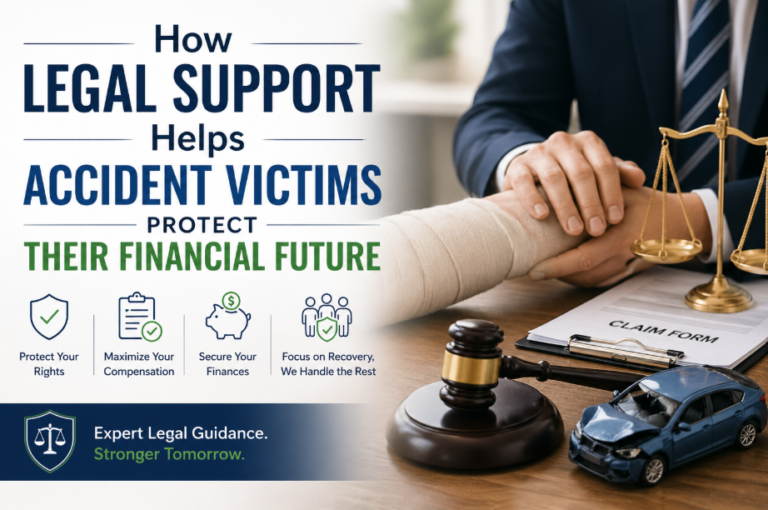
Most people do not think much about personal injury claims until life forces them to. An accident can change everything in a single afternoon, leaving a person to manage medical care, missed work, insurance calls, and stacks of paperwork all at once. That is the exact moment when legal help after an accident becomes more than a service. It becomes a way to steady the financial ground beneath someone who is trying to recover.
Accidents are expensive in ways that rarely show up right away. The first few bills are only the beginning, and the long term costs can stretch for years. Understanding how legal support fits into the picture helps people make better decisions during a difficult time.
This article looks at why financial protection matters after an accident, what kinds of risks people face, and how working with a qualified attorney can shape the outcome.
The Real Cost of an Accident
The financial impact of an accident often surprises the person living through it. Even a single emergency room visit can cost thousands, and that is before any imaging, follow up appointments, or specialist referrals. The bills add up faster than most budgets can absorb.
The Centers for Disease Control and Prevention has reported that motor vehicle crashes alone cost the United States more than 470 billion dollars in a single recent year. That figure includes medical care, lost productivity, and property damage. Behind every number is a household trying to make sense of unexpected expenses.
The National Safety Council estimates the average cost of a disabling injury crash at well over 155 thousand dollars when medical and wage losses are combined. For families without strong savings, that can be a serious financial shock.
Why Many Victims Settle Too Quickly
Insurance adjusters often reach out within days of an accident. Their job is to close claims efficiently, which means early offers tend to favor the insurer rather than the injured person. The pressure to accept can feel intense when bills are already arriving.
A widely cited study by the Insurance Research Council found that injured people who worked with an attorney received settlements that were significantly higher on average than those who handled the claim alone. The exact figure varies by case type, but the gap is consistent across the data.
That difference is not about luck. It comes from knowing how to document injuries properly, how to value future medical needs, and how to push back when an offer falls short.
The Hidden Layers of Financial Risk
Most people focus on the immediate medical bills, but the financial fallout from an accident has several layers. Some only show up months or years later. Missing them in a settlement can leave a victim covering costs out of pocket long after the case closes.
The table below outlines common financial risks after an accident and how legal support can help address each one.
| Financial Risk | Why It Matters | How Legal Support Can Help |
| Mounting medical bills | Treatment costs grow quickly | Documents every expense and includes them in the claim |
| Lost wages | Time away from work reduces income | Calculates short and long term wage losses |
| Future medical needs | Some injuries require ongoing care | Includes projected costs in the case value |
| Insurance lowball offers | Early settlements often undervalue the claim | Negotiates based on the full evidence |
| Statute of limitations | Filing deadlines vary by state | Tracks legal timelines closely |
| Property damage | Repair or replacement costs are real | Pursues full vehicle and property recovery |
| Long term disability | Earning capacity may be reduced | Builds a record of future income loss |
| Pain and suffering | Non economic damages are valid | Documents the impact on daily life |
This kind of thorough review is hard to do alone, especially while managing recovery. A trained legal team has the time, the experience, and the tools to map out the full picture.
Documentation Is Where Cases Are Won or Lost
Strong cases are built on records, not arguments. Medical files, accident reports, witness statements, and pay stubs all carry weight when an insurance company is calculating an offer. The completeness of that documentation often shapes the outcome.
Many injured people unintentionally weaken their case by missing follow up appointments, posting about the accident on social media, or giving recorded statements without preparation. None of these mistakes feel obvious in the moment, but each can affect what a claim is worth.
A legal team helps avoid those gaps by guiding the process from the early days. The earlier the involvement, the cleaner the record tends to be.
The Role of Negotiation
Most personal injury claims settle outside of court. That makes negotiation one of the most important skills in the field. A poorly negotiated settlement can leave money on the table that the victim genuinely needs.
Experienced attorneys know what similar cases have settled for in the past. They also know which arguments tend to carry weight with which insurers. That context shapes how a case is presented and how counter offers are framed.
For someone navigating the process for the first time, that knowledge gap is real. Legal support helps close it.
When Litigation Becomes Necessary
Not every case settles. When an insurer refuses to make a fair offer, the next step may involve filing a lawsuit. The possibility of litigation often changes the conversation, and sometimes the case actually proceeds to court.
Litigation is more time intensive and more procedural, but it is sometimes the only path to a reasonable resolution. Many attorneys try to avoid it when possible, while still being prepared if the situation calls for it.
For accident victims, that preparation can be reassuring. Having a team ready for either outcome tends to add leverage during settlement talks.
How Local Experience Matters
Personal injury law is influenced by state statutes, local court practices, and regional insurance trends. Attorneys who work in a specific area tend to know the terrain better. That familiarity can affect how a case is built and how it is resolved.
A firm like Scheuerman Law, led by Mark Scheuerman, focuses on local clients and understands the specific patterns that shape outcomes in their region. Working with attorneys who know the area can help victims feel more grounded during a stressful time.
Local insight is not a guarantee of any particular result, but it does help shape a more informed strategy.
What Victims Can Do Early
There are a few practical steps that tend to support a stronger claim. Seeking medical care promptly is one of the most important. Even if injuries seem minor at first, some symptoms appear days later, and a delayed visit can complicate the medical record.
Saving every receipt, photograph, and message related to the accident also matters. Insurance companies pay close attention to consistency, so building a clean paper trail from the start is worth the effort.
Avoiding detailed conversations with the other party’s insurance adjuster until speaking with a lawyer can also help. That single habit protects many cases from early missteps.
A Word on Expectations
Every case is different, and outcomes vary based on facts, evidence, and applicable law. No reputable legal team will promise a specific dollar figure or a specific result. The honest answer always involves more nuance.
What legal support offers is structure, advocacy, and informed expectations. That combination tends to produce better outcomes than going through the process alone, even if the path looks different from one case to another.
The financial future of an accident victim deserves the same level of care given to medical recovery.
Closing Thoughts
An accident can shake a household in ways that go far beyond the moment of impact. Bills arrive, work hours are missed, and decisions need to be made when energy is already low. The pressure to accept the first offer or to handle everything alone is real.
Legal support gives accident victims a way to slow down, gather the right information, and protect what they have worked to build. It does not erase the pain of an accident, and it does not promise any specific outcome. It does help ensure that the financial side of recovery gets the same level of attention as the physical one.
For anyone weighing whether to seek that kind of help, the most useful first step is usually a conversation. Many firms offer initial consultations, and that one meeting often clarifies more than weeks of online research.
