
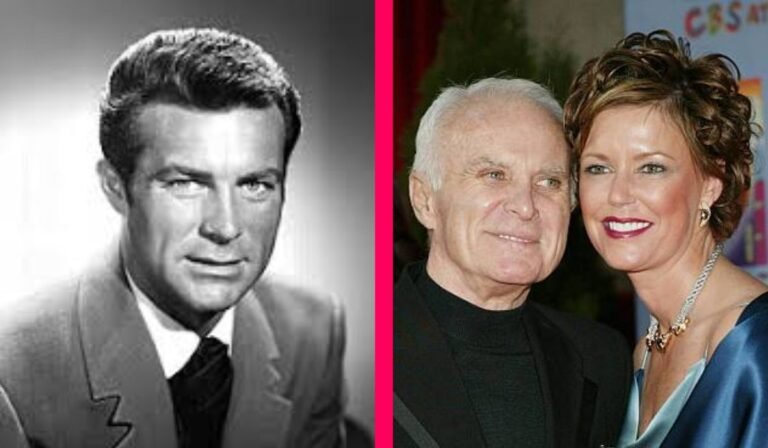
Robert Conrad Few classic television stars left a mark as bold, physical, and unforgettable as Robert Conrad. Known for his rugged charm, daring stunt work, and commanding presence, he became one of the most recognizable action heroes of the 1960s and 1970s. His work on hit shows like The Wild Wild West, Hawaiian Eye, and Baa Baa Black Sheep turned him into a household name, and his tough-guy image—both on and off screen—cemented him as a Hollywood icon.
This article takes a deep look at Robert Conrad’s life, from his challenging beginnings in Chicago to the height of his fame, his evolution as an actor, and the legacy he built across six decades in entertainment. With a friendly tone and clear storytelling, you’ll learn not just who Robert Conrad was, but why he still fascinates fans today.
Quick Bio Information
Full Name: Conrad Robert Falk
Stage Name: Robert Conrad
Born: March 1, 1935, Chicago, Illinois
Died: February 8, 2020, Malibu, California
Occupation: Actor, Singer, Stuntman
Years Active: 1953–2019
Known For: The Wild Wild West, Hawaiian Eye, Baa Baa Black Sheep
Education: Northwestern University (Theater Arts)
Parents: Leonard Henry Falk and Alice Jacqueline Hartman
Father’s Heritage: Polish (Falkowski family)
Mother’s Career: Publicity director at Mercury Records
First Major TV Role: Tom Lopaka in Hawaiian Eye
Breakout Role: James T. West in The Wild Wild West
Famous Trademark: Performing his own stunts
Marriages: Joan Kenlay (1952–1977), LaVelda Fann (1983–2010)
Children: Eight
Major Award: People’s Choice Award (Favorite Male Actor)
Notable Skill: Multi-lingual singing career in English and Spanish
Final Major Project: The PM Show with Robert Conrad (Radio)
Early Life And Family Roots
Robert Conrad’s story begins in Chicago during the mid-1930s, born to teenage parents who were still growing up themselves. His father, Leonard Falk, descended from a Polish family, while his mother, Alice Jacqueline Hartman—later known in the music industry as Jackie Smith—became the first publicity director at Mercury Records. His childhood was shaped by instability, frequent school changes, and early responsibilities.
Conrad attended several Chicago-area schools but eventually dropped out at age fifteen. To support himself, he took on full-time work, including loading freight and delivering milk for Bowman Dairy. These early jobs helped shape the grit and toughness that would later define his Hollywood persona. Even during those rough years, Conrad was drawn to performing, and he eventually enrolled in theater classes at Northwestern University, setting his sights on a much bigger stage.
From Unexpected Beginnings To Hollywood Ambition
Conrad’s path into entertainment came in an unexpected way. His resemblance to James Dean led to one of his earliest paid opportunities—posing outside a Chicago theater that was screening Giant as a publicity stunt. That job, arranged through his mother’s industry connections, gave him his first sense of show business and sparked a desire to pursue a career in acting.
During a visit to James Dean’s grave, Conrad met actor Nick Adams, who quickly encouraged the young Chicago native to head west. Adams later helped him land his first small role in Juvenile Jungle (1958), an appearance that earned Conrad his Screen Actors Guild membership and marked the official start of his acting journey.
Breaking Into Television And Learning The Craft
Like many young actors of the era, Conrad’s early career involved a string of minor roles in popular TV series. He appeared in Maverick, Sea Hunt, Highway Patrol, Lawman, and several other Warner Bros. productions. These experiences allowed him to develop his screen presence, refine his craft, and build relationships that would soon lead to his first major breakthrough.
While working steadily in television, Conrad also pursued singing. He recorded pop and rock songs, eventually earning a minor Billboard hit in 1961 with “Bye Bye Baby.” Though his music career was brief, it showcased his versatility and willingness to explore different sides of entertainment.
Hawaiian Eye And The Rise Of A Television Star
Conrad’s role as Tom Lopaka in Hawaiian Eye changed everything. The show became a major success from 1959 to 1963, pairing his charisma with a glamorous Pacific backdrop. As one of the series’ stars, Conrad quickly became a familiar face to American audiences. He developed a reputation for being energetic, dedicated, and fiercely committed to realism in every scene.
During this period, Conrad expanded his singing career by signing with the Orfeon label in Mexico, recording songs in Spanish and even releasing two albums. His popularity grew across the United States and Latin America, making him one of Warner Bros.’ most bankable stars of the early 1960s.
The Wild Wild West And The Making Of A TV Icon
When Conrad landed the role of James T. West in The Wild Wild West in 1965, he became more than a TV star—he became a legend. The series blended Western adventure with espionage, giving Conrad the chance to perform intricate fight scenes, daring escapes, and jaw-dropping stunts.
What truly set him apart was his decision to perform almost every stunt himself. This commitment came with risk. While filming the episode “The Night of the Fugitives,” Conrad fell twelve feet from a chandelier during a stunt gone wrong, suffering a serious head injury. The accident made headlines, but it also reinforced his image as a fearless performer who gave everything to his craft.
The show ran for four seasons and became one of the most recognizable programs of its time. Even decades later, The Wild Wild West remains the role most associated with Conrad’s career.
A Career Of Range Beyond His Signature Role
After The Wild Wild West, Conrad refused to be typecast. Throughout the late 1960s and 1970s, he took on roles in films and TV dramas that showcased his range beyond action and adventure. He portrayed the infamous gangster Pretty Boy Floyd in Young Dillinger, delivered compelling dramatic work in The D.A., and appeared in recognizable hits like Mission: Impossible and Mannix.
These roles allowed him to grow as a performer and demonstrate his ability to move between action, crime drama, suspense, and historical roles.
Baa Baa Black Sheep And A New Era Of Fame
In 1976, Conrad took on the role of Major Greg “Pappy” Boyington in Baa Baa Black Sheep, a World War II drama based on the real-life fighter squadron. The show earned him a People’s Choice Award and a Golden Globe nomination, solidifying his comeback as a leading man.
His portrayal of Boyington showcased a more mature, layered version of his trademark toughness. The series developed a dedicated fan base and continues to be remembered fondly by viewers who admired its blend of action and character-driven storytelling.
The Eveready Commercial That Became Pop Culture History
Even if younger audiences didn’t grow up watching his shows, many knew Robert Conrad from his iconic Eveready battery commercial. Standing with a battery balanced on his shoulder, he leaned into the camera and delivered the now-famous challenge: “Come on, I dare ya.”
The commercial was bold, memorable, and instantly linked to Conrad’s tough image. It became so popular that it was parodied on major TV shows, further reinforcing his cultural presence.
Behind The Camera And Working With Family
Conrad wasn’t just an action star; he became a director and producer as well. With projects like High Mountain Rangers and its later spin-off Jesse Hawkes, he included his children in both acting and production roles. This era of his career reflected his loyalty to family, his passion for storytelling, and his interest in mentoring the next generation.
He continued directing TV movies throughout the 1980s, creating a blend of action-driven entertainment and character-focused plots that viewers enjoyed.
Personal Life, Family, And Meaningful Relationships
Robert Conrad’s personal life was rich, complicated, and deeply family-centered. He married twice and raised eight children. His first marriage to Joan Kenlay lasted twenty-five years and resulted in a large, loving family. After their divorce, he married LaVelda Fann, whom he met while emceeing a pageant she won.
Conrad also maintained deep friendships, including one with Chicago Outfit associate Michael Spilotro. While this connection raised eyebrows, Conrad often described Spilotro as a loyal friend who supported him throughout difficult times.
Challenges, Accidents, And Public Scrutiny
The early 2000s brought some of Conrad’s most difficult moments. In 2003, he was involved in a serious car accident caused by drunk driving, resulting in major injuries to both himself and another driver. Conrad later suffered long-term nerve damage and partial paralysis on his right side.
This chapter in his life was painful and public, but it also marked a turning point. He served his sentence, completed counseling, and pulled back from acting to focus on recovery and family.
Later Years And Continuing Connection With Fans
Even as he slowed down physically, Conrad stayed active professionally. In 2008, he launched The PM Show with Robert Conrad, a weekly national radio show where he spoke with fans, shared personal stories, and celebrated classic television. Listeners loved his honesty, humor, and down-to-earth personality.
He remained proud of his stunt work and was inducted into the Hollywood Stuntmen’s Hall of Fame, a recognition he valued deeply.
His Final Chapter And Legacy In Television
Robert Conrad passed away on February 8, 2020, at the age of eighty-four. His death was met with tributes from fans, actors, and colleagues who remembered him as one of TV’s early action pioneers. His influence can still be seen in modern stunt-heavy series, and his work on The Wild Wild West continues to attract new viewers through streaming.
Conrad’s legacy lives on through the characters he brought to life, the stunts he performed with fearless commitment, and the generations of fans who still admire his remarkable career.
Final Thoughts
Robert Conrad’s story is one of determination, resilience, and an unwavering dedication to his craft. He rose from a tough upbringing to become one of television’s most iconic action stars, defining an era of bold storytelling and physically demanding performances. His willingness to take risks, both in his acting and stunt work, set him apart from his peers and established his place in entertainment history.
His journey reminds us that legends aren’t born—they’re built through hard work, fearless choices, and the courage to give everything to the roles we play, both on-screen and in life.
FAQs About Robert Conrad
Who Was Robert Conrad?
Robert Conrad was an American actor, singer, and stuntman best known for starring in The Wild Wild West, Hawaiian Eye, and Baa Baa Black Sheep. His fearless stunt work and strong on-screen presence made him a television legend.
What Made Robert Conrad Famous?
He became widely known for playing James T. West in The Wild Wild West, a role that showcased his athleticism, charisma, and dedication to performing his own stunts.
Did Robert Conrad Do His Own Stunts?
Yes. Conrad was famous for performing nearly all his stunts himself, which led to several injuries but also built his reputation as one of TV’s boldest action stars.
How Many Children Did Robert Conrad Have?
Robert Conrad had eight children from two marriages, many of whom later worked with him in various television projects.
What Was His Most Important Career Award?
He won a People’s Choice Award for Favorite Male Actor and was nominated for a Golden Globe for his work in Baa Baa Black Sheep.
How Did Robert Conrad Die?
He died of heart failure in 2020 at his home in Malibu, California.
Why Is Robert Conrad Still Remembered Today?
He remains admired for his groundbreaking stunt work, his iconic TV roles, and his long, influential career that spanned more than six decades.
People Also Read: Boston Russell: Inside The Private Life Of Kurt Russell’s Low-Key Son
