

Raising children alone while looking for romance puts you in a position most people have opinions about but few actually understand. The U.S. Census Bureau recorded 9.8 million one-parent households in 2023, with 7.3 million headed by mothers and 2.5 million by fathers. That number sat at 1.5 million in 1950. Nearly 1 in 4 American children now live in a household without their biological, step, or adoptive father present. You are not an outlier. You are part of a massive demographic that has been quietly figuring out how to date with limited time, split attention, and a small human who depends on you for everything.
The assumptions people make about single parents looking for relationships rarely hold up. Research from Stir, a dating app built for parents, found that 34% of respondents said others assumed they lacked time or energy for dating. Another 32% encountered the belief that their lives must be complicated. A similar percentage reported that people assumed they were searching for a co-parent rather than a romantic partner. The actual findings told a different story. About 48% of single parents said they had a clearer picture of what they wanted from a partner, and 34% said they appreciated romantic moments more than they did before having children.
What Single Parents Actually Want
The idea that single parents are desperate or rushing into relationships does not match the data. A survey of Stir members found that 51% of single parents became less tolerant of drama after having kids. They also reported knowing if they wanted a second date about 38 minutes into the first one. That kind of decisiveness comes from having limited time and no patience for wasting it.
About 65% of single parents had a romantic encounter in the past year. The number who had sex with one or more people was 62%, compared to 46% of singles overall. These numbers counter the assumption that parenting duties kill your dating life entirely.
Age Gaps and What They Mean for Single Parents
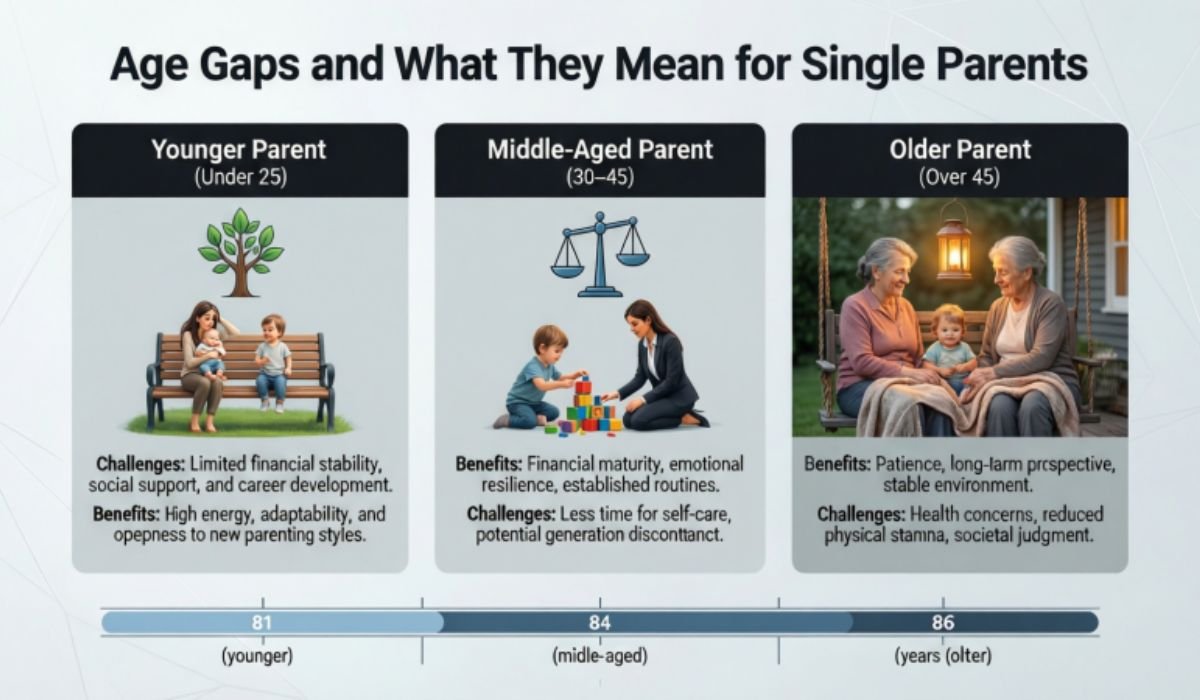
Many single parents find themselves drawn to partners at different life stages. Dating an older guy appeals to some because older partners often bring stability, patience, and a grounded perspective on family life. For a parent managing school schedules and bedtime routines, a partner who has already settled into a predictable rhythm can be a practical match.
Age differences also affect how a new partner relates to children. Someone with more years behind them may have raised kids of their own or spent time around families in various forms. This familiarity can ease the transition when introductions eventually happen, since the partner already knows what life with children looks like day to day.
Scheduling and Time
Coordinating schedules remains one of the biggest barriers. About 27% of single parents said schedule conflicts typically prevented them from going on dates. The majority, around 37%, spent 1 to 2 hours per week on dating, while 34% managed 3 or more hours weekly.
Those hours matter. Finding a reliable babysitter, coordinating custody arrangements, and carving out time that does not cut into your child’s needs all require planning. Spontaneous dates become rare. Most single parents learn to plan ahead or accept that some weeks will have no dating activity at all.
When to Introduce Your Kids
This question causes more anxiety than almost any other part of dating as a parent. The Stir survey found that 61% of single parents wait up to 3 months before introducing a new partner to their children. Another 28% said they would wait up to a year. Only 16% said they would make introductions within the first 30 days.
Professionals who work with divorcing parents often recommend waiting until a relationship has been stable for 9 to 12 months. The rationale behind this suggestion is straightforward. Children need time to adjust to new living arrangements and grieve the loss of their original family structure. Introducing someone new too early can create confusion, anxiety, and attachment problems.
When introductions do happen, the process should be gradual. A brief meeting in a neutral location works better than an all-day activity. Letting your ex-spouse know beforehand prevents unnecessary conflict. The goal is to protect your child from emotional upheaval while giving your new relationship room to grow.
Ghosting and Disclosure
Telling someone you have children can end a conversation before it begins. A survey of 1,494 Stir members found that 20% had been ghosted after revealing they had kids on a dating app. This rejection stings, but it also serves a filtering function. Someone who disappears at the mention of children was never going to work as a long-term partner anyway.
The timing of disclosure varies by platform. Some apps, like Stir, assume all users are parents. On mainstream apps, the question becomes when and how to mention your children. Putting it in your profile filters out incompatible matches early. Waiting until you have established some rapport risks wasting both people’s time.
Safety on Dating Apps

Single parents carry an extra layer of concern when meeting strangers online. The Federal Trade Commission reported that romance scams increased by 50% from 2019, according to NBC News. Protecting yourself financially and emotionally matters as much as physical safety.
Most major apps now include verification features. Bumble asks users to send real-time selfies that are compared to their profile photos. Verified accounts receive a blue checkmark. Hinge offers similar verification along with video calling and blocking tools. Tinder includes a panic button for dangerous situations and maintains a safety center with resources.
Sharing your location with a trusted friend before a first date is a basic precaution. Meeting in public places during daylight hours reduces risk. Running a quick background check online can reveal red flags that would not show up in casual conversation.
Poverty and Financial Strain
Single-parent households face poverty at rates 3 to 6 times higher than two-parent households. Over 80% of the roughly 10 million single-parent families with children under 18 are headed by mothers, according to U.S. Census Bureau data. Financial pressure affects every part of life, including dating.
Paying for childcare to go on a date is an added expense. So is the date itself. Some single parents limit dating to free or low-cost activities. Others wait until their children are old enough to stay home alone. Money constraints shape how often you can date and what kinds of activities are possible.
What Works
The University of Florida runs a program called SMART Couples that provides relationship education for adults of all ages and relationship statuses. The program acknowledges that dating covers a wide range of situations, from casual outings to long-term partnerships. Attraction matters, but compatibility requires assessment over time. Asking yourself what you want from a relationship and checking if those goals are being met helps prevent wasted effort.
Single parents often report that dating after having children feels different than dating before. You know yourself better. You have less tolerance for games. You can spot incompatibility faster because you have seen how someone responds to the reality of your life rather than a version of yourself you have curated for a first impression.
The 38-minute threshold for knowing if you want a second date reflects this efficiency. When time is limited and the stakes are higher, clarity arrives faster.
