
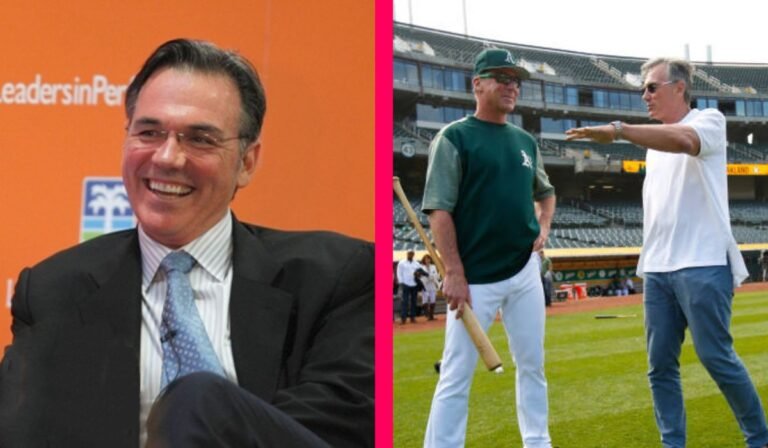
Billy Beane when you think about how baseball evolved in the 21st century, one name stands out for redefining how teams are built: Billy Beane. Known to many as the mastermind behind the “Moneyball” movement, Beane didn’t just influence Major League Baseball—he changed it forever. While his career as a player was far from legendary, his work behind the scenes with the Oakland Athletics made him one of the most important figures in modern sports. This is the story of how Billy Beane turned numbers into wins, changed the rules of the game, and became a pioneer of performance analytics in baseball and beyond.
Quick Bio Overview: Key Facts At A Glance
| Full Name | William Lamar Beane III |
|---|---|
| Known As | Billy Beane |
| Date Of Birth | March 29, 1962 |
| Age (As Of 2025) | 63 |
| Birthplace | Orlando, Florida, U.S. |
| Nationality | American |
| Current Role | Senior Advisor, Oakland Athletics |
| Former Roles | GM, EVP of Baseball Operations |
| MLB Debut | September 13, 1984 |
| Last MLB Appearance | October 1, 1989 |
| MLB Teams Played For | New York Mets, Minnesota Twins, Detroit Tigers, Oakland Athletics |
| Batting Average (MLB) | .220 |
| Home Runs | 3 |
| Runs Batted In | 29 |
| Moneyball Contribution | Revolutionized player evaluation using sabermetrics |
| Popular Book | Moneyball: The Art of Winning an Unfair Game |
| Movie Adaptation | Moneyball (2011), portrayed by Brad Pitt |
| Spouse | Tara Beane |
| Children | Edward, Brayden, Tinsley, and Casey |
| Other Ventures | Part-owner of Barnsley FC and AZ Alkmaar (Soccer Clubs) |
| Education | University of California, San Diego (Off-seasons) |
Early Life And Athletic Beginnings
Billy Beane grew up in a military family, which meant discipline and structure were part of daily life. Raised in Mayport, Florida, and later San Diego, California, Beane quickly proved to be a gifted athlete. At Mt. Carmel High School in San Diego, he excelled not just in baseball, but also in football and basketball. Coaches and scouts saw something special in him early on. He was promoted to varsity baseball during his freshman year and went on to bat over .500 through much of his high school career. Though his senior year numbers dropped slightly, he was still considered a top prospect by Major League Baseball scouts. He also had an opportunity to attend Stanford University on a dual baseball and football scholarship, but he turned it down to pursue his dream of playing professional baseball.
MLB Playing Career: The High Expectations And Hard Lessons
Billy Beane entered professional baseball with high expectations when he was drafted in the first round by the New York Mets in 1980. At the time, he was seen as a can’t-miss prospect. But things didn’t go as planned. While his teammate Darryl Strawberry thrived, Beane struggled to adjust in the minor leagues. Despite showing flashes of power, he never quite lived up to the hype. His major league career was short-lived and inconsistent, with stints on four different teams: the Mets, Twins, Tigers, and Athletics. His career batting average was just .220, and he hit only three home runs. While his playing career may have been a disappointment on the field, it gave him an inside look at how the game worked—and, more importantly, how it could be improved.
Turning Point: How Failure As A Player Sparked A New Vision
After several years bouncing between the majors and minors, Billy Beane made a bold decision. In 1990, rather than accept another assignment to the minors, he approached Oakland Athletics General Manager Sandy Alderson and asked for a job in the front office. It was the start of a transformation that would redefine his life and, eventually, baseball itself. Beane began as an advance scout, then rose to assistant general manager. During this period, he was introduced to a new way of evaluating talent—one that relied less on traditional scouting and more on data. His own struggles as a player helped shape his skepticism of outdated evaluation systems. That insight would later become the foundation of the Moneyball approach.
Rise As Oakland A’s General Manager
In 1997, Billy Beane took over as the General Manager of the Oakland Athletics. The team didn’t have the financial muscle of baseball’s powerhouses like the Yankees or Red Sox, so Beane had to find smarter ways to compete. Rather than chasing big names and flashy stats, he focused on players who got on base, had high walk rates, and could contribute in undervalued ways. He used sabermetrics—a form of statistical analysis—to evaluate players and build a competitive roster on a shoestring budget. Under his leadership, the A’s consistently punched above their weight, making multiple playoff appearances despite having one of the lowest payrolls in the league.
The Moneyball Revolution
The philosophy that made Billy Beane famous became known as “Moneyball,” named after the 2003 book by Michael Lewis. The idea was simple but radical: traditional baseball scouting was flawed, and better outcomes could be achieved by focusing on overlooked metrics like on-base percentage. The 2002 Oakland A’s team, built on this strategy, won 20 straight games—a record in the American League. Beane’s approach drew criticism from traditionalists but gained praise from economists, data scientists, and even tech executives. His method changed how Major League teams approached drafting, trading, and budgeting. Today, every MLB team uses some form of analytics in player evaluation, thanks in large part to Beane’s influence.
From Book To Blockbuster
The Moneyball book brought national attention to Billy Beane, but it was the 2011 film adaptation that made him a household name. Brad Pitt portrayed Beane in a performance that earned him an Oscar nomination. The film, while dramatized, highlighted the real challenges Beane faced while pushing against baseball’s old-school thinking. It captured the personal and professional risks he took to change the game. The movie helped cement his reputation not just as a successful executive but as a sports visionary who defied the odds.
Executive Evolution: From GM To Senior Advisor
Billy Beane served as the Athletics’ General Manager until 2015, when he was promoted to Executive Vice President of Baseball Operations. In this role, he oversaw the broader strategic direction of the team, while his protégé David Forst took over as GM. Beane continued to influence trades, draft picks, and long-term planning. In 2022, he transitioned again—this time to Senior Advisor to team owner John Fisher. Though no longer involved in the day-to-day operations, his voice still carries weight within the organization. Even now, his legacy continues to shape how the A’s make decisions.
Beyond Baseball: Soccer Ventures And Global Sports Analytics
Billy Beane’s love for data-driven decision-making didn’t stop at baseball. A long-time soccer enthusiast, he applied his analytical mindset to the world’s most popular sport. He joined the ownership group for Barnsley FC in England and became an advisor and later shareholder for Dutch club AZ Alkmaar. His goal? To bring the same kind of efficiency and smart scouting to soccer that he pioneered in baseball. He has also collaborated with top football minds like Arsène Wenger and Alex Ferguson, proving that his methods can apply across sports and even continents.
Business Interests And Technology Influence
Billy Beane’s innovative approach to sports management caught the attention of the tech world. In 2007, he joined the board of directors at NetSuite, a cloud-based software company. His ability to balance instincts with analytics made him an ideal voice in tech-driven decision-making. He also served as a consultant for the video game MLB Front Office Manager, where players could step into the role of a GM and make real-time decisions based on stats and scenarios. Beane has become a symbol of how data can revolutionize not just sports, but also business and leadership.
Personal Life: Family, Education, And A Life Away From The Spotlight
Though his professional life has been in the public eye, Billy Beane keeps his personal life relatively private. He was first married to Cathy Sturdivant, and they have a daughter named Casey. He later married Tara Beane, with whom he shares three children: Edward and twins Brayden and Tinsley. During his playing days, Beane also attended the University of California, San Diego in the off-seasons. Despite being portrayed in books and movies, he prefers a quieter, family-focused life away from fame. He remains based in California and continues to be involved in baseball and global sports development.
Awards, Honors, And Professional Legacy
Billy Beane’s contributions have earned him several accolades over the years. He was named MLB Executive of the Year in 2018, received the Sporting News Executive of the Year award three times, and was twice honored by Baseball America. But his biggest achievement is arguably the cultural shift he sparked in how sports evaluate performance. From professional scouts to fantasy leagues, from corporate boardrooms to European soccer, his influence is everywhere. He didn’t just build great teams—he built a new way of thinking about value, efficiency, and competitive advantage.
Final Thoughts: Why Billy Beane’s Impact Will Be Felt For Generations
Billy Beane may not have had a Hall of Fame playing career, but his influence as an executive far exceeds most who ever wore a uniform. He took a struggling, low-budget team and turned it into a model of innovation and efficiency. More importantly, he showed the world that smart ideas can beat big money—and that thinking differently can change everything. Whether in baseball, soccer, or business, Beane’s legacy continues to inspire new generations to challenge the status quo. He didn’t just change how the game is played. He changed how the game is understood.
FAQs About Billy Beane
What Does Billy Beane Do Now?
Billy Beane currently serves as a Senior Advisor to the Oakland Athletics and remains involved with European soccer clubs like AZ Alkmaar and Barnsley FC.
Did Moneyball Really Work?
Yes, while it didn’t win a championship, the Moneyball method allowed the Oakland A’s to consistently compete with wealthier teams using a data-driven approach.
Why Didn’t Billy Beane Join The Red Sox?
After being offered a $12.5 million deal to join the Boston Red Sox in 2002, Beane turned it down due to personal reasons and his loyalty to Oakland.
Is Billy Beane Still Involved In Baseball?
Yes, although not in a daily executive role, he still advises the A’s on long-term planning and strategy.
Was The Moneyball Movie Accurate?
While the movie takes some creative liberties, it captures the core truth about Beane’s data-driven revolution and the obstacles he faced.
Who Played Billy Beane In Moneyball?
Brad Pitt played Billy Beane in the 2011 film Moneyball, earning critical acclaim and an Oscar nomination.
What Is Billy Beane’s Legacy In Sports?
His legacy lies in proving that intelligence and innovation can outperform money and tradition. He helped launch the age of analytics in sports.
People Also Read: Fanum Height: Everything to Know About the Streamer’s Real Measurements
