
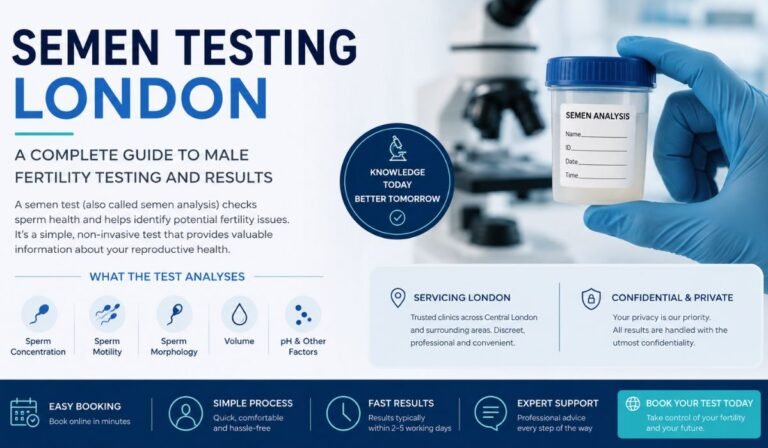
One of the first tests a specialist will order if you and your partner have been trying to conceive for a while without getting pregnant is a semen test. Semen testing in London can be a simple and reliable procedure that provides you with accurate information about the state of your reproductive health.
However, many men have delayed it because they did not know what it entails or what the expected outcomes are. This blog provides a step-by-step walkthrough of the semen analysis procedure. What a semen analysis covers, how results are produced, and how results are analysed, to ensure you feel informed and prepared.
What is Semen Analysis?
Semen analysis is a lab test performed on a semen sample that uses a microscope. It is used to assess factors important to a man’s fertility. The test is usually performed as the initial test in males with fertility problems. It is also performed following a vasectomy to ensure that the surgery was successful.
Semen is a whitish-grey fluid consisting of sperm cells, fluid to protect and transport the sperm, and proteins, vitamins and minerals that support the health of the sperm. If a man has a semen analysis, the laboratory will do a thorough analysis of the semen and sperm. This will help understand sperm’s fertility.
The Reporting of a Semen Analysis
Applicants will get a semen analysis report with various parameters.
- Sperm count: The number of sperm in a semen sample is called the sperm count. A count does not give a true indication of fertility, but a higher count increases the chance of fertilisation.
- Sperm motility: It refers to the movement of the sperm. For sperm to reach and fertilise an egg, they must move forward efficiently. The sperm analysis process checks motility to indicate the proportion of moving sperm and the effectiveness of their movement.
- Sperm morphology: Sperm morphology is the size and shape of the sperm cells. If the sperm is abnormally shaped, it will not easily penetrate the egg. A normal response will be a specific percentage that has a rounded head and a correct tail.
- Semen volume: It is the amount of fluid present in the sample. Having too little volume can diminish the sperm flow during sexual intercourse.
- pH: The level of pH shows the acidity or alkalinity of semen. Acidic foods can harm the sperm and impact fertility.
- Time to liquefaction: It is the amount of time it takes for the gel-like semen to turn into a fluid. This is important as sperm must be able to move easily through the reproductive tract.
- Vitality: The lab will receive information from Vitality on the percentage of sperm in the sample that are alive.
- Infections: The presence of white blood cells may indicate a possible infection or inflammation of the reproductive system that may require different treatment.
How Does the Process of Semen Analysis Work?
The semen analysis process in London is much easier than most men might think. There are two to seven days before you test when you’ll be asked not to have sexual activity or masturbation. This will help to have an ideal sperm count and provide more accurate semen analysis results.
On the test day, a specimen of semen is collected. This can be done in the home or in a private room within the clinic or lab. If you prepare the sample at home, you should bring it in within 1 hour, with the temperature maintained at room temperature.
The container supplied will be sterile with your details on it. Do not touch the inside of the container, and if any sample spills, do not attempt to pick it up; this may alter the results.
The semen testing in London is performed by a specialist at the laboratory, and the results are compared to normal values. Your doctor might ask you to have a second test about 2 weeks later to get a more comprehensive picture of your sperm count.
Familiarise yourself with the normal values of semen analysis
Semen testing results in London are typically available 2-3 days after you submit your sample. A lab will compare your results with the World Health Organisation (WHO) normal results for semen analysis.
- The results of a healthy sample with normal semen analysis values are usually active, have a normal shape, adequate volume, a pH not too acidic, and liquefy within a reasonable period of time.
- Abnormally low or high results do not mean that you cannot be fertile. Even men who have borderline scores have been able to conceive naturally or with very little effort.
- Any abnormal results may suggest various underlying conditions, such as hormonal imbalances, infection, lifestyle or structural problems.
- The findings of the semen analysis will be discussed with a fertility expert, who will consider all factors when making recommendations for the next step.
Nutrients such as zinc, vitamin C, folate, coenzyme Q10, and omega-3 fatty acids can improve sperm health. Certain changes can occur with these nutrients; however, they are small but consistent, which can make a big difference in sperm quantity over about three months.
Conclusion
Semen testing in London is widely available, confidential, easy to do, and not as difficult as most men think. From fertility inquiries with your partner to simply a greater understanding of your reproductive health, a semen evaluation can provide you with the clarity you need to make educated choices and move forward.
The Male Fertility Clinic provides a discreet space where men can comfortably do semen testing in London. This can be the first step towards improving your male fertility.
