
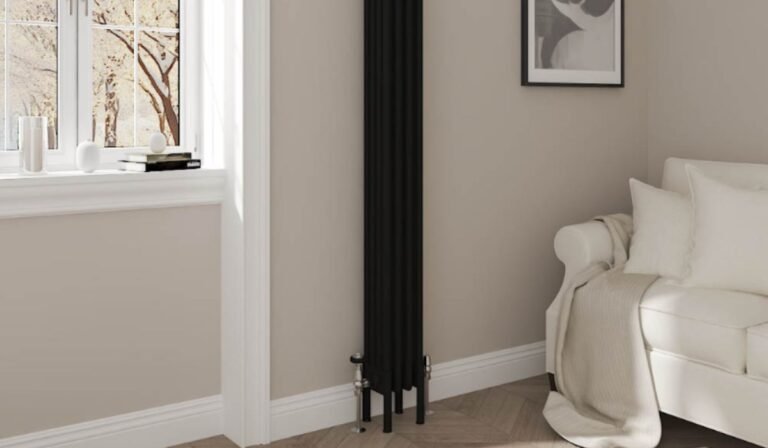
Column radiators are stylish and can heat a room perfectly. They can be used to complement any property, whether it is a Victorian townhouse or a modern apartment. This DIY guide will help you install a new column radiator safely.
This DIY guide to installing a column radiator will go through step by step, and is written from the perspective of someone with average DIY ability. Please remember to take your time to complete each stage to a high quality of work.
Is Your Boiler Up to It?
Additional radiators can put too much pressure on your existing boiler. Depending on the age of your boiler, this could be a problem if your boiler is old or possibly at the end of its life. It is always best to consult with a heating engineer.
Do You Have the Right Radiator Size?
Most column radiators are rated in BTUs, and some great free online calculators will work out the exact size of radiator that you require before your purchase. These free online calculators will require information about the room where the new radiator is to be placed, such as the square footage of the room, the height of the ceiling, plus details of any windows in the room, etc.
The online calculator will then supply you with the required BTU rating for the correct size radiator for your needs. A radiator that is too small will not heat the room up sufficiently, and a radiator that is too big will make the room feel stuffy and will be a big waste of energy.
What You’ll Need
Get everything together before you start. Stopping mid-job to find a tool wastes time and breaks your concentration.
Tools:
- Power drill and drill bits (masonry and wood)
- Spirit level
- Tape measure
- Pencil
- Adjustable spanner or wrench
- Pipe cutter (if adjusting pipework)
- Pipe detector or multi-scanner
Turn Off and Drain the System
Before you can start removing any existing pipework, make sure your central heating system has been switched off and drained as necessary for the section you are working on.
Here’s how to do it:
- Switch off the central heating. Allow the system to cool down completely.
- Next, switch off the water supply to the heating system. This is done at the filling loop on your boiler.
- To drain a part of the heating system, you need to connect a hose to the drain-off valve. Typically, this will be found at the bottom of the boiler or on the lowest radiator in the house.
- Run the hose outside or into a drain.
- Slowly open the drain-off valve to allow water to drain from the system.
- Now turn the bleed valves on your radiators fully open; this will allow water to drain from the pipework.
Just a final thought, it is impossible to remove all of the water from the pipework, so always make sure you have a suitable bucket and some towels to hand to mop up any spillages.
Remove the Existing Radiator
Use an adjustable spanner to release the old radiator from the valves. Once released from the valves, the complete radiator can then be lifted off the wall brackets and removed.
Also check for local wall damage, etc before the column radiator is installed.
Measure and Mark the Position
Positioning of your radiator, whether for appearance or performance, is crucial.
Most radiators are fixed below a window. This is largely for appearance, but also to help spread the heat throughout the room.
Leave adequate clearance:
- Around 100-150 mm from the floor
- Approximately 50 mm from the wall
- At least 100 mm below the window sill
Use a spirit level to transfer the marks to the wall, using a pencil. These marks will be the fixing points for the wall brackets.
Install the Wall Brackets
Fix the fixing holes in the Wall Brackets to the corresponding markings on the wall. Fix Wall Plugs as required and fix the brackets to the wall using the relevant fixings.
Check that the radiator is straight using a spirit level. This will look better than an incorrectly fitted radiator and also enable the water to circulate better through the radiator.
Column radiators are far heavier than typical panel radiators, so check the fixing to the wall and ensure that the fixing to the wall is suitable for the weight of the Column radiator.
Prepare the Radiator
Radiator valves and radiator accessories are usually supplied attached to the radiator. Make sure the connections are wrapped with PTFE tape before installing the radiator on the wall.
Other parts of the radiator (valves and other accessories) are also fitted to the radiator. PTFE tape is wrapped around the threaded parts of the connections to the radiator to help make a watertight joint. The Thermostatic radiator valve (TRV) and other items (Lockshield valve, Bleed valve, Blanking plug) are also fitted.
Thermostatic radiator valve (TRV)
Lockshield valve
Bleed valve
Blanking plug
Tighten up the individual fittings for the various valves, etc. Note that due to the risk of stripping the radiator threads, it is wise to avoid over-tightening.
Mount the Column Radiator
Column radiators are extremely heavy, so we advise moving these products with assistance. Place the product straight on the wall and ensure that it is completely even. Also, check the end with the valves to ensure this can be fixed to the pipework already fixed to the wall.
Look at the radiator, which is straight and central and is adequately fixed. Check that the ends where the valve connections are to be made are aligned with the relevant pipework.
Connect the Pipework
Fix the radiator valve ends to the central heating pipes using a spanner, where necessary, to tighten up.
Tighten all joints to a secure fixing and ensure that both valves for the radiator are in the closed position.
Additional pipework will be required if a radiator is to be fitted in a completely new position. Advice should be sought from a qualified plumber on the required pipe runs and method of connection.
Refill the Heating System
Open up the radiator valves and refill the heating system as per the manufacturer’s instructions for your boiler.
Ensure every connection is leak-tight when filling the radiator with water. Even a tiny drop of water could mean the fitting needs a slight tightening.
Bleed the Radiator
An Alternative to Using a Heating Pipe to Connect a New Radiator to the Central Heating System.
Open slowly until you start to hear air hissing. As soon as the air stops hissing and the water starts to come out of the bleed valve in a steady stream of water, close the bleed valve.
Bleeding your radiator will help to prevent loss of efficiency and ensure that your heating system is operating as best it can.
Helpful Tips for a Successful Installation
- Always follow the manufacturer’s installation instructions.
- Use heavy-duty wall fixings for larger radiators.
- Ask someone to help when lifting the radiator.
- Check pipe centres before purchasing a replacement model.
- Bleed all radiators in the system after refilling.
- If you are unsure about plumbing or changing pipes within the heating system, it is advisable to seek help from a qualified heating engineer.
A really straightforward DIY project, installing a column radiator can provide you with not only a fantastic new heating system, but also something to really admire in your home. If you just take a little time to plan, obtain the required tools and measure up with precision, it should all work out well for you and make for a superb job.
A perfectly installed column radiator will give you years of efficient heating and style to any room. If in doubt about any part of the process, always seek advice from a qualified heating engineer to ensure a safe and correct installation.
