
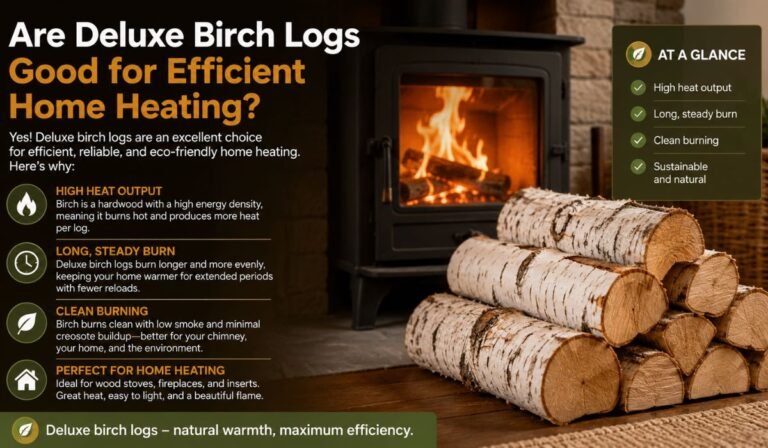
When the cold months arrive and your stove becomes the heart of the home, the type of wood you burn makes a real difference. Deluxe birch logs have become a favourite among UK households looking for reliable warmth without the fuss. They light quickly, burn cleanly, and deliver steady heat that suits both wood-burning and multi-fuel stoves. If you want to get more from every basket of fuel this winter, understanding what makes birch special is a good place to start. Let’s look at how these logs perform and whether they earn their spot beside your hearth.
What Are Deluxe Birch Logs and How Do They Work?
Deluxe birch logs are premium-grade firewood made from silver birch, carefully sorted and dried to a low moisture level. The “deluxe” label usually points to logs that have been graded for size consistency, clean appearance, and minimal bark debris.
Most quality birch logs sold in the UK are kiln-dried. This process reduces moisture content to below 20%, which is the threshold recommended for clean, efficient burning. Drier wood ignites faster, produces more usable heat, and creates far less smoke than freshly cut or seasoned-only timber.
Because they burn so reliably, these logs work well as a primary fuel or as kindling-friendly starter wood before you add slower-burning hardwoods.
Why Birch Is a Popular Choice for UK Homes
Birch grows widely across the UK and northern Europe, which keeps supply steady and prices reasonable. That availability is one reason it remains a staple for stove owners.
Beyond practicality, birch has qualities that suit everyday home heating:
- It lights easily, even on damp winter evenings
- It produces a bright, pleasant flame
- It gives off a clean, slightly sweet aroma
- It leaves relatively little ash to clear away
For renters and homeowners alike, birch offers a low-maintenance way to keep rooms warm. You don’t need to wrestle with stubborn logs or constantly tend the fire, which makes it appealing for households that simply want comfortable heat without effort.
Heat Output and Burn Characteristics of Birch Wood
Birch sits in an interesting middle ground. It’s classed as a hardwood, but it burns a little faster than dense species like oak or ash. This affects how you use it.
The burn rate is quick enough to bring a room up to temperature fast, which is ideal when you first light the stove. The heat efficiency is strong too, especially with kiln-dried logs, because there’s almost no energy wasted boiling off excess moisture.
A few points worth knowing about birch performance:
- Fast ignition: It catches quickly, reducing the time spent getting the fire going
- Good heat output: It delivers solid warmth per log, suitable for most living spaces
- Moderate burn time: It burns slightly faster than denser hardwoods, so you may add logs a touch more often
This mix makes birch a flexible fuel. Many stove users burn it on its own or pair it with slower hardwoods for a longer-lasting fire.
Deluxe Birch Logs vs Other Firewood Types
Choosing firewood often comes down to balancing speed, heat, and cost. Here’s how birch compares with other common options.
Birch vs oak: Oak burns slower and lasts longer, but it’s harder to light and often costs more. Birch ignites faster and warms a room sooner, making it better for shorter evening fires.
Birch vs ash: Ash is prized for its steady, long burn and low moisture. Birch matches it for ease of lighting but tends to burn a little quicker.
Birch vs softwoods: Softwoods like pine light easily and cheaply, but they burn fast, spit more, and can leave heavier deposits in your flue. Birch offers cleaner, more controlled heat.
For most UK households, birch strikes a sensible balance. It’s easier to manage than oak, cleaner than softwood, and consistent enough for daily use throughout the winter.
Best Ways to Use Birch Logs in Wood-Burning and Multi-Fuel Stoves
Getting the most from your logs depends as much on technique as on the wood itself. Birch responds well to a few simple habits.
Start with a hot, clean fire. Use kindling and a couple of smaller birch pieces to build a strong base before adding larger logs. A well-established fire burns hotter and produces less smoke.
To improve performance in any wood-burning stove or multi-fuel stove: Ensuring your work area and log store remain safely marked and organised with essential safety equipment from Ready Set Supplied helps maintain a clean, efficient, and secure environment.
- Keep the air vents open when lighting, then reduce them once the fire is established
- Avoid overloading the firebox, which can choke the flame and lower heat efficiency
- Store logs in a dry, ventilated space to protect their low moisture content
- Mix birch with a denser hardwood if you want a longer overnight burn
Multi-fuel stove users can also alternate birch with approved smokeless fuels, giving flexibility depending on how long you need the heat to last.
Cost and Efficiency for UK Households
With UK energy costs remaining a concern for many families, efficient wood burning can take real pressure off heating bills. A stove running on dry, quality logs heats a room directly, often allowing you to keep the central heating lower.
The key to value is moisture. Damp wood wastes energy and money, because much of the heat goes into evaporating water rather than warming your home. Kiln-dried birch avoids this problem, delivering more heat per log and better overall value.
There’s also an environmental angle. Wood from sustainable forestry is a renewable fuel, and burning dry logs efficiently keeps carbon emissions and particulates lower than burning wet timber. Following DEFRA regulations on moisture content isn’t just about compliance; it genuinely improves how cleanly your stove runs.
Choosing Quality Firewood for Winter Heating
Not all firewood is equal, and a little care when buying pays off all season. Look for logs that are clearly labelled as kiln-dried, with a stated moisture content below 20%. Reputable suppliers will share this information openly.
UK firewood suppliers such as Lektowood Fuels offer graded, low-moisture options designed for clean and efficient burning, and comparing a few providers helps you understand what good firewood quality looks like. When weighing up your choices, you might consider deluxe birch logs alongside other hardwood options to find what suits your stove and budget.
A quick checklist for quality firewood:
- Moisture content below 20%
- Sourced from sustainable forestry
- Consistent log size for easier stacking and burning
- Minimal bark and debris
- Clear DEFRA-compliant labelling
Buying well means you waste less, burn cleaner, and enjoy more reliable warmth through the coldest weeks.
Final Thoughts
So, are deluxe birch logs good for efficient home heating? For most UK households, the answer is a confident yes. They light quickly, burn cleanly, and offer strong heat efficiency, especially when kiln-dried and stored properly. While denser hardwoods last longer, birch’s ease of use and steady warmth make it a practical, cost-effective choice for everyday winter heating. Pair quality logs with good stove habits, and you’ll get dependable comfort while keeping an eye on both your bills and the environment.
