
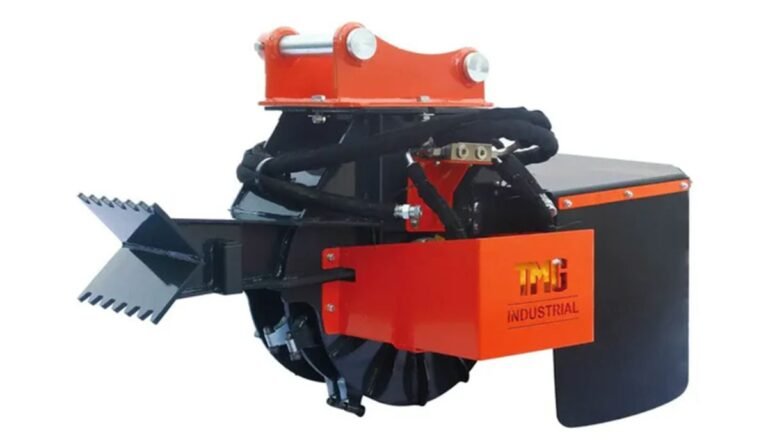
Across Canadian forestry operations, land development projects, and property maintenance, removing tree stumps after felling is essential. Stumps left in the ground hinder replanting, damage mowing equipment, and create tripping hazards. An excavator stump grinder attachment mounts to compact excavators to grind stumps below ground level. Canadian contractors, landscapers, and property managers use these attachments for efficient stump removal without dedicated stump grinding machines.
Common Applications and Grinding Method
Excavator stump grinders are commonly used for:
- Forestry site preparation after timber harvest
- Residential lot clearing for new construction
- Park and trail maintenance
- Utility right-of-way clearing
- Orchard and vineyard removal
The attachment connects to the excavator’s hydraulic system. A grinding wheel with carbide teeth rotates at high speed, pulverizing wood fiber into fine chips. The operator maneuvers the grinder across the stump surface, grinding from the outside inward. The excavator’s reach allows grinding around obstacles that a walk-behind grinder cannot access.
Efficiency Compared to Manual Removal
Manual stump removal using an excavator bucket to dig out stumps is time-consuming and leaves a large hole to backfill. Stump grinding produces wood chips that fill the hole as the stump is ground, leaving minimal surface disruption. The chips decompose over time, returning nutrients to the soil.
Key factors affecting grinding performance:
- Stump wood species and age
- Rocks and debris embedded in stump
- Hydraulic flow rate from host machine
- Grinding wheel teeth condition
- Operator technique and approach
Operator Safety and Equipment Protection
Stump grinding is dangerous work. Kickback can occur if the grinder catches on a hard knot or rock. The excavator cab protects the operator from thrown debris. This is a significant safety advantage over walk-behind stump grinders that require the operator to stand near the grinding wheel.
Safe grinder operation requires several key practices:
- Clear area of rocks and debris before grinding
- Keep bystanders 50 feet away
- Wear hearing protection in cab
- Inspect teeth for damage before each use
- Stop grinder if unusual vibration occurs
Advantages and Limitations
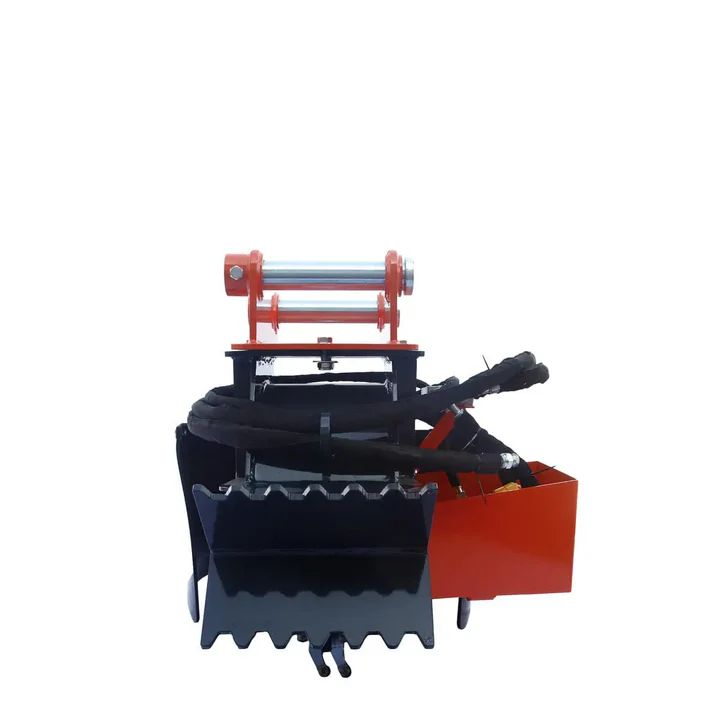
Advantages of an excavator stump grinder include:
- Operator stays in protected cab during grinding
- Reaches stumps in tight or hazardous locations
- Grinds stumps below grade level
- Leaves wood chips as natural fill material
- No large hole to backfill after removal
Limitations to consider:
- Requires excavator with adequate hydraulic flow
- Carbide teeth wear and require replacement
- Not suitable for frozen ground conditions
- Slower than pulling stumps with excavator bucket
- Teeth can be damaged by rocks
Real-World Application Example
A Canadian land clearing contractor in British Columbia cleared a 5 acre site for a residential subdivision. Over 200 stumps remained after logging. Using an excavator bucket to dig out each stump would have taken 3 weeks. The contractor used an excavator stump grinder attachment. The operator ground each stump to 6 inches below grade in 10 minutes. The site was ready for grading in 4 days.
Conclusion and Future Outlook
TMG Industrial Excavator stump grinder attachments enable contractors to offer stump removal services using existing equipment. The combination of operator safety, below-grade grinding, and minimal site disruption makes these attachments valuable for land clearing operations. As development continues on previously forested land, demand for efficient stump removal will likely remain strong. Future designs may include more aggressive carbide tooth patterns for frozen ground and dust suppression systems for dry conditions.
Contractors should evaluate stump grinder attachments for any excavator fleet performing land clearing or site preparation. The 18 inch grinding width makes this attachment suitable for diverse Canadian stump removal applications.
