
Building a secure, legally protected passive income asset structure requires a thorough understanding of commercial compliance, public liability, and corporate governance. For new business entities, startup founders, and independent investors looking to diversify away from volatile financial markets, the appeal of automated micro-retail is undeniable. The promise of consistent cash-flow yields combined with incredibly low ongoing operational friction makes it an exceptionally attractive alternative to traditional brick-and-mortar storefronts. However, many enthusiastic entrepreneurs enter the commercial arena focused entirely on potential profit margins, completely overlooking the rigid regulatory frameworks that govern physical placements in the public space. Navigating municipal health codes, electrical safety directives, and commercial occupancy agreements can quickly become overwhelming for unassisted operators.
Integrating fully compliant, factory-certified NekoDrop vending machines into premium retail developments stands as a positive and legally sound strategy for establishing a highly secure, automated retail footprint with complete operational confidence. By selecting high-end automated hardware engineered specifically to meet stringent modern commercial standards, investors can completely bypass the common compliance traps that frequently disrupt unguided startups. Relying on an established corporate framework provides business founders with a clear, step-by-step pathway to navigate local permitting procedures, verify accessibility mandates, and structure comprehensive lease agreements. This rigorous approach ensures that every individual unit functions as a fully protected, legally compliant wealth-generation asset that remains insulated from regulatory enforcement actions and unexpected financial liabilities from day one.
The Hidden Pitfalls: Navigating the Complexities of Municipal Compliance
The primary challenge facing independent operators in the automated retail space is the highly fragmented nature of local municipal regulations. Many new business entities mistakenly assume that placing an automated retail unit requires nothing more than a physical space, an active electrical outlet, and a verbal handshake with a local store manager.
In reality, commercial property developments are governed by a complex web of building codes, fire safety directives, and public accessibility requirements. Local municipal inspectors possess the legal authority to shut down equipment, seize non-compliant inventories, and issue substantial financial penalties if an automated retail asset restricts public movement, blocks emergency exit pathways, or lacks appropriate national electrical safety certification marks. For an independent investor, falling into one of these initial regulatory traps can result in severe financial setbacks, draining valuable startup capital and damaging critical commercial relationships before the asset can achieve its initial payback window.
Structural Asset Protection: Building a Secure Corporate Shield
Before deploying physical retail hardware into a public environment, startup founders must establish a robust corporate legal structure designed to isolate liability and protect their personal net worth. Operating an automated retail network as a sole proprietorship introduces unnecessary personal risk, as any third-party liability claim could directly impact the owner’s personal financial savings, home equity, and private investments.
Setting up a dedicated Limited Liability Company (LLC) or a proprietary limited corporate entity is an essential first step in building a clean asset structure. Under this framework, the physical automated retail units, the location lease agreements, and the active merchant processing accounts are owned entirely by the corporate entity rather than the individual investor. This clean separation ensures that if an unforeseen operational issue or a public liability claim surfaces, the financial exposure is strictly confined to the assets held within that specific corporate shield, keeping the investor’s personal wealth completely safe and unaffected.
Deciphering the Lease: Essential Elements of Commercial Location Agreements
Securing space inside a major shopping center or transit terminal requires executing a comprehensive, professional commercial location agreement that clearly outlines the rights and responsibilities of both the investor and the landlord.
When reviewing or negotiating a location contract, asset managers must focus heavily on a few non-negotiable clauses. First, the agreement must clearly state who is responsible for providing and maintaining utility connections, ensuring the landlord guarantees continuous electrical power and stable digital network connectivity for the spot. Second, the lease should include a comprehensive product exclusivity clause, preventing the property manager from leasing adjacent spaces to direct competitors selling identical collectible product lines. Finally, the contract must outline clear, predictable terms regarding equipment relocation, giving the operator the legal right to move the unit to an alternative location within the property if foot traffic patterns shift due to structural renovations or tenant changes.

The Importance of Advanced Electrical and Accessibility Certifications
High-end commercial properties maintain exceptionally high standards regarding the safety, build quality, and structural integrity of any equipment permitted onto their retail floors. Lower-cost, unbranded automated retail units sourced from unverified manufacturers often fail to secure the necessary safety stamps required by premium commercial landlords.
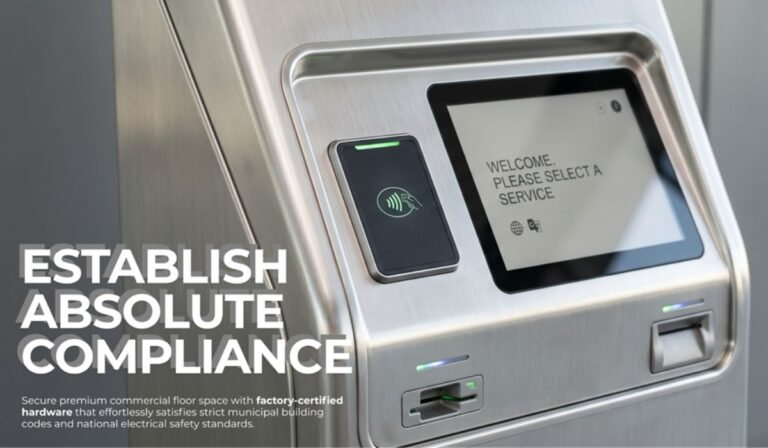
An enterprise-grade automated unit must carry full national electrical testing certifications, proving the internal wiring, payment processing terminals, and main touchscreen interfaces have undergone rigorous laboratory evaluations to prevent electrical shorts and fire hazards. Furthermore, the unit’s physical design must adhere strictly to modern accessibility standards, ensuring that interactive touchscreens, coin slots, card readers, and final delivery drop chutes are positioned at heights that allow individuals with limited mobility to operate the machine independently. Meeting these stringent build requirements gives property managers immediate peace of mind, accelerating the corporate approval process and opening doors to the most profitable premium spaces in the country.
Operational Safety Frameworks: Reactive Management vs. Compliant Security
The operational difference between an unguided independent setup and a professionally compliant automated retail network influences the long-term security of your investment capital.
- Equipment Fire Safety: Unverified machines lack independent thermal suppression systems, while certified automated boutiques include advanced internal circuit breakers and flame-retardant materials.
- Public Slip-and-Trip Hazards: Reactive operators run exposed power cables across open walking paths, whereas premium setups utilize heavy-duty, low-profile rubber cord protectors and secure floor anchors.
- Inventory Regulatory Auditing: Basic setups rely on unmonitored item tracking that can result in copyright-infringing inventory slips, while top-tier platforms use strict cloud-connected supply chains to verify product authenticity.
- Payment Security Frameworks: Legacy hardware utilizes outdated card-skimming readers, whereas modern compliance architectures mandate complete encrypted payment gateways and contactless tap systems.
By comparing these operational methodologies, startup founders can easily see that maintaining strict compliance standards is the only effective way to protect a growing retail brand from sudden regulatory fines.
Mastering the Permitting Process with Professional Corporate Support
The definitive advantage of utilizing a structured corporate framework lies in the elimination of the complex administrative guesswork that typically complicates the municipal permitting process. Navigating local council channels, filling out extensive zoning documents, and preparing professional site-plan drawings can consume weeks of valuable time for an independent business owner.
A premium turnkey framework provides owners with a complete library of engineering diagrams, electrical safety reports, and structural dimensions required by commercial landlords and local regulatory bodies. This comprehensive documentation allows investors to present a highly professional, risk-free proposal to leasing committees right from the start, significantly shortening the timeline between initial location selection and active profit generation.
Conclusion: Safeguarding Your Automated Retail Empire
The future of automated micro-retail belongs to professional operators who understand that long-term profitability is completely inseparable from strict regulatory compliance and asset protection. In a highly regulated commercial environment where property managers and local councils demand absolute transparency, operating outside established legal frameworks is a significant business risk.
By implementing a clean corporate structure, securing fully certified automated retail assets, and utilizing a professional, step-by-step compliance framework, you can build an incredibly stable and resilient passive income network. This strategic approach removes the compliance bottlenecks that stall business growth, shields your personal wealth from third-party liabilities, and gives your organization the institutional credibility required to secure the most lucrative commercial spaces in the industry. Take complete command of your corporate compliance strategy, eliminate the risk of regulatory fine traps, and build a highly profitable, scalable, and legally bulletproof automated retail empire that delivers clean, reliable financial returns for decades to come.
Steven Lagrimas is a freelance writer specializing in STEM, business, health, politics, and the social sciences. His work explores the intersection of society, governance, innovation, and emerging global trends shaping communities and industries today.
