
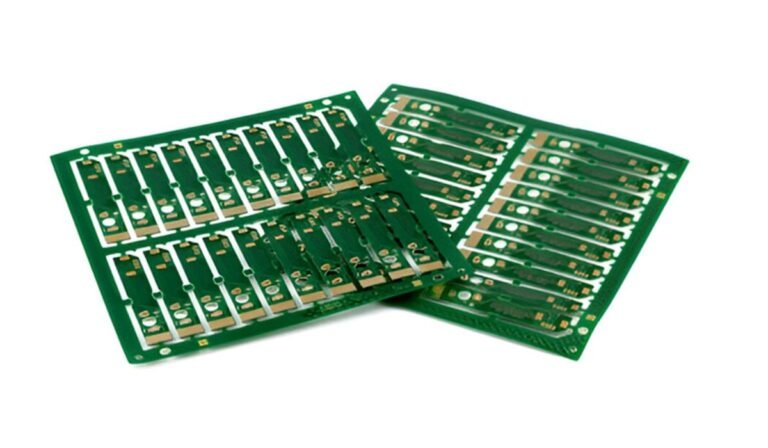
As electronic devices become more powerful and compact, thermal performance and material stability have become critical factors in PCB design. Standard PCB materials may not perform well under high temperatures, leading to reduced reliability and potential failure. To address these challenges, engineers increasingly rely on High Tg PCB technology. These circuit boards are specifically designed to withstand elevated temperatures while maintaining structural integrity and electrical performance.
Understanding the properties, manufacturing process, and applications of high Tg PCBs can help businesses and engineers choose the right solution for demanding electronic environments.
What Is a High Tg PCB?
A High Tg PCB refers to a printed circuit board made from materials with a high glass transition temperature (Tg). The glass transition temperature is the point at which the substrate material changes from a rigid, glass-like state to a softer, more flexible state.
In standard PCBs, this transition typically occurs at lower temperatures, which can lead to deformation and reduced performance under heat stress. High Tg PCBs, on the other hand, are designed to operate at higher temperatures without losing their mechanical and electrical properties.
These boards are commonly used in applications where heat resistance and long-term reliability are essential.
Key Properties of High Tg PCBs
The defining characteristic of a High Tg PCB is its ability to withstand high temperatures. Materials used in these boards typically have a Tg value above 170°C, compared to standard materials that may have a Tg of around 130°C.
High thermal stability ensures that the board maintains its shape and performance even under continuous heat exposure. This reduces the risk of warping, delamination, and mechanical failure.
High Tg PCBs also offer improved chemical resistance, making them suitable for harsh environments and manufacturing processes.
In addition, they provide excellent electrical insulation and stable dielectric properties, which are essential for maintaining signal integrity.
Moisture resistance is another important property, as it helps prevent degradation in humid conditions.
Structure of a High Tg PCB
The structure of a High Tg PCB is similar to that of standard PCBs but uses specialized materials to achieve higher temperature resistance. The base layer is typically made from high-performance epoxy resin combined with fiberglass reinforcement.
Copper layers are laminated onto the substrate to form the circuit pathways. These layers are etched to create the desired circuit design.
A solder mask is applied to protect the copper traces from oxidation and environmental damage. A silkscreen layer may also be added for labeling and assembly guidance.
In multilayer designs, multiple layers of copper and insulating material are stacked and bonded together. The high Tg materials used in these layers ensure stability under thermal stress.
Manufacturing Process of High Tg PCBs
The manufacturing of a High Tg PCB follows a process similar to standard PCB fabrication, with careful selection of high-performance materials. The process begins with choosing the appropriate high Tg substrate.
Copper foil is laminated onto the substrate, and a photoresist layer is applied. The circuit design is transferred using photolithography, followed by etching to remove unwanted copper.
Drilling is performed to create holes for vias and component mounting. These holes are plated with copper to establish electrical connections.
For multilayer boards, layers are stacked and bonded through lamination under controlled temperature and pressure conditions.
After lamination, a solder mask is applied, followed by the silkscreen layer. The board is then tested and inspected to ensure it meets quality and performance standards.
Advantages of High Tg PCBs
One of the main advantages of a High Tg PCB is its superior thermal resistance. This allows the board to operate reliably in high-temperature environments without deformation.
Another benefit is improved durability. High Tg materials reduce the risk of delamination and mechanical failure, leading to longer product lifespans.
These boards also offer better performance during soldering processes, as they can withstand higher temperatures without damage.
High Tg PCBs provide stable electrical performance, ensuring consistent signal transmission even under thermal stress.
Additionally, they are well-suited for high-power and high-density applications, where heat management is critical.
Applications of High Tg PCBs
The use of High Tg PCB technology is widespread in industries that require high reliability and thermal performance. In the automotive industry, these boards are used in engine control units, power electronics, and lighting systems.
Industrial equipment, including power supplies and automation systems, relies on high Tg PCBs for stable operation under high temperatures.
In telecommunications, these boards are used in networking equipment and base stations that generate significant heat.
Consumer electronics, such as laptops and gaming devices, also benefit from high Tg PCBs to improve performance and durability.
Aerospace and defense applications use high Tg PCBs in systems that must operate in extreme conditions.
Design Considerations for High Tg PCBs
Designing a High Tg PCB requires careful consideration of thermal and electrical factors. Engineers must select materials with appropriate Tg values based on the operating environment.
Proper thermal management is essential. Heat-generating components should be strategically placed to ensure efficient heat dissipation.
Trace width and spacing must be optimized to handle current requirements and maintain signal integrity.
Layer stack-up design is also important, particularly in multilayer boards, to ensure stability and performance.
Manufacturing constraints should be considered to ensure that the design can be produced efficiently and reliably.
Limitations of High Tg PCBs
While High Tg PCBs offer many advantages, they also have some limitations. One of the main drawbacks is higher cost compared to standard PCB materials.
The manufacturing process may require specialized materials and equipment, which can increase production complexity.
In applications where high temperature resistance is not required, the additional cost may not be justified.
Despite these limitations, high Tg PCBs are an excellent choice for demanding applications.
Conclusion
The High Tg PCB is a reliable and high-performance solution for electronic applications that require excellent thermal resistance and durability. Its ability to withstand high temperatures while maintaining structural and electrical integrity makes it ideal for industries such as automotive, industrial, telecommunications, and aerospace.
As electronic systems continue to evolve and operate under more demanding conditions, the importance of high Tg materials will continue to grow. Businesses seeking dependable and high-quality circuit boards often partner with an experienced High Tg PCB manufacturer to ensure consistent performance, precision, and long-term reliability in their products.
