
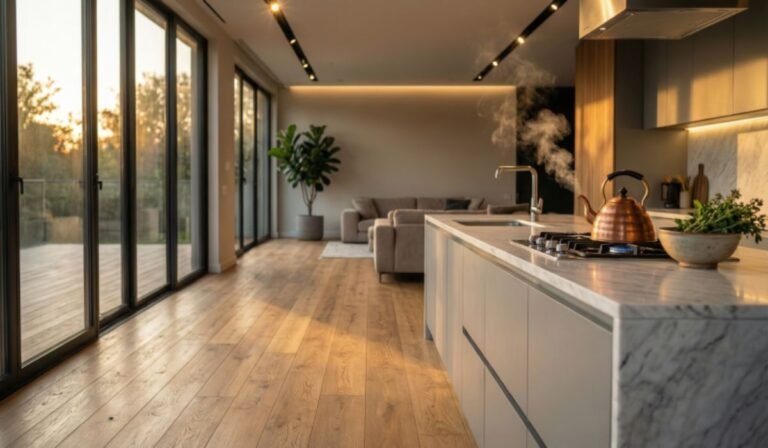
Luxury in the kitchen is no longer about shiny surfaces or showroom-perfect styling. Today, it’s about warmth, texture and spaces that feel thoughtfully put together yet comfortable to live in. One of the simplest ways to achieve that balance is underfoot. Wood flooring has a unique ability to transform a kitchen from purely functional into something that feels refined, welcoming and quietly luxurious.
From period homes to contemporary open-plan spaces, wood brings a depth and softness that other materials often struggle to replicate. It grounds the room, adds visual richness and makes even the most practical kitchen feel considered.
What Makes Wood Flooring Feel Luxurious?
Luxury interiors tend to share a few common traits: natural materials, subtle variation and finishes that age gracefully. Wood ticks every one of those boxes.
Unlike flat, uniform surfaces, wood flooring introduces gentle movement through grain patterns, knots and tonal variation. These details catch the light differently throughout the day, adding depth without overwhelming the space. Whether it’s wide oak planks or a more decorative parquet pattern, wood flooring feels tactile and layered, which instantly elevates the overall look of a kitchen.
There’s also an inherent sense of craftsmanship attached to wood. It suggests quality, longevity and intention; all hallmarks of a luxury home.
Why Wood Flooring Works So Well in Kitchens Today
Kitchens have evolved. They’re no longer tucked-away workrooms but central living spaces where cooking, dining and relaxing happen side by side. Flooring plays a huge role in how that space feels.
Wood flooring creates visual continuity, especially in open-plan layouts where the kitchen flows into dining or living areas. Instead of breaking the space up with a hard visual stop, wood helps everything feel cohesive and calm. This seamlessness is often what gives high-end kitchens their effortless look.
Modern engineered wood has also made wood flooring far more suitable for kitchen environments. With improved stability and protective finishes, it can comfortably handle temperature changes and daily foot traffic while still delivering that sought-after natural aesthetic.
The Emotional Impact of Wood Underfoot
Luxury isn’t just visual; it’s emotional. Wood flooring has a warmth that’s felt as much as it’s seen.
Kitchens with wood floors often feel calmer and more inviting. The natural tones soften cabinetry, balance out stone worktops and stop sleek designs from feeling cold or clinical. Even minimalist kitchens benefit from the contrast wood provides, adding a sense of comfort without compromising on style.
This emotional warmth is a big reason wood flooring continues to feature in aspirational interiors. It makes the kitchen feel like somewhere to linger, not just somewhere to cook.
How to Use Wood Flooring to Elevate Your Kitchen
Choosing wood flooring is one thing; choosing the right wood flooring is what makes the difference between ordinary and luxurious.
A few design-led considerations can make a big impact:
- Go for wider planks to create a more expansive, high-end feel
- Choose natural or lightly brushed finishes for a softer, more organic look
- Stick to warm, neutral tones that complement cabinetry rather than competing with it
- Consider parquet patterns for character kitchens or period-style homes
Engineered wood is often the preferred option for kitchens thanks to its layered construction, offering the look of solid wood with added stability. It also works beautifully with underfloor heating, making it a practical as well as stylish choice.
Is Wood Flooring Practical Enough for a Kitchen?
A common hesitation around wood flooring in kitchens is durability. While solid wood can be sensitive to moisture, engineered wood is designed to cope with real-life conditions.
With proper sealing and everyday care, wood flooring handles spills, splashes and heavy use surprisingly well. In fact, many luxury homes favour materials that develop character over time rather than staying perfectly pristine. Small marks and subtle wear often enhance the lived-in elegance that wood does so well.
For households wanting a similar look with even greater resilience, wood-effect floor tiles or wood-effect LVT laid in plank or parquet styles can also deliver a polished finish, though real wood remains unmatched for depth and authenticity.”
Why Wood Flooring Is Worth the Investment
Wood flooring tends to cost more upfront than some alternatives, but it delivers long-term value. It ages gracefully, complements changing kitchen trends and often enhances a home’s overall appeal.
Rather than dating quickly, wood adapts. It works with classic shaker kitchens, sleek handleless designs and everything in between. That versatility is part of what makes it feel luxurious; it never looks like a short-term decision.
When chosen thoughtfully, wood flooring becomes the foundation of the kitchen, allowing cabinets, lighting and décor to evolve while the space still feels cohesive.
Author Bio:
Sophie Marlowe is a digital content writer and outreach executive for Luxury Flooring. She specialises in crafting engaging blogs on home improvement and home decor with a focus on flooring. Sophie writes handy how-tos, easy guides, and helpful comparisons, letting the reader be informed and inspired to take their home to the next level.
